
HUNTINGTON, NY – May 14, 2026
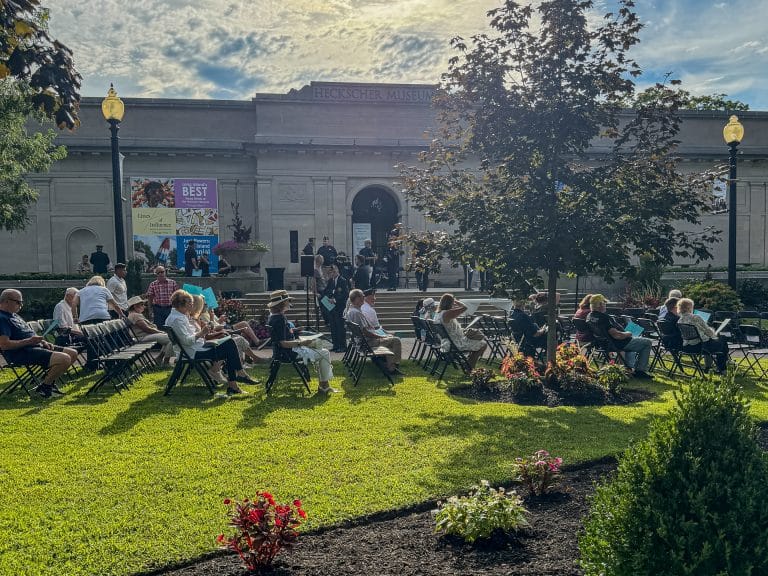
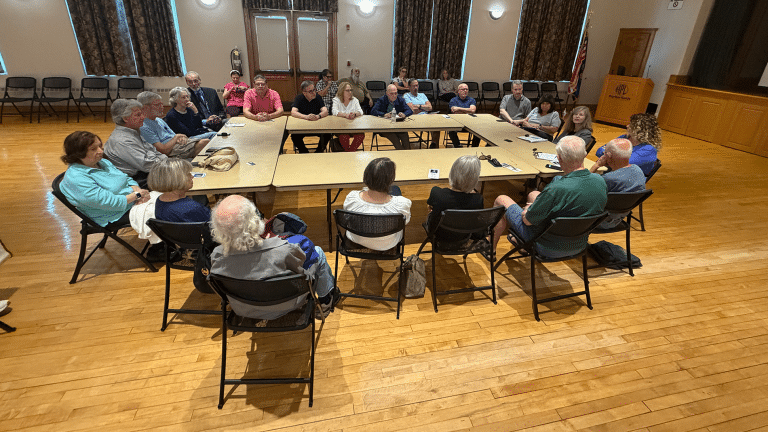
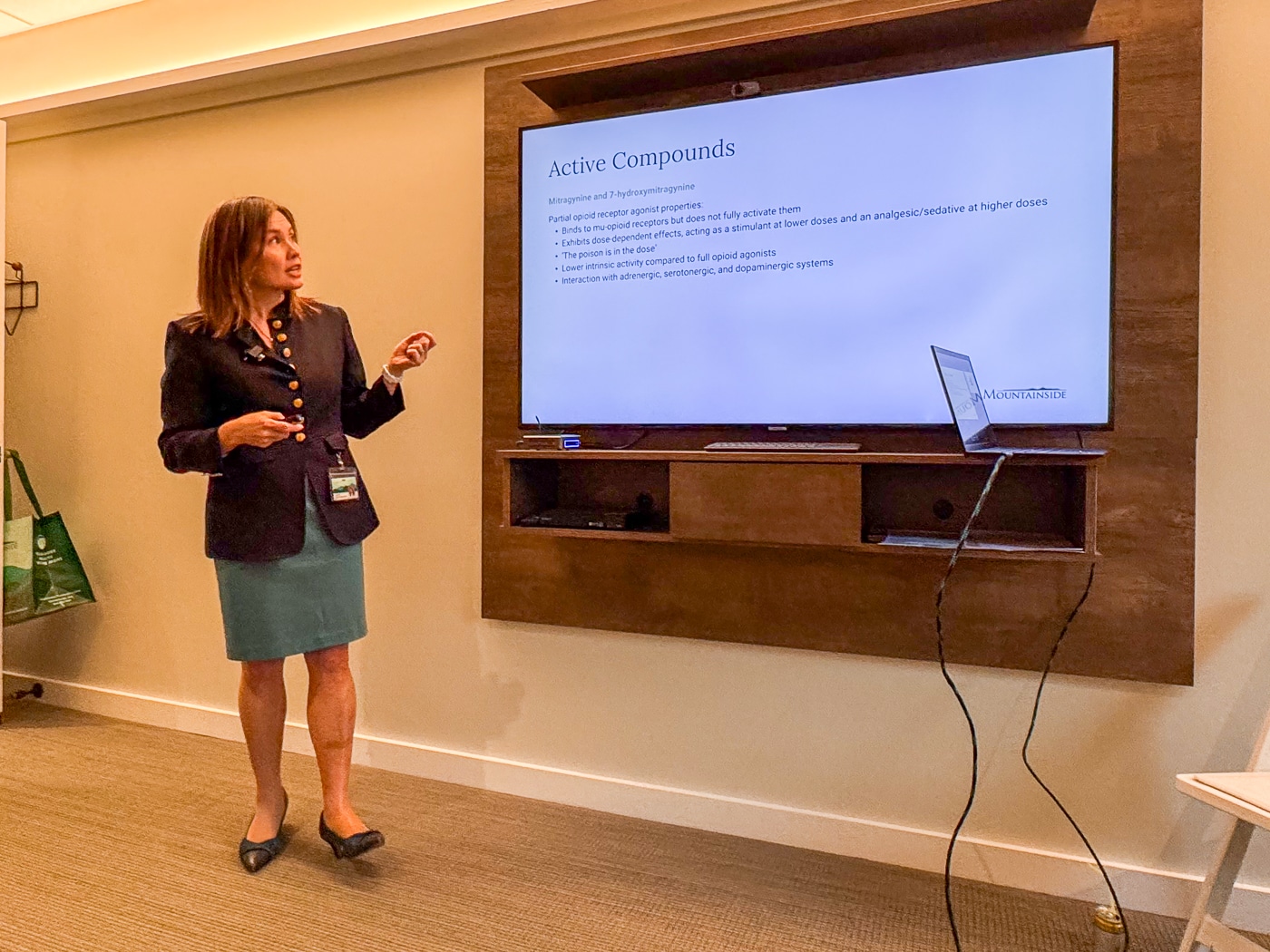
Community leaders, healthcare professionals, educators, and recovery advocates gathered recently at the Huntington location of Mountainside Treatment Center for an educational symposium focused on one rapidly growing and often misunderstood substance, kratom.
Local Organizations Unite Around Growing Concerns
The event, titled “Understanding Kratom: A Symposium,” was organized to address what organizers described as a widespread lack of awareness surrounding the substance, its effects, and the growing concerns surrounding its use.
“We spoke to some religious leaders, and I was stopped by a lot of pastors and reverends asking, ‘What is this symposium about? What is kratom?’” said Gary Lupinacci during opening remarks. “There is a prevalent lack of education, lack of understanding, and lack of knowledge of the dangers that kratom imposes on our community, how it could lead to other substances, and how people relapse on it. So we wanted to put this community education symposium together as a resource for the community.”
Lupinacci thanked the many organizations that collaborated on the event, including Huntington Matters, AWARE Drug and Alcohol Community Coalition, and Thomas’ Hope Foundation. Representatives from prevention programs, treatment services, law enforcement, and local government were also in attendance.
A Growing Presence in Addiction Treatment
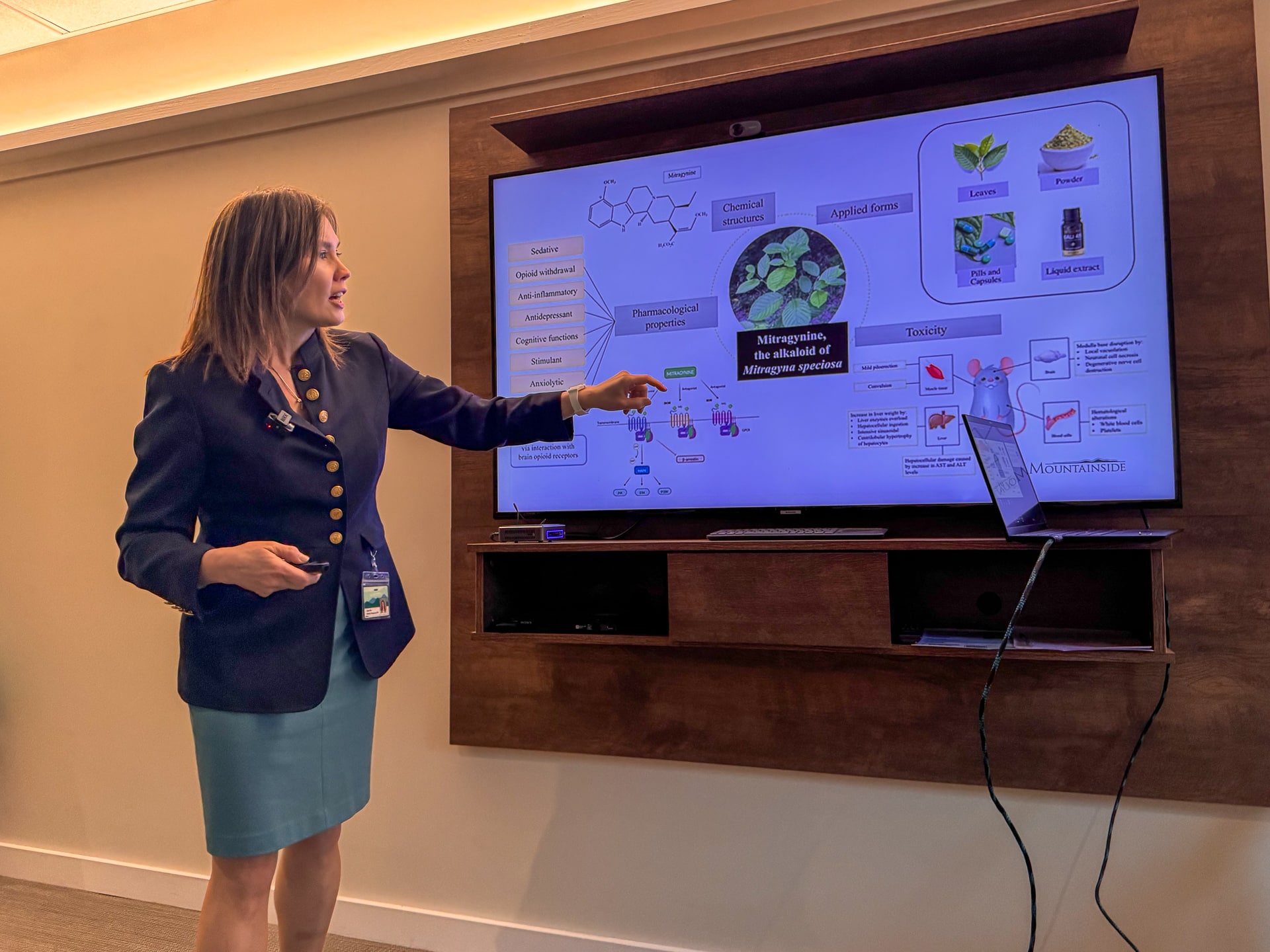
The evening’s keynote presentation was led by Jana Wu, a licensed clinical social worker, licensed alcohol and drug counselor, and Director of Clinical Integration at Mountainside. Wu has spent years researching emerging substances, with a particular focus on kratom and its impact on addiction treatment and public health.
“I really encourage people to come as they are,” Wu told attendees while discussing the free support group she co-leads, Let’s Talk Kratom. “If you hear anything tonight that you think someone could use some free support for, this group is free and open to the public, and it is my passion project.”
Wu explained that her interest in kratom began shortly after the pandemic while working at Mountainside’s Ramsey, New Jersey location, where she saw a dramatic increase in patients using the substance.
“Almost 40% of my caseload was utilizing kratom,” she said. “I had heard of kratom, but I was asking myself, ‘What is going on?’ We were seeing parents, young people, older adults – all different types of people using it.”

From “Natural Alternative” to Public Health Debate
Throughout the presentation, Wu described kratom as a complex and evolving public health issue. Native to Southeast Asia, kratom has traditionally been used for centuries by chewing leaves or brewing teas. In lower doses, it can act as a stimulant, while higher doses can produce opioid-like effects.
Today, however, kratom is commonly sold in powders, capsules, gummies, extracts, and concentrated products often found in vape shops, gas stations, and online retailers.
Speakers at the symposium also noted that in many places there are currently no meaningful age restrictions preventing minors from purchasing kratom products, making them widely accessible to young people in the same way they might purchase a soda or energy drink at a convenience store. Organizers said that ease of access is one of the major concerns driving education efforts around the substance.
“It was marketed very heavily as a natural alternative,” Wu explained. “People viewed it as safer because it was plant-based and sold openly.”
Wu noted that many individuals report using kratom for chronic pain, anxiety, PTSD, depression, and recovery from opioid addiction. At the same time, clinicians are increasingly seeing cases involving dependency, withdrawal, and severe side effects.
“We know from reports that it can be a horrendous detox,” Wu said. “Some people report it is as bad as detoxing from fentanyl or heroin.”
Concerns Over Potent Kratom Derivatives
The symposium also explored the growing concerns surrounding highly concentrated products containing 7-hydroxymitragynine, often referred to as “7-OH,” a potent kratom derivative that experts say has intensified addiction and overdose risks.
“We’re seeing products with extremely high potency levels,” Wu explained. “Many people are taking doses far beyond what the body could naturally produce.”
Wu emphasized that kratom regulation remains inconsistent across the country. Some states have banned it outright, while others, including New York, operate under versions of a Kratom Consumer Protection Act. Connecticut recently classified kratom as a Schedule I substance, while other states continue debating regulation and enforcement.

Education, Support, and Treatment Resources
The symposium also addressed treatment options, including inpatient detox, outpatient withdrawal management, peer support groups, medication-assisted treatment, and harm reduction approaches.
“We really believe in meeting people where they’re at,” Wu said. “There’s no magic pill for recovery. Support systems and behavioral changes are essential.”
Attendees also learned about ongoing national research efforts studying kratom’s effects, safety concerns, and potential therapeutic uses. Wu encouraged community members to participate in an independent research study being conducted in partnership with the New York Institute of Technology College of Osteopathic Medicine.
As the evening concluded, organizers stressed that education, open dialogue, and accessible support services remain key in addressing a substance that many believe is still poorly understood by both the public and healthcare providers.
“This is moving very fast,” Wu said. “Every week, the laws are changing, the products are changing, and the conversations are changing. What’s most important is that people have accurate information and know they are not alone.”
Since 1998, Mountainside has operated from a simple conviction: recovery is possible for everyone. Their Huntington treatment options include outpatient services, recovery coaching, adolescent services, medication-assisted treatment, telehealth services and support groups. Mountainside Treatment Center – Huntington is located at 141 E. Main Street, Huntington, NY. Contact them at (631) 350-9603.
Photography by Dana E. Richter. Videography by June Margolin.