

HUNTINGTON, NY – September 21, 2026
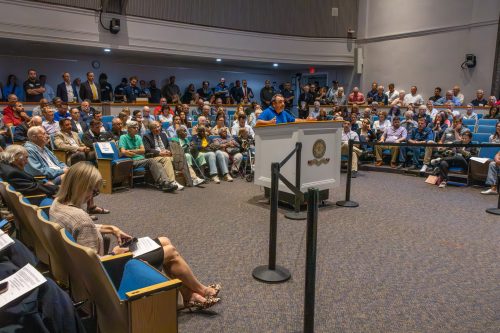
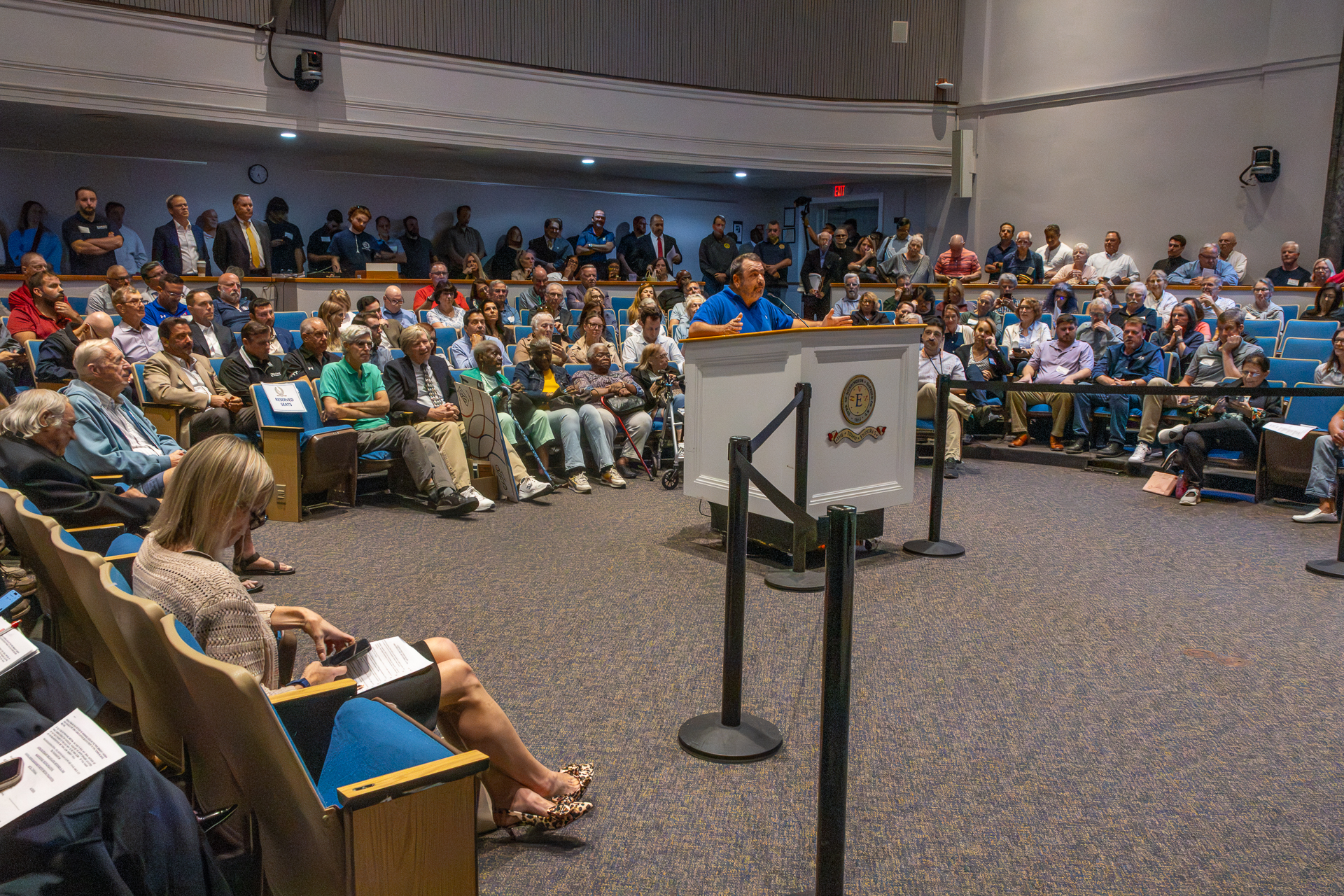
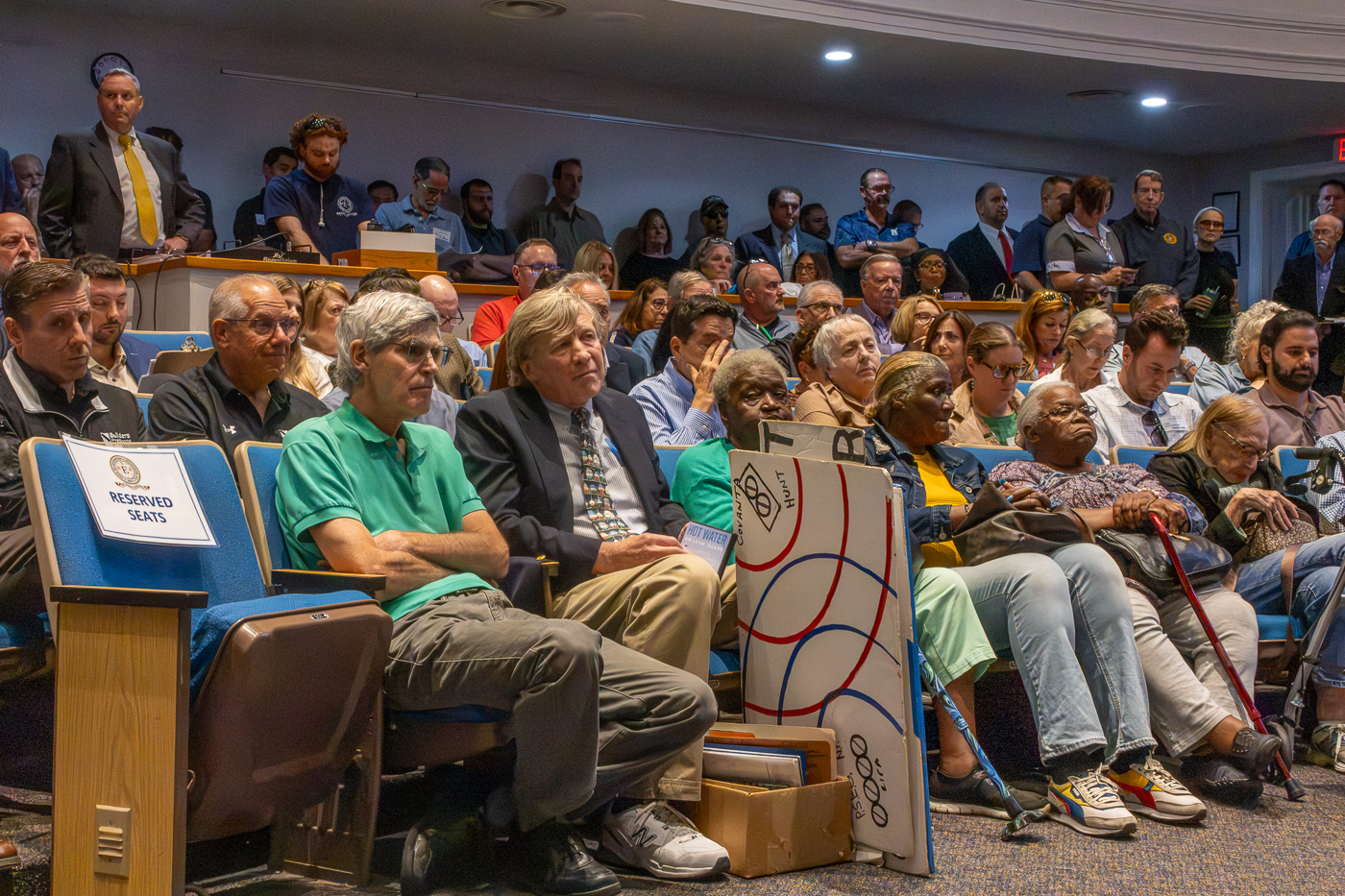
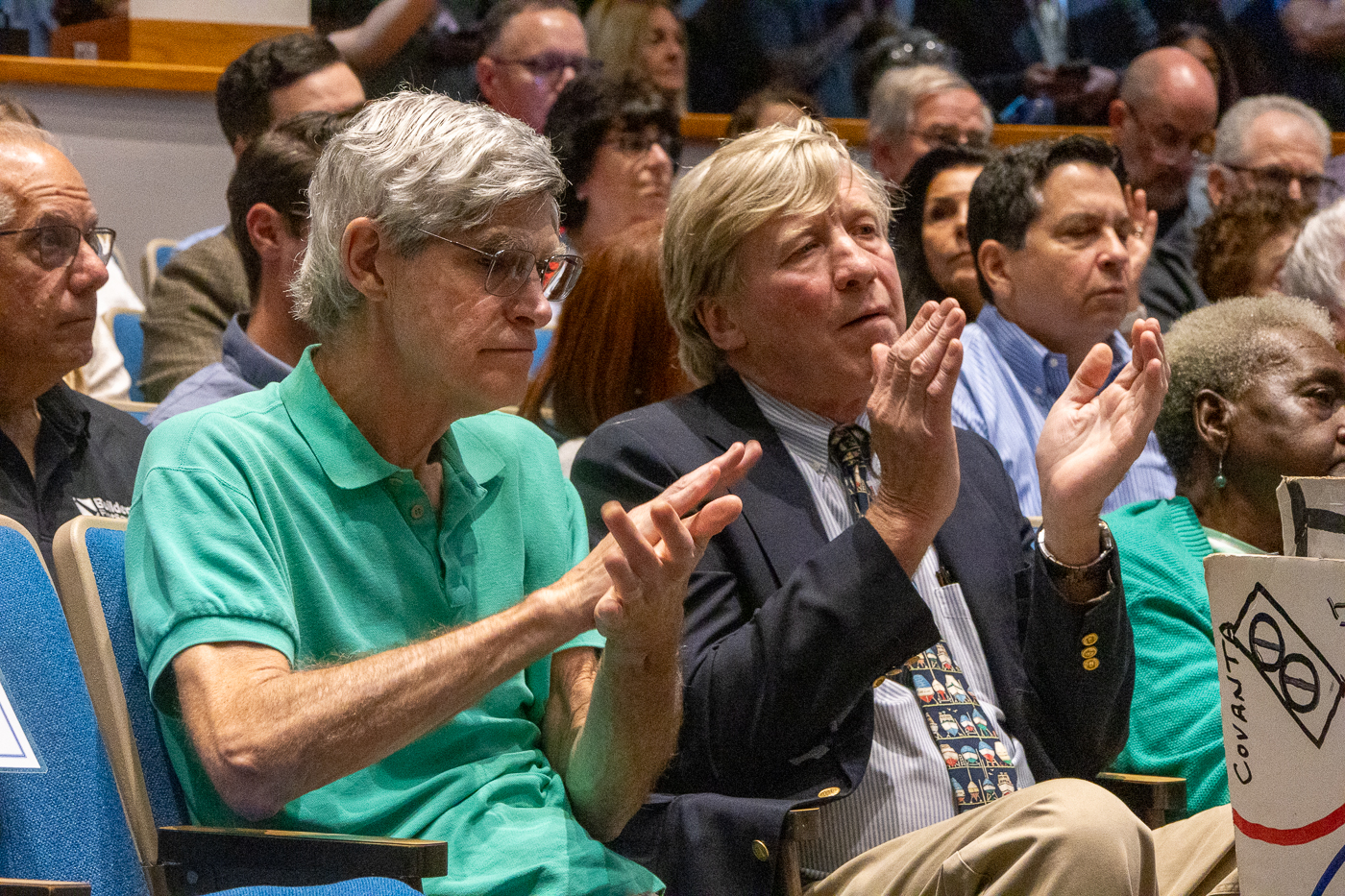
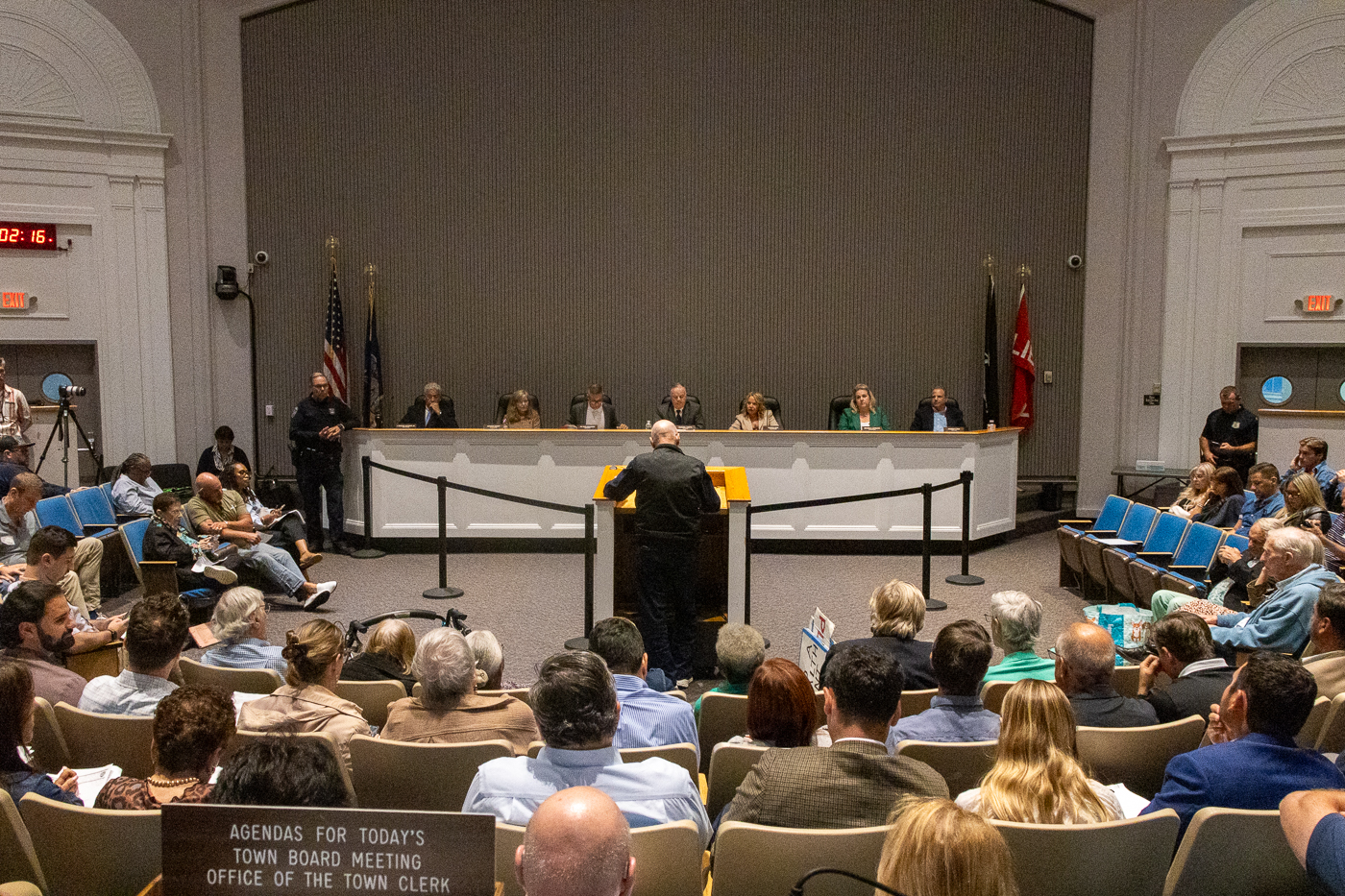
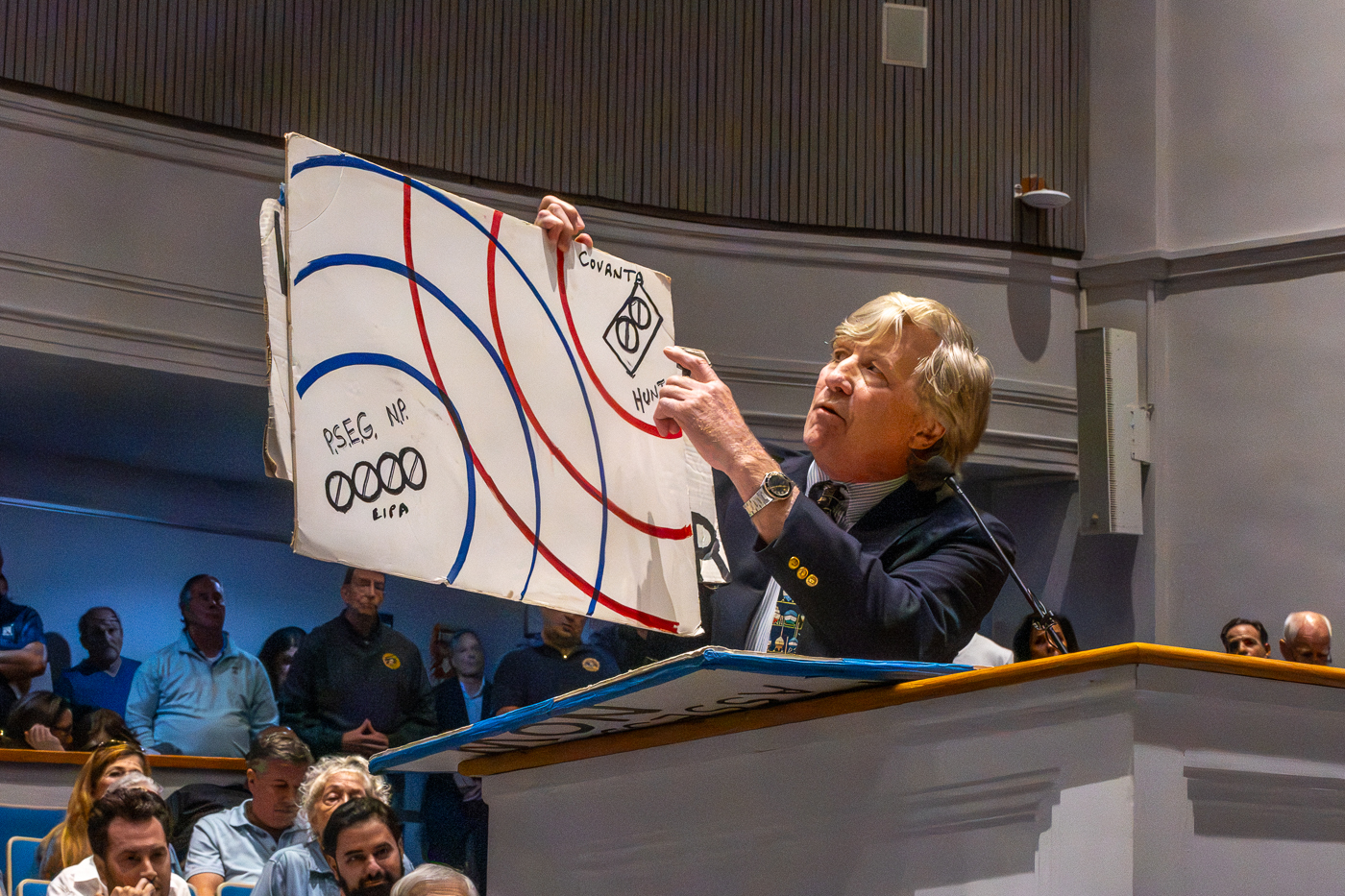
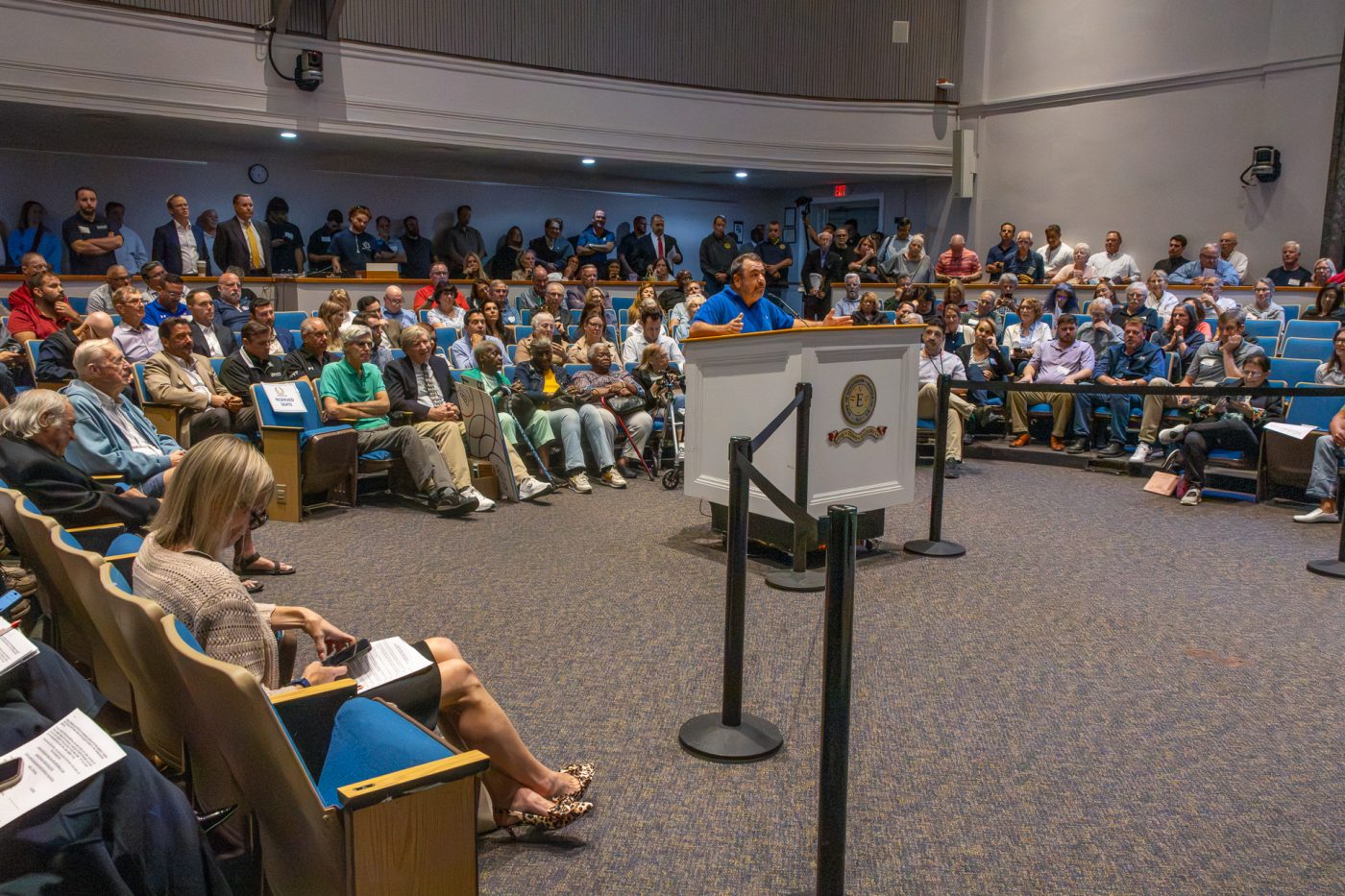
A marathon Huntington Town Board meeting stretched approximately four hours Tuesday night September 15 as residents packed Town Hall for six public hearings covering Manor Farm Park, gas-powered leaf blowers, the Cornerstone Melville development, traffic restrictions and other issues.
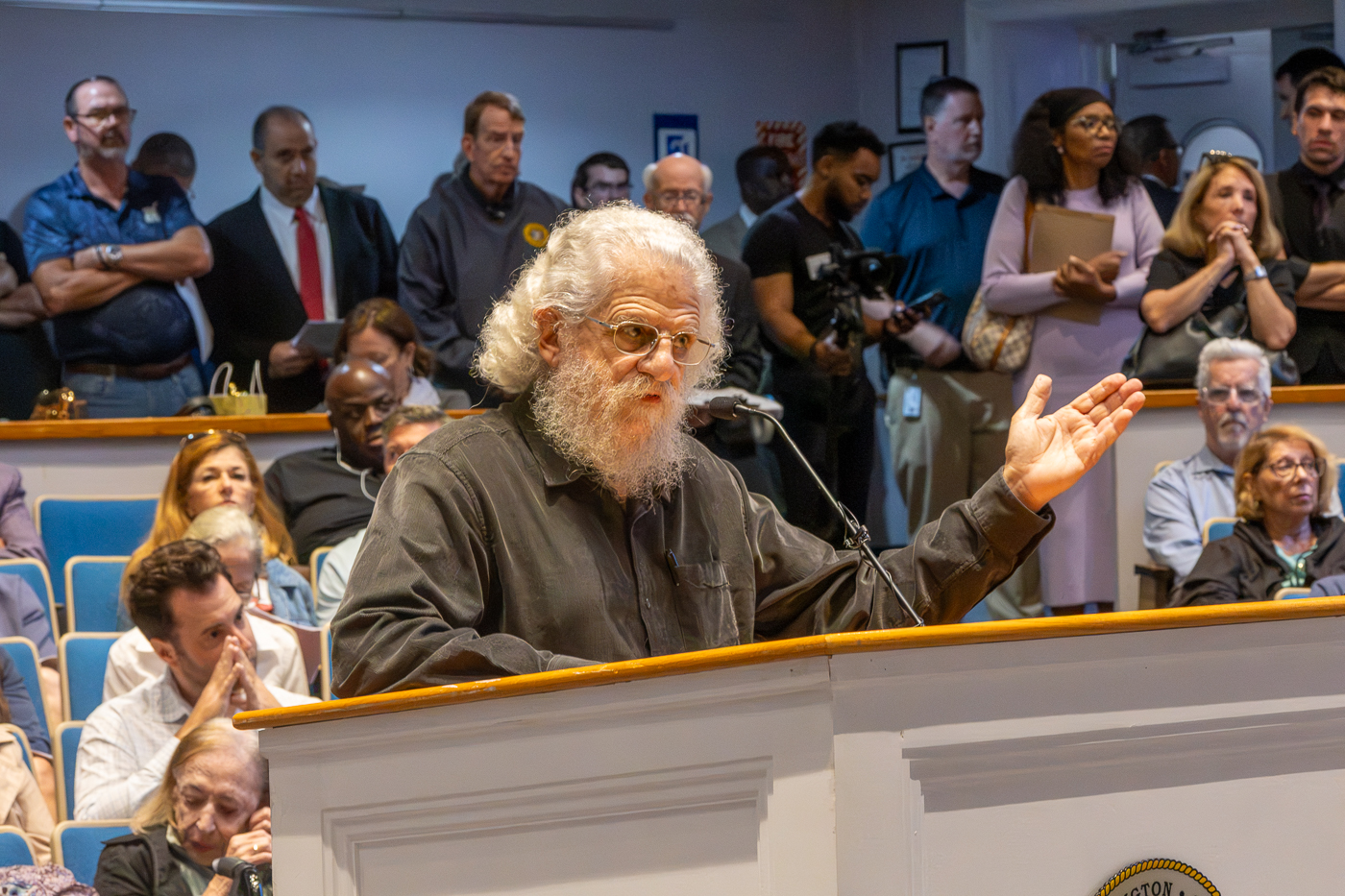
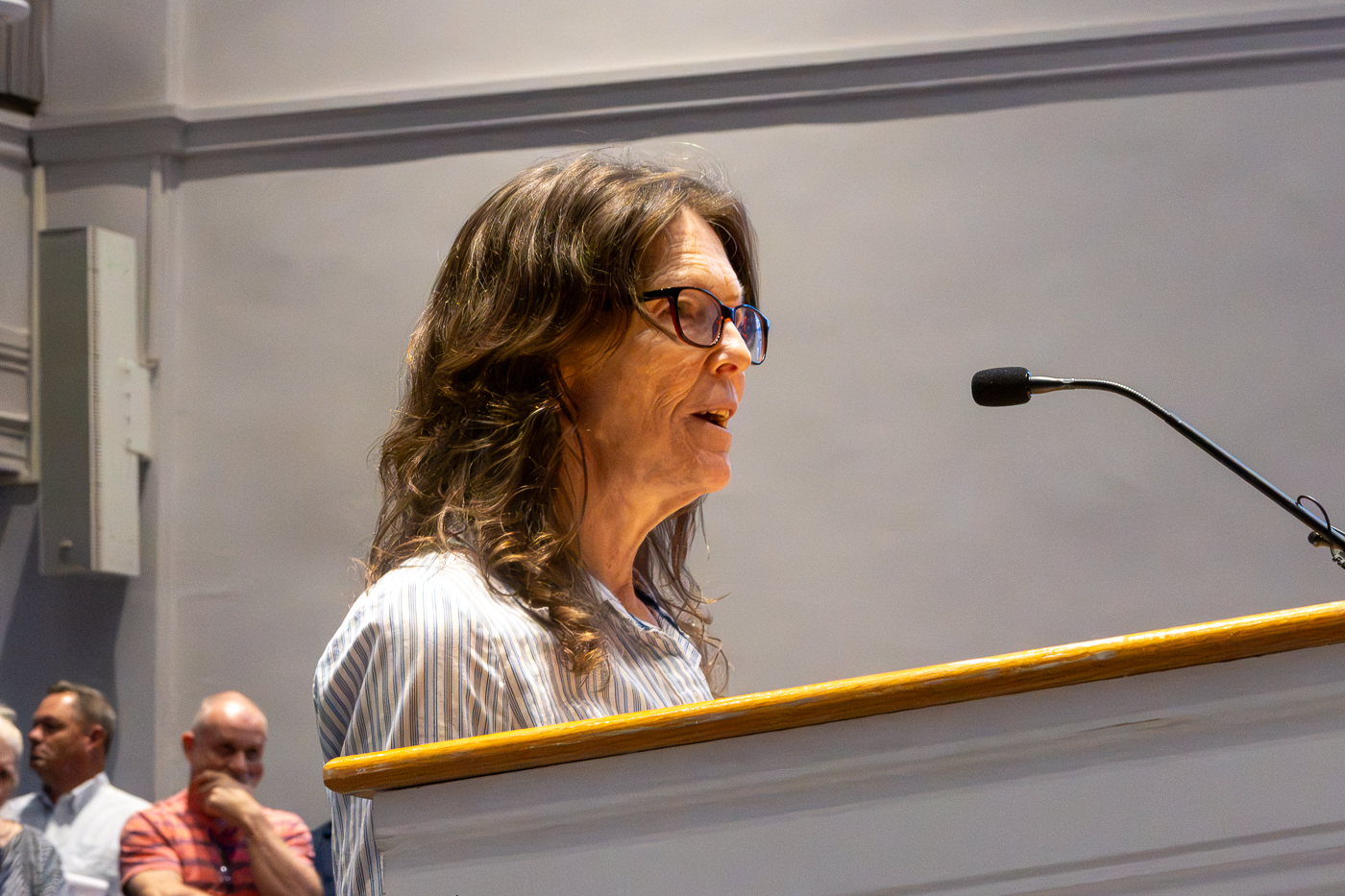
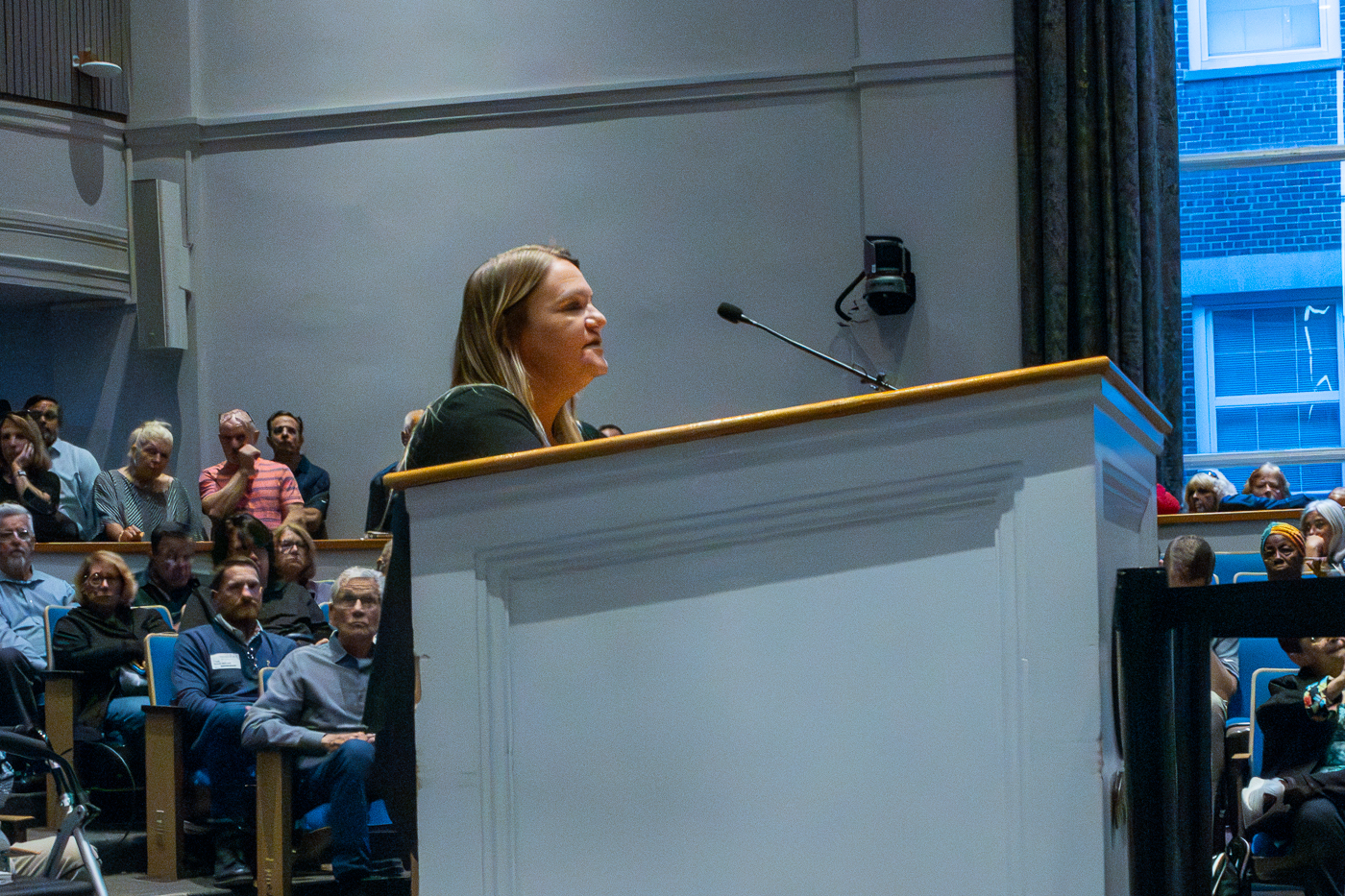
The unusually large turnout continued into the public portion of the meeting. With a long list of residents waiting to speak, the normal three-minute speaking limit was reduced to two minutes later in the night. Several speakers complained that they could not finish prepared remarks, while others who had signed up to speak left before their names were called as the meeting ran late.
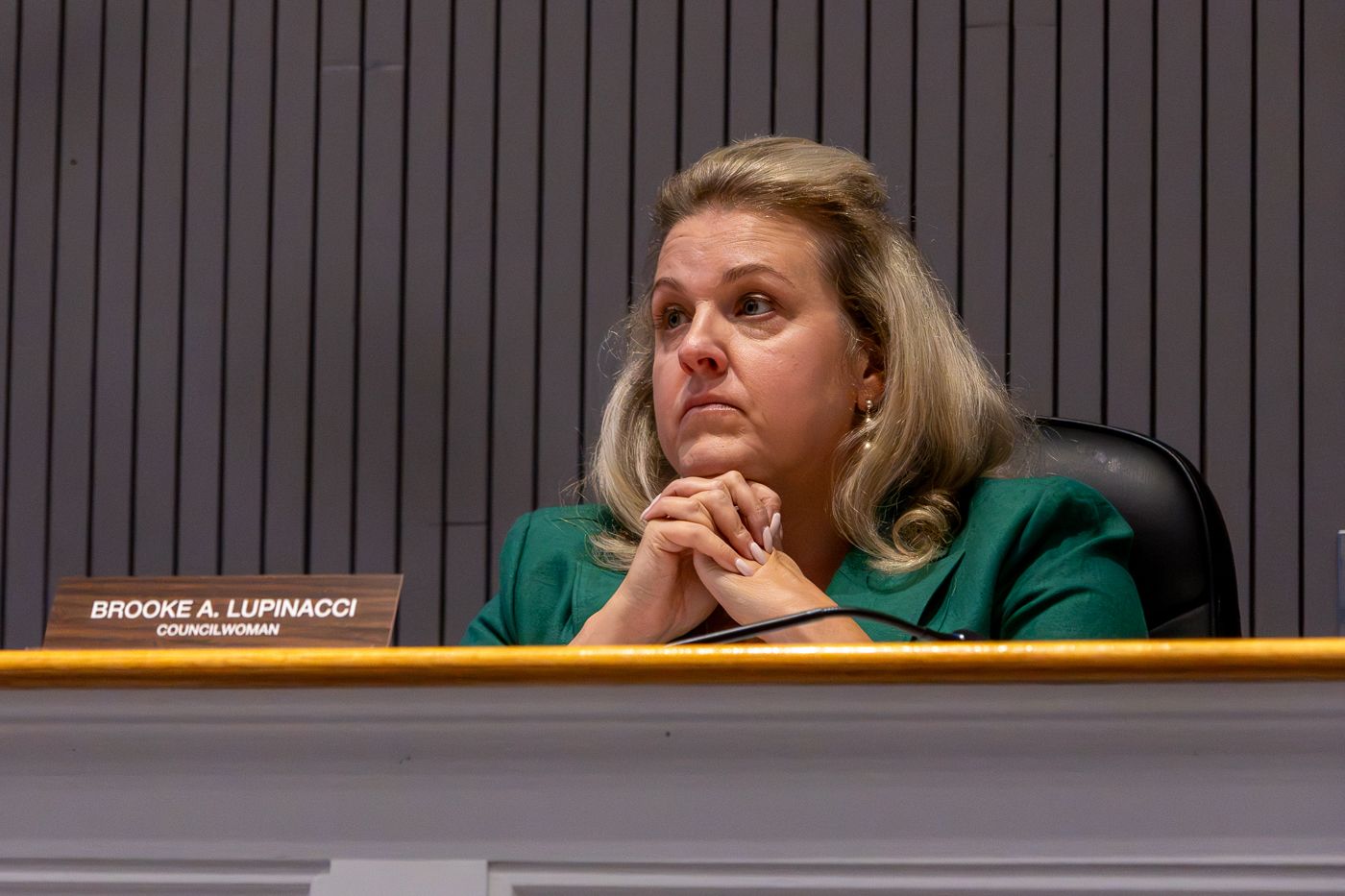
One of the most consequential actions came near the end of the night, when the Town Board voted 3-2 to enact Local Law 26-2026, authorizing the Town to override New York State’s tax levy limit as the 2027 budget process moves forward. Supervisor Ed Smyth, Councilman Dr. Dave Bennardo and Councilwoman Theresa Mari voted yes. Councilwomen Jennifer Hebert and Brooke Lupinacci voted no.
The vote gives the Town the legal authority to exceed the tax cap, but it does not establish the final 2027 tax levy or adopt the Town’s final budget.
Huntington Matters has been following the Town’s approximately $16 million budget gap and discussions over potential spending cuts, services and revenue increases throughout the 2027 budget process.
Watch the September 15, 2026 Town Board Meeting.
Public Hearing #1: East Northport Nuisance Property
The first hearing concerned property at 336 Markfield Road in East Northport and whether the Town should declare the property a nuisance, enter the property to remedy the conditions and charge the costs against the property. No members of the public spoke.
Public Hearing #2: Manor Farm and Long Island Cares
One of the evening’s first major debates involved a proposed license agreement with Long Island Cares for Manor Farm Park at 210 Manor Road in Huntington. At the beginning of the hearing, the Board announced that the resolution granting the agreement had been pulled during the Town Board workshop earlier that day. The public hearing proceeded, but no vote would be taken that evening.
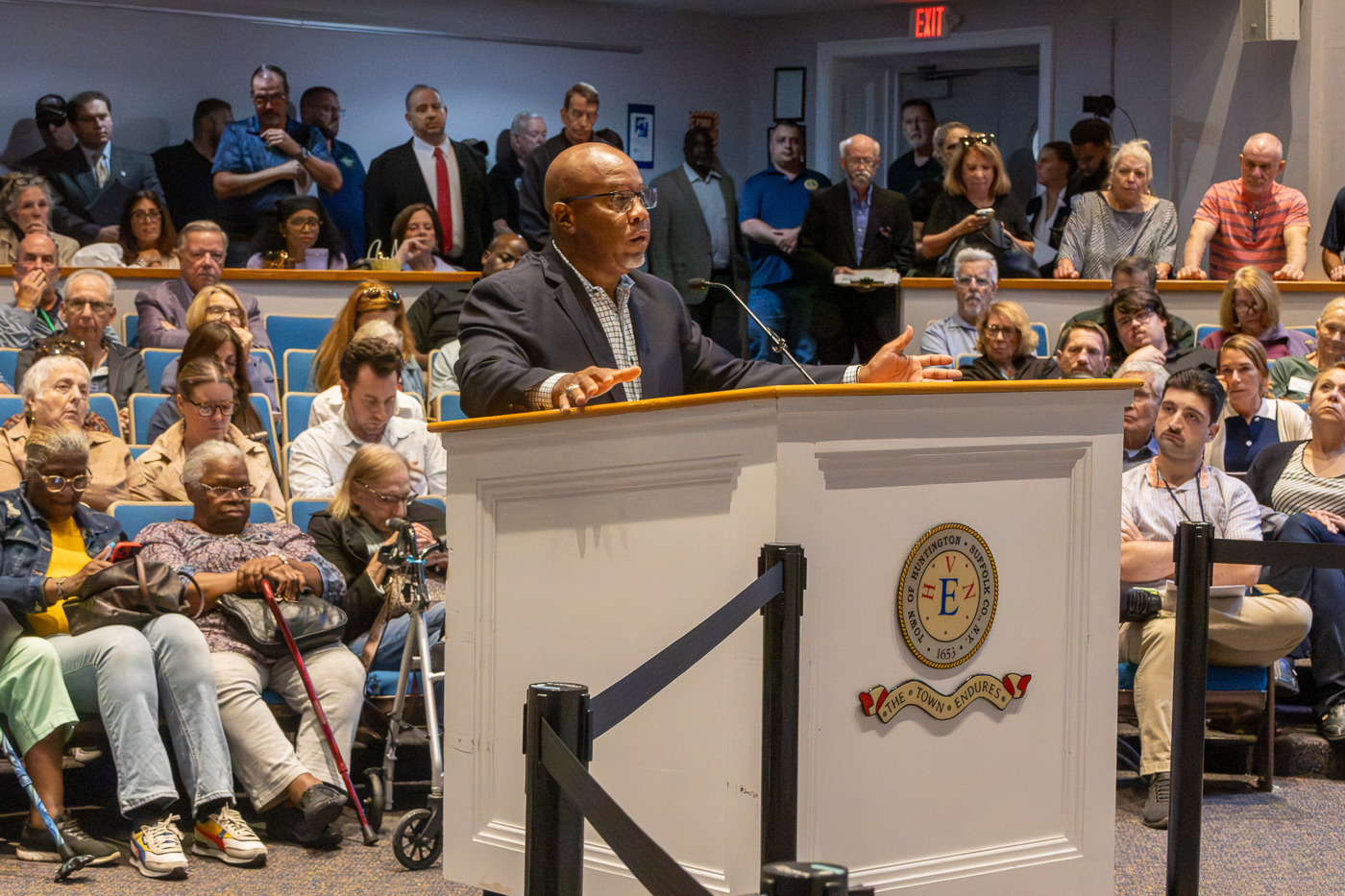
Town Parks and Recreation Director C. Todd Jamison addressed what he described as misinformation surrounding the proposal. He said Long Island Cares would serve as the new caretaker of Manor Farm, restoring the property to its intended agricultural and educational use. Jamison said the site would not operate as a food pantry or commercial operation and would not have delivery truck lines or heavy daily operations. Educational and agricultural programming would serve students from the eight Town of Huntington school districts.
“This will be a small agricultural site, the same as there was before.”
Residents nevertheless raised concerns about preservation restrictions, traffic, school buses, potential changes to the property and whether the proposed use is compatible with land preserved as open space. By our count, 13 residents addressed the proposal. One clearly supported the proposed use, 10 opposed it or asked the Town to delay moving forward, and two expressed mixed positions or concerns without clearly opposing Long Island Cares.
Elisa Miller Brundige of Starflower Experiences, the former Manor Farm tenant, also explained why the organization did not submit a proposal under the Town’s new Request for Proposals. She said the new RFP included financial requirements approximately twice what Starflower had been paying, along with additional costs and responsibilities that made bidding difficult.
Erika Applegate, granddaughter of Harriet Backer, who sold the property to the Town, traveled from New Jersey to speak.
“I’m here that you guys preserve the land and keep your promise through my grandma. To the community, to the neighborhood, to the children.”
The hearing concluded without a vote on the Long Island Cares agreement.
Public Hearing #3: Truck Restrictions on Barkers Lane
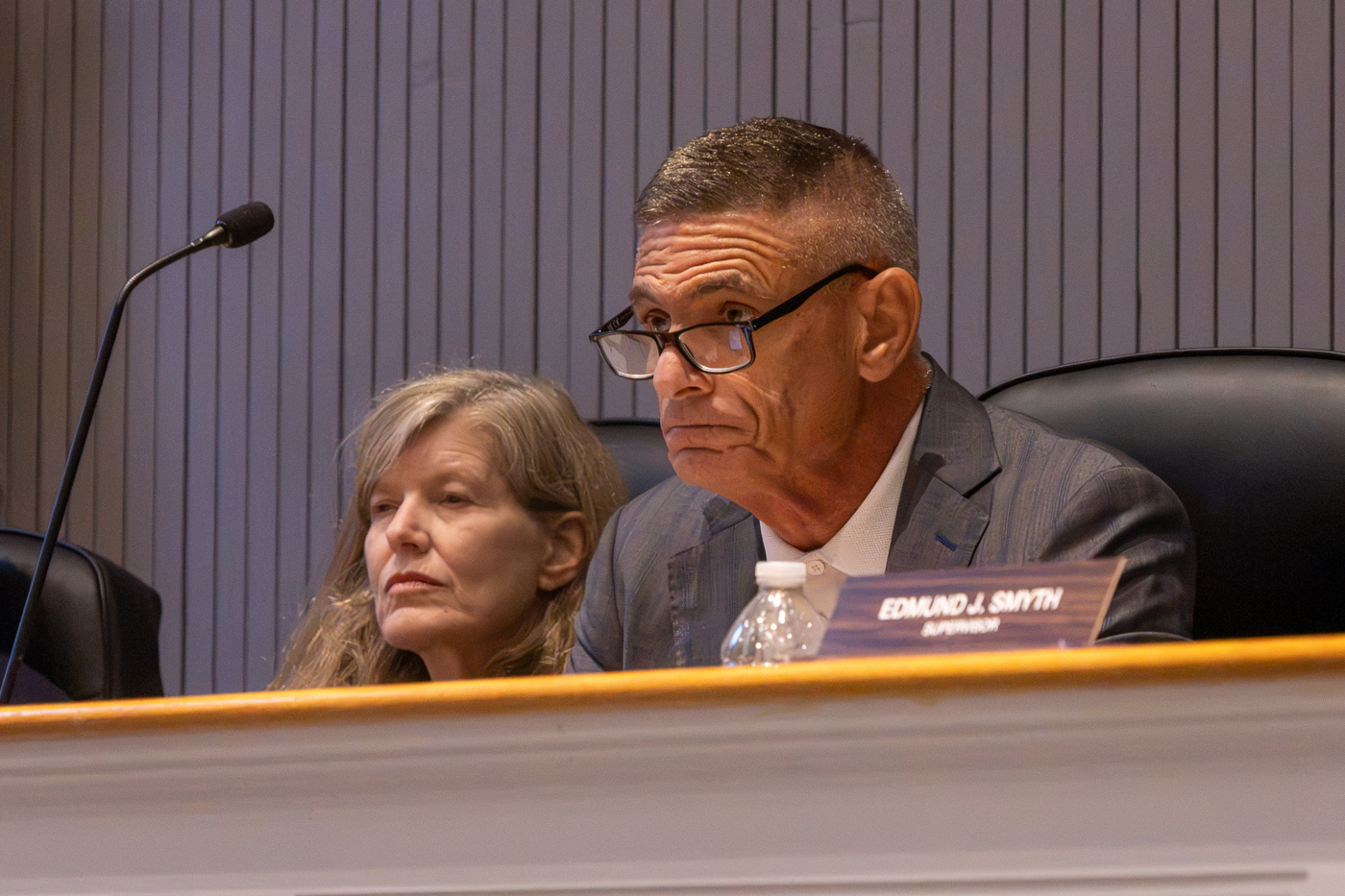
Two residents of Barkers Lane in Huntington Station spoke in favor of restricting trucks from the roadway between East Jericho Turnpike and Melville Road, citing speeding, large trucks and pedestrian safety. A third resident spoke about similar truck concerns on other Town roads. No one spoke against the Barkers Lane restriction.
The Town explained that adding the truck exclusion to the traffic code would allow the Suffolk County Police Department to enforce it.
Public Hearing #4: Disabled Veterans Tax Exemption
The Board held a hearing on Local Law Introductory No. 30-2026, which would amend the Town Code to add a tax exemption for permanently and totally disabled veterans. No members of the public spoke.
Public Hearing #5: Gas-Powered Leaf Blowers
Gas-powered leaf blowers generated one of the largest turnouts of the night.
The hearing concerned Local Law Introductory No. 25-2026, which would amend Chapter 141 of the Town Code governing noise. The actual text of the proposed local law was not included in the Town Board meeting resolution packets reviewed by Huntington Matters.
By our count, approximately 30 people spoke during the lengthy hearing. About 25 supported the proposed restrictions or stronger restrictions, while five opposed the proposal or argued that the transition would unfairly affect landscapers and homeowners.
Supporters raised concerns about noise, air pollution, hearing damage and exposure faced by landscaping workers. Several residents and landscaping professionals who already use electric equipment argued that commercial electric equipment is increasingly capable of doing the work.
Garrett Stebel of Dix Hills, who said his property is maintained with electric equipment and robotic mowers, urged the Town to move forward.
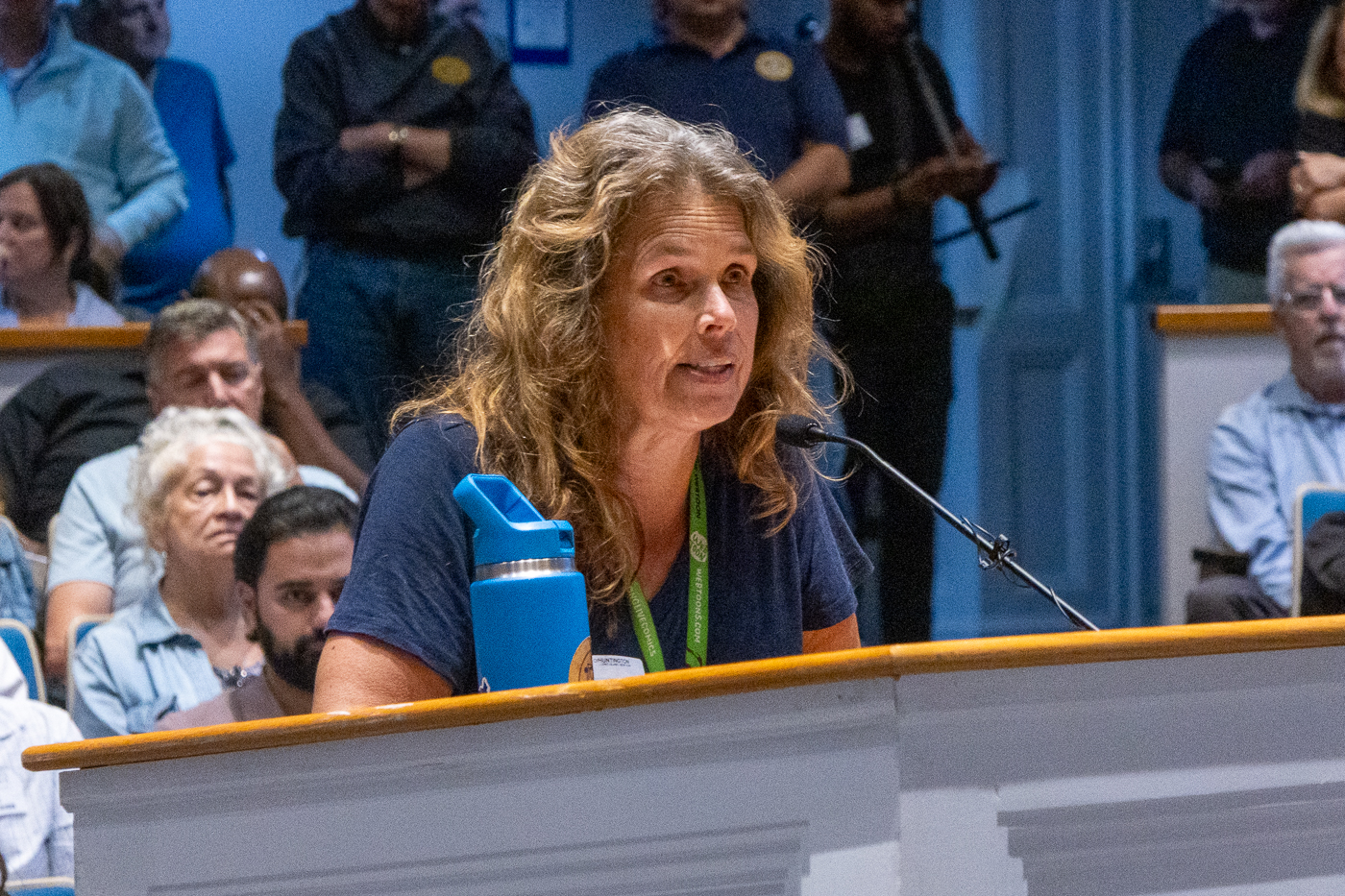
“We, the residents, have had enough.”
Opponents questioned whether electric equipment can handle large properties and heavy cleanups and raised concerns about equipment costs, battery capacity and the practical effect on landscaping businesses.
Huntington Station homeowner Beverly Flanagan said she maintains her own property and uses her gas blower for only about 15 to 20 minutes a week.
“Homeowners and landscapers are not in the same category, and now we’re grouped together.”
Several landscaping business owners argued that electric equipment may be practical for routine summer maintenance but is not yet sufficient for large spring and fall cleanups.
The Board did not vote on the proposed law that night.
Public Hearing #6: Cornerstone Melville
The longest development hearing involved Cornerstone Melville, a proposed mixed-use development at 115 Baylis Road in the Melville Town Center Overlay District.
Terwilliger & Bartone Properties is proposing 168 residences, including rental and ownership opportunities, with a 20% affordable housing component. The development team told the Board its environmental and traffic studies account for cumulative impacts from Cornerstone and the previously approved 400-unit Melville Crossing development.
Traffic consultant Wayne Muller said the analysis concluded Cornerstone would not significantly affect traffic conditions in the Melville corridor and would generate less peak-period traffic than development permitted under the property’s existing industrial zoning.
Developer Anthony Bartone argued that waiting for Melville Crossing to be built and occupied before allowing another project to advance could stall development of the Town Center for years. He said Melville Crossing and Cornerstone together represent approximately $250 million in private investment and more than 100 affordable housing units.
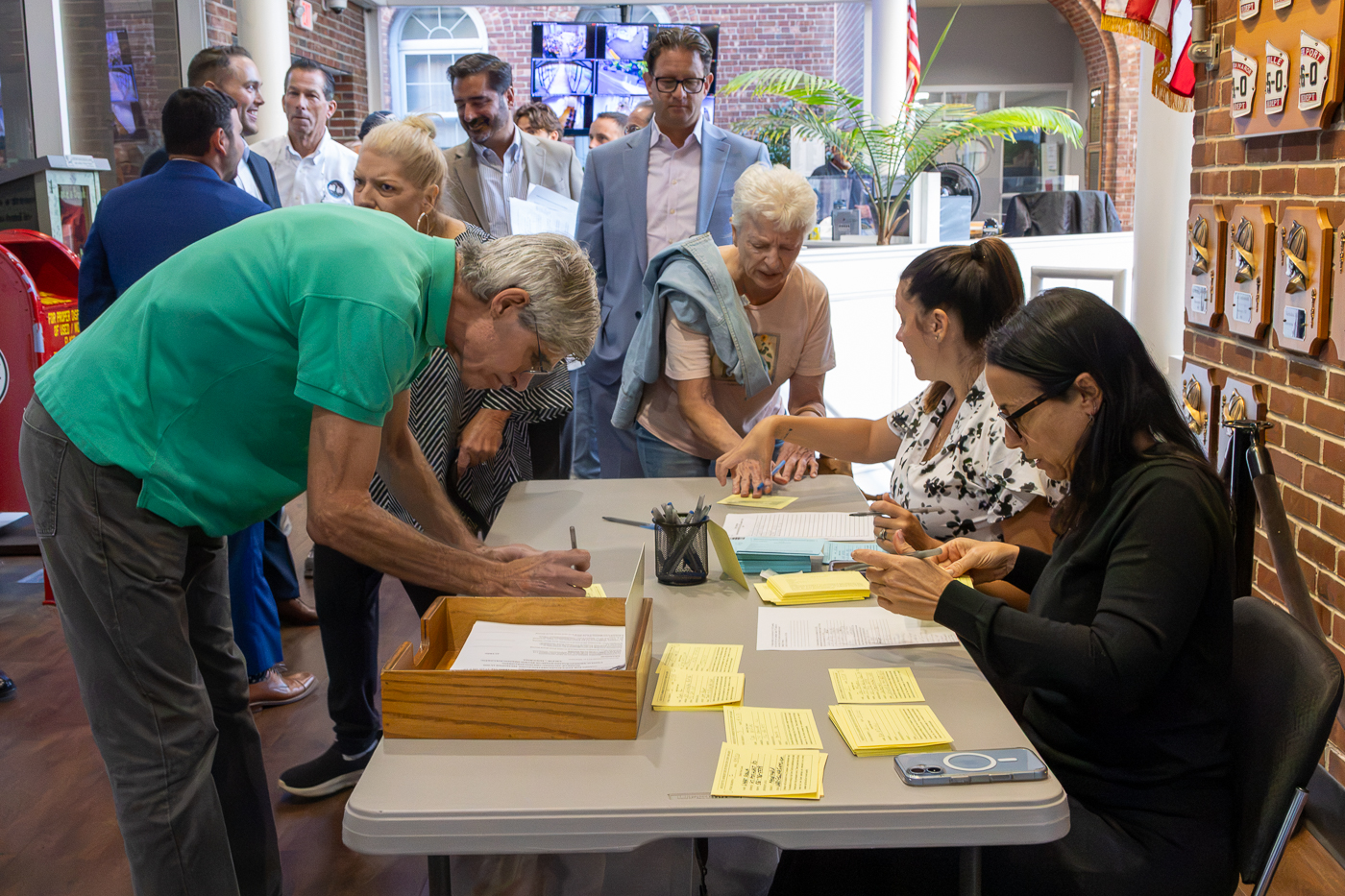
The public testimony was divided, although supporters substantially outnumbered opponents. By our count, 38 members of the public spoke about Cornerstone, with 28 supporting the development and 10 opposing it or raising significant concerns.
Supporters included young professionals, housing advocates, union representatives, business representatives and residents who argued Long Island’s housing shortage is making it increasingly difficult for younger generations to remain here.
Half Hollow Hills parent Chad Lerner told the Board:
“We cannot continue to say we want to preserve our communities while making it nearly impossible for the next generation to live here.”
Opponents and residents raising concerns focused on traffic, density, groundwater, parking, school district finances, potential tax incentives and the meaning of the “pause” written into the Melville Town Center zoning.
Half Hollow Hills Central School District Superintendent Dr. John O’Farrell told the Board:
“Please pause your consideration of future residential projects until such time as we can measure the actual real world impacts of the first 400 units on the Half Hollow Hills community.”
The hearing concluded without a final vote on the Cornerstone special use permit.
Tax Cap Takes Center Stage
The Town’s 2027 budget returned to the forefront during the public portion of the meeting, with residents weighing the impact of potential cuts against the cost of exceeding the state tax cap.
Lifelong Huntington resident Gail Lamberta spoke in support of exceeding the cap, pointing to inflation, positions the Town has left unfilled, efforts to streamline operations and the relatively small portion of residents’ overall property tax bills controlled by the Town. She also argued that eliminating events and programs could have economic consequences by reducing tourism and activity that support local businesses.
“You have taken the initiatives to streamline processes that reduces staffing needs. You’ve secured grants to fund capital projects and equipment, as well as programs and services. You don’t have anywhere else to go at this point.”
Joe Dragone, a Huntington resident who said he spent 56 years as a teacher and school district chief financial officer, urged the Board to protect services for vulnerable residents while continuing to look for savings, fee adjustments and other ways to reduce the burden on taxpayers.
Minutes after the public portion concluded, the Town Board took up Resolution 2026-484 and voted 3-2 to enact Local Law 26-2026, authorizing the Town to override the tax levy limit.
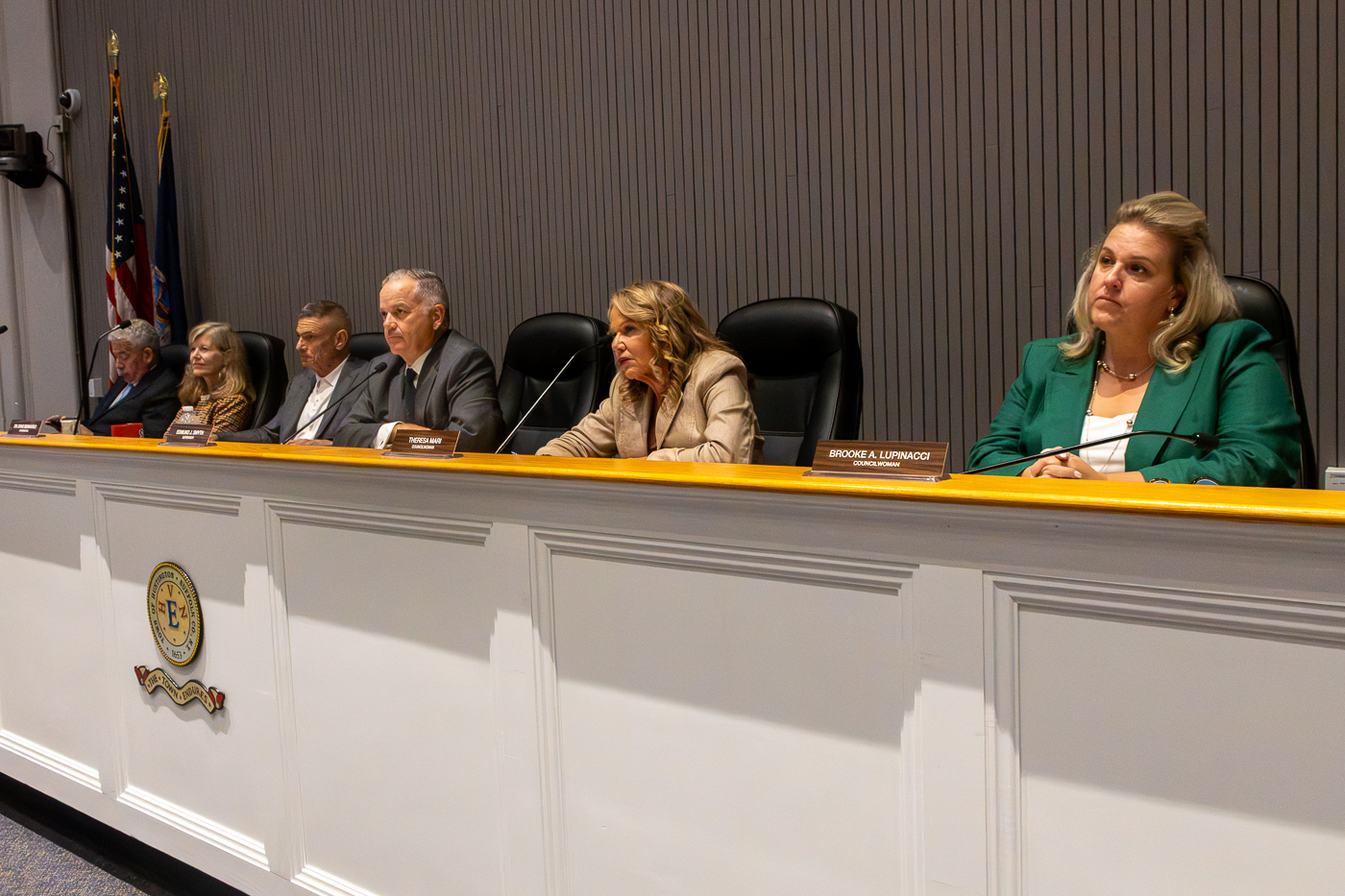
Before casting her yes vote, Councilwoman Theresa Mari explained that authorizing the override does not commit her to supporting the final budget.
“We are not passing a budget this evening. All we are doing is making sure that all of the tools are at our disposal and remain viable.”
The adopted law gives Huntington the legal authority to exceed the state tax cap during the 2027 budget process. How much the Town ultimately levies, what spending reductions are made and what the final 2027 budget looks like remain to be determined.
For more on Huntington’s 2027 budget process, read Huntington Matters’ coverage of the Town Board’s previous budget meetings:
Huntington Faces $16 Million Budget Gap as Town Begins 2027 Budget Talks
Huntington Weighs Cuts as 19% Tax Increase Enters Budget Talks
Jennifer Hebert’s “Let’s Talk, Huntington” Brings Budget, Safety and Spending Questions to Harborfields
Huntington Matters has been following the 2027 budget process from the beginning and will continue covering the decisions ahead. Supervisor Ed Smyth also discussed the Town’s budget challenges and tax cap in depth during his recent appearance on the Huntington Matters Weekly Update Podcast.
Photography by Dana E. Richter