

NORTHPORT, NY – September 27, 2026
The Great Cow Harbor 10K Run: The Runners, Volunteers and Community Behind Northport’s Race
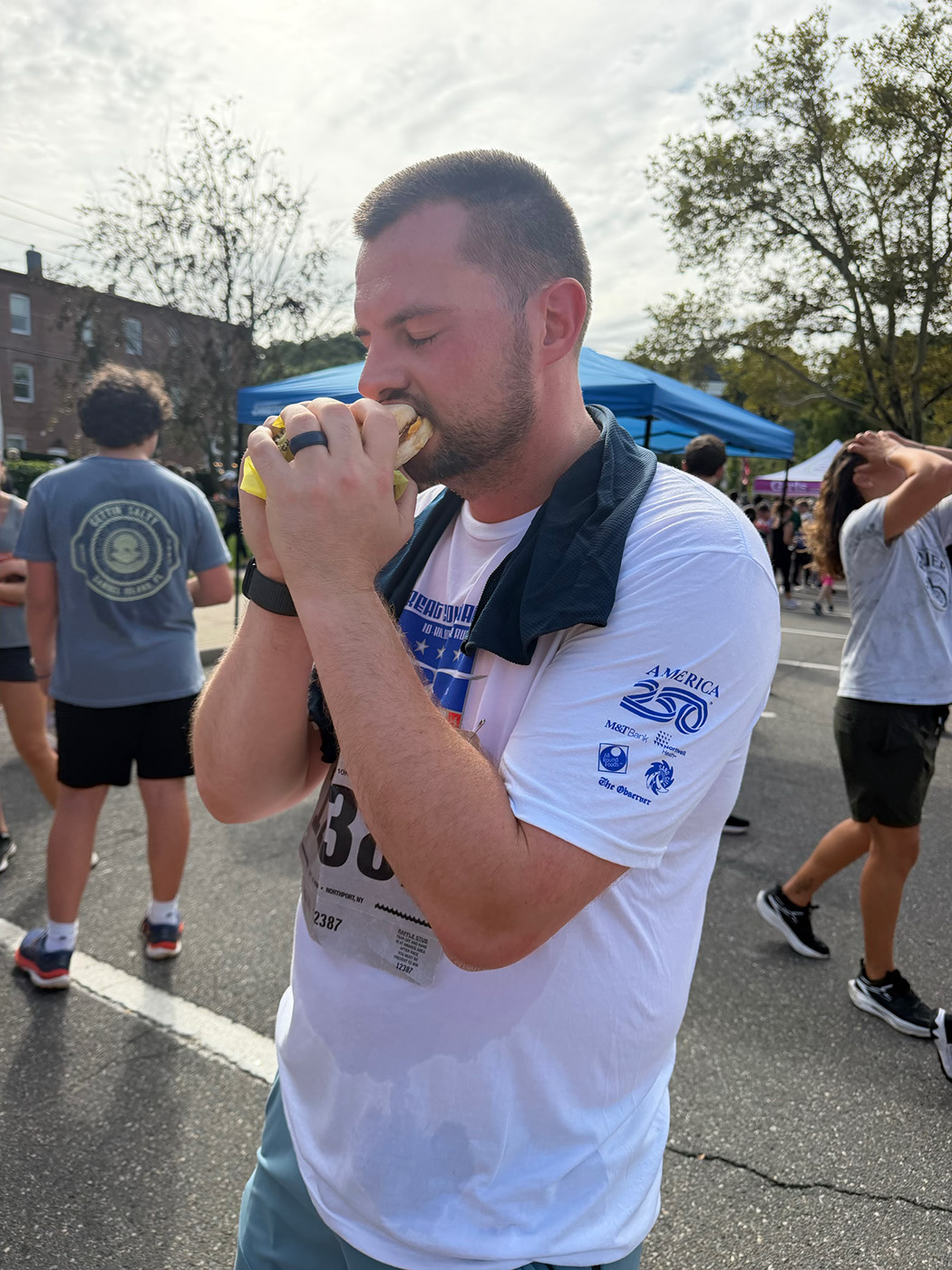
By the time Tyler Cobe reached Waterside, he was exhausted and pushing himself to keep going. Then he spotted a neighbor handing out McDonald’s Egg McMuffins and found something worth getting to the finish line for.
“So, me being me, I ran to that side and I grabbed the McMuffin, looked at it, and thought to myself … ‘Wow, this is going to be really, really good in about a half hour.’”
He tucked the sandwich into his pocket and kept running. Breakfast would have to finish the race with him.
“And after the race, that was the first thing I did was eat an egg McMuffin in the parking lot,” Cobe said.
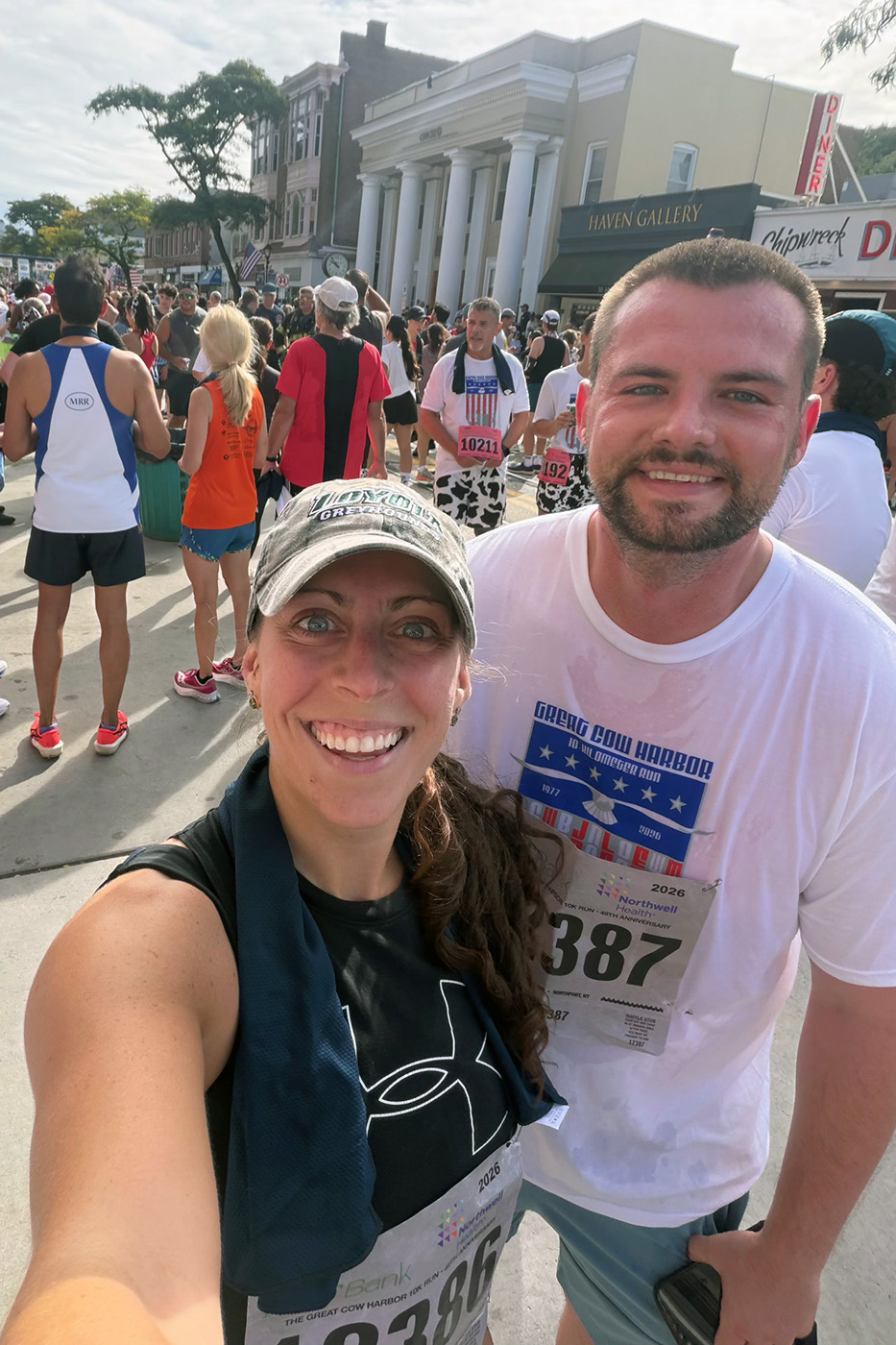
A Northport resident and Legislative Aide to Suffolk County Legislator Stephanie Bontempi, Cobe was back for his second chance at The Great Cow Harbor 10K Run with his wife, Katie. They started together but ran at their own paces. Katie, a passionate runner, finished in 54:44.58, nearly 12 minutes ahead of him.
It was an unexpected bit of neighborhood hospitality, and a really memorable example of what he enjoys about Cow Harbor. From recognizing people he grew up with at bib pickup to seeing friends and family along the course, the weekend brings his community together.
“It’s all positive energy all weekend long,” he said. “I think that’s kind of what gets me to sign up for it, knowing the rush that you get and the camaraderie between everybody.”
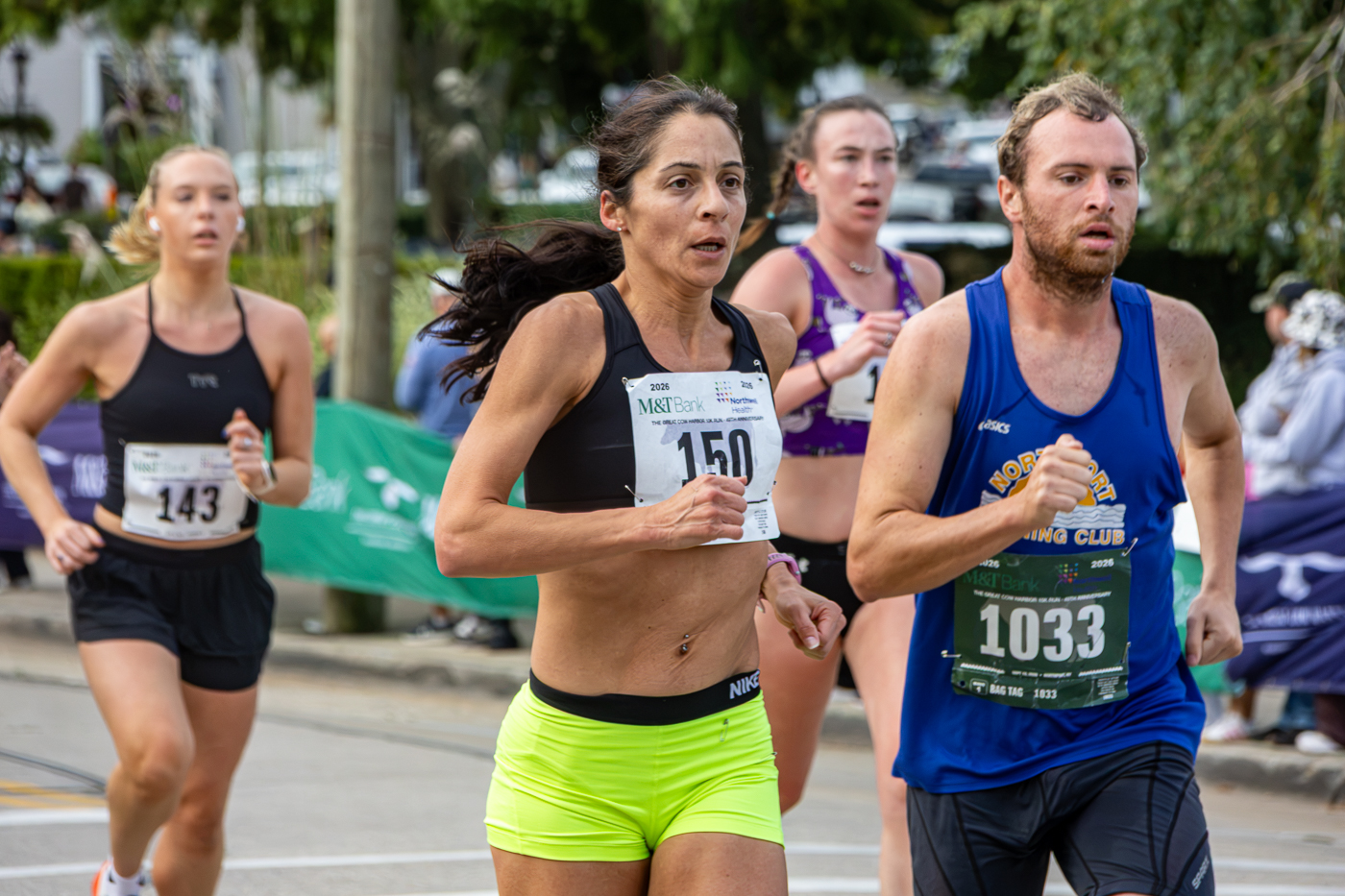
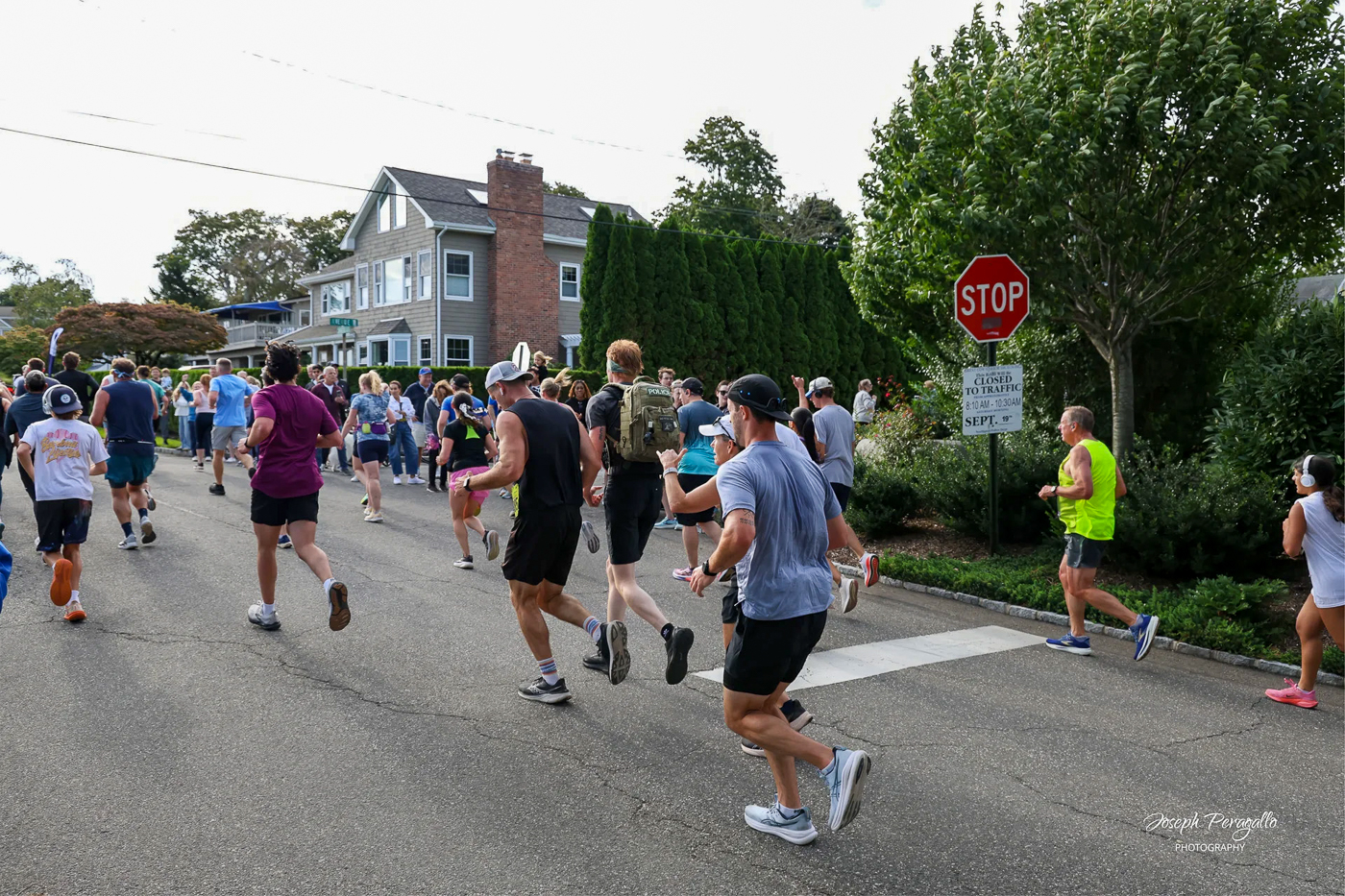
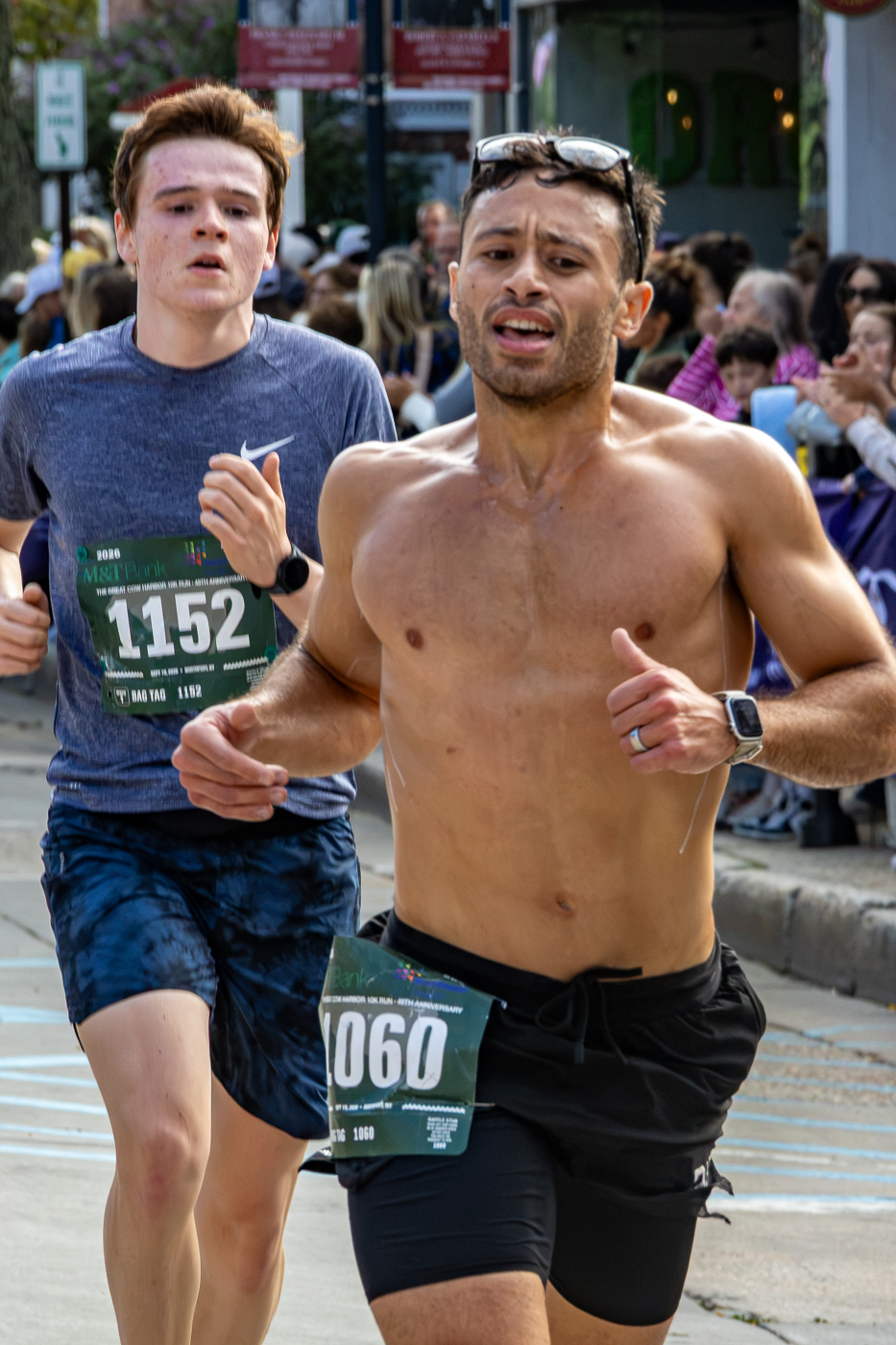
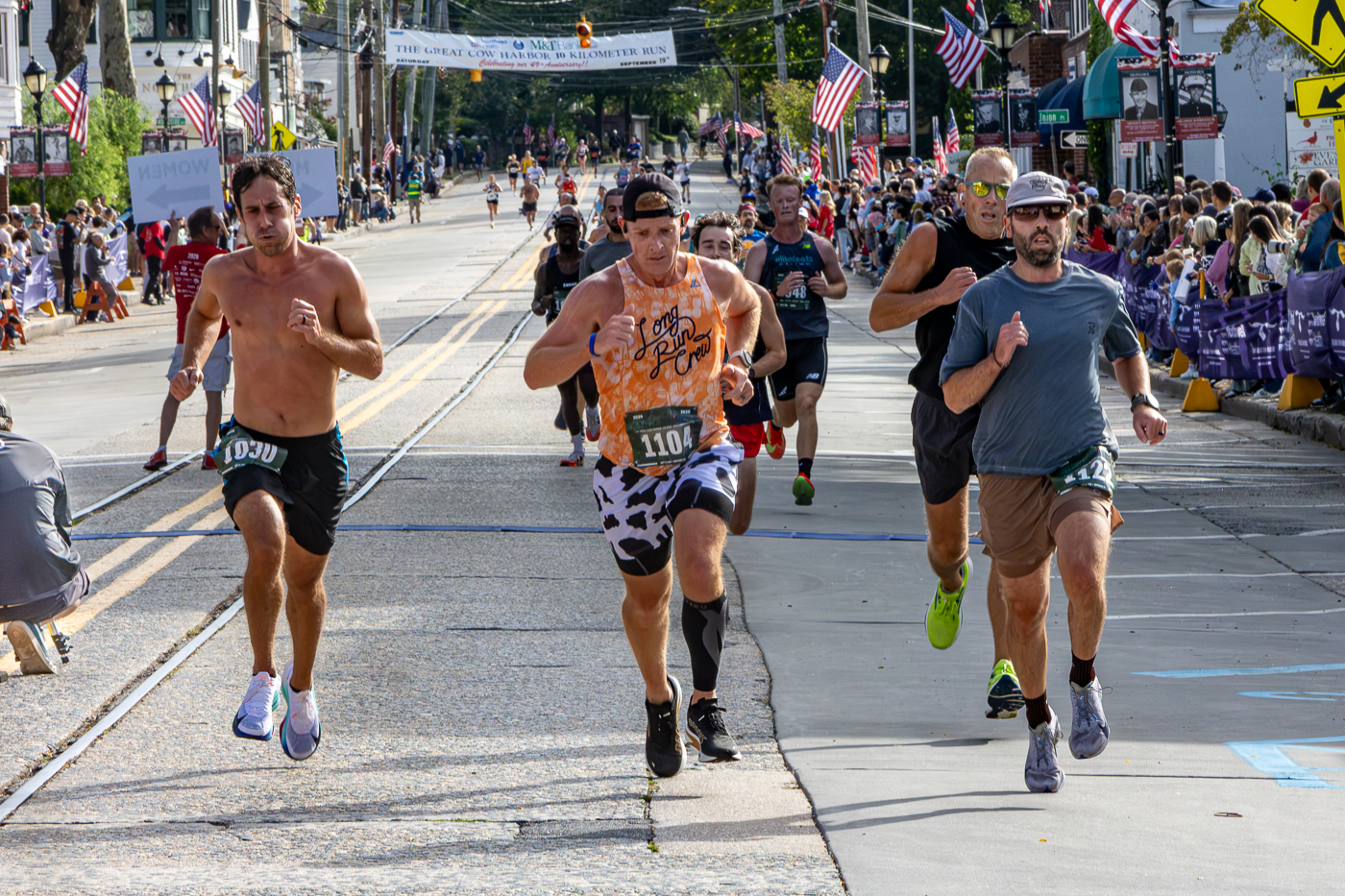
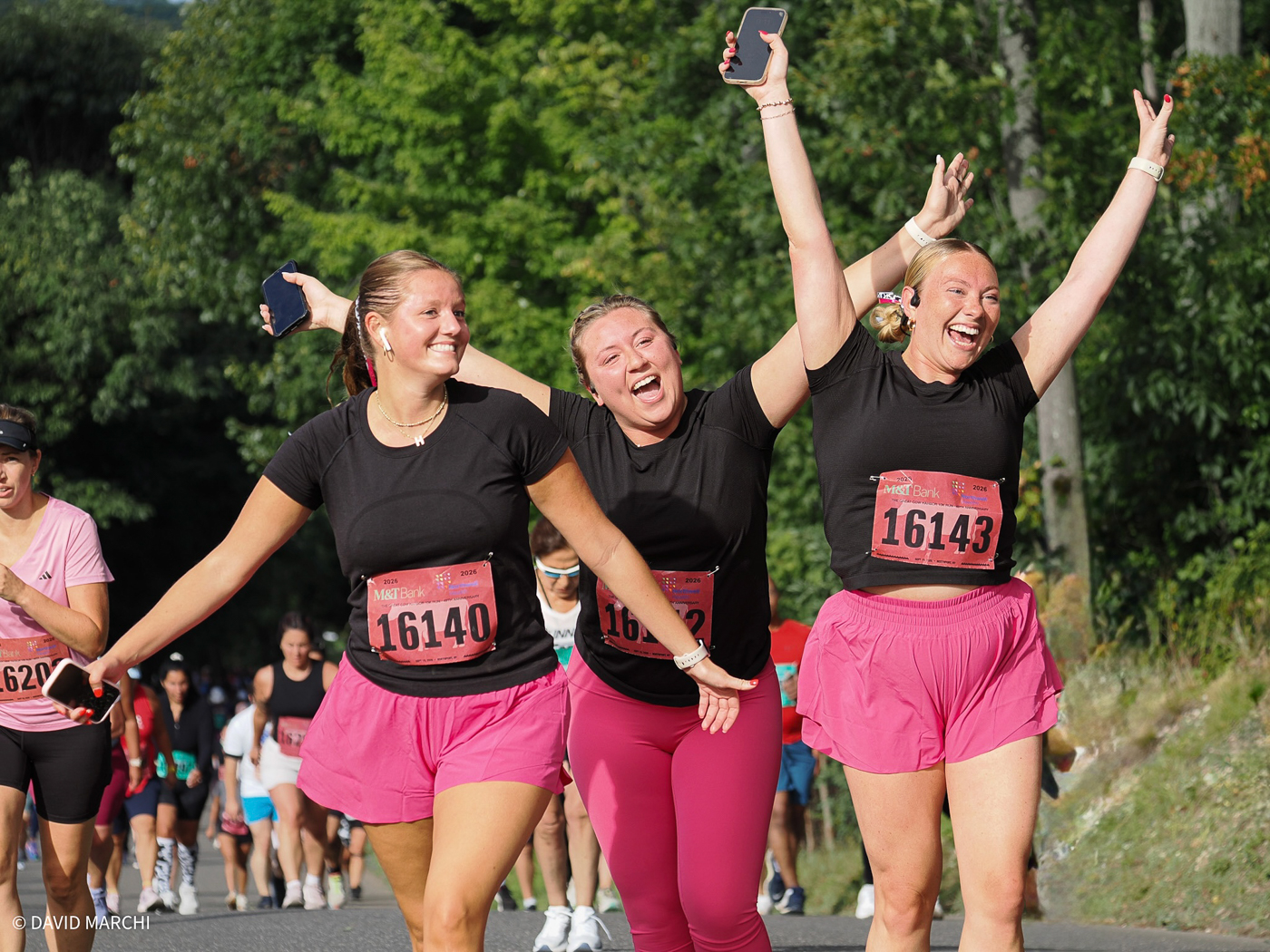
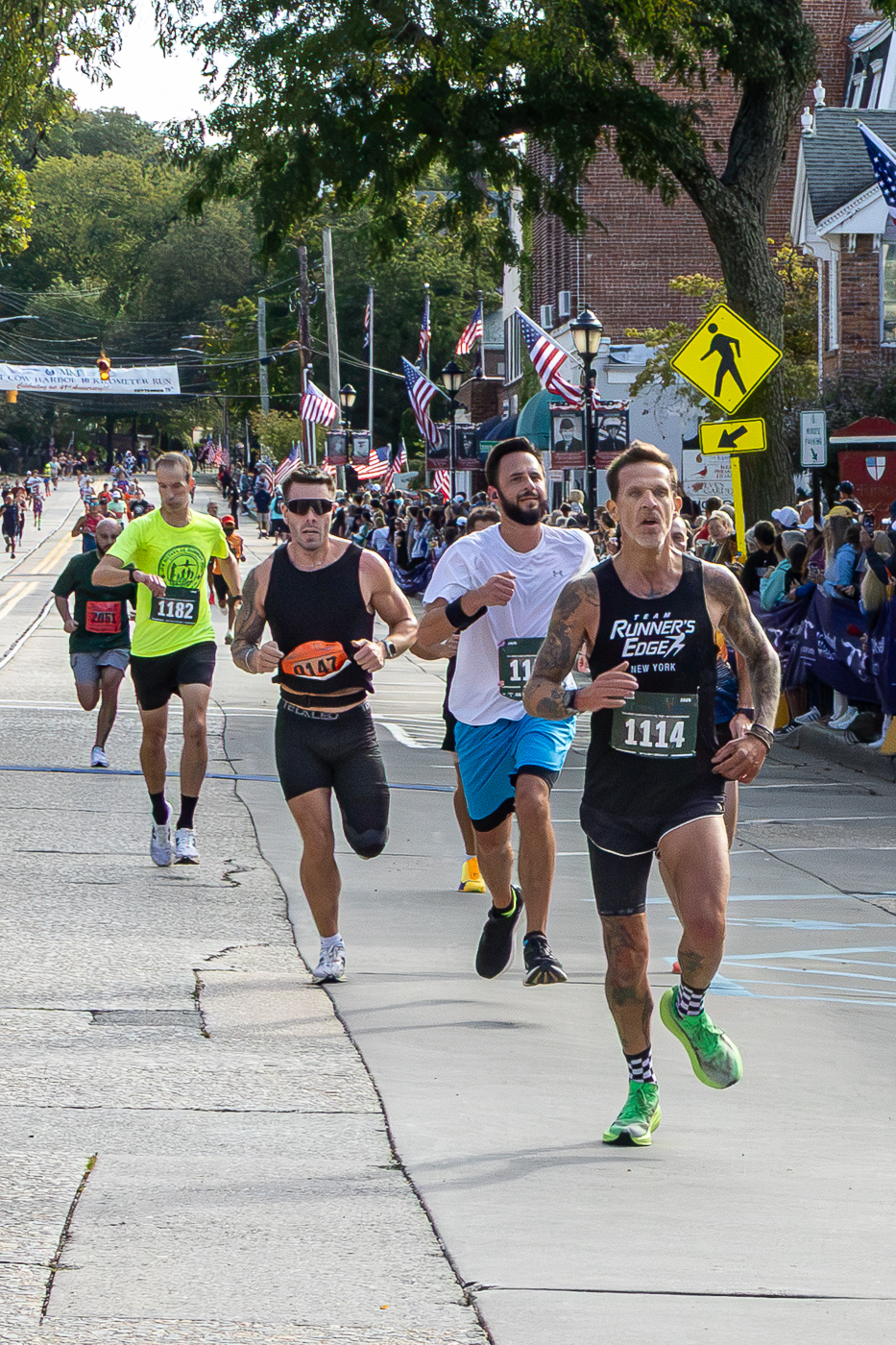
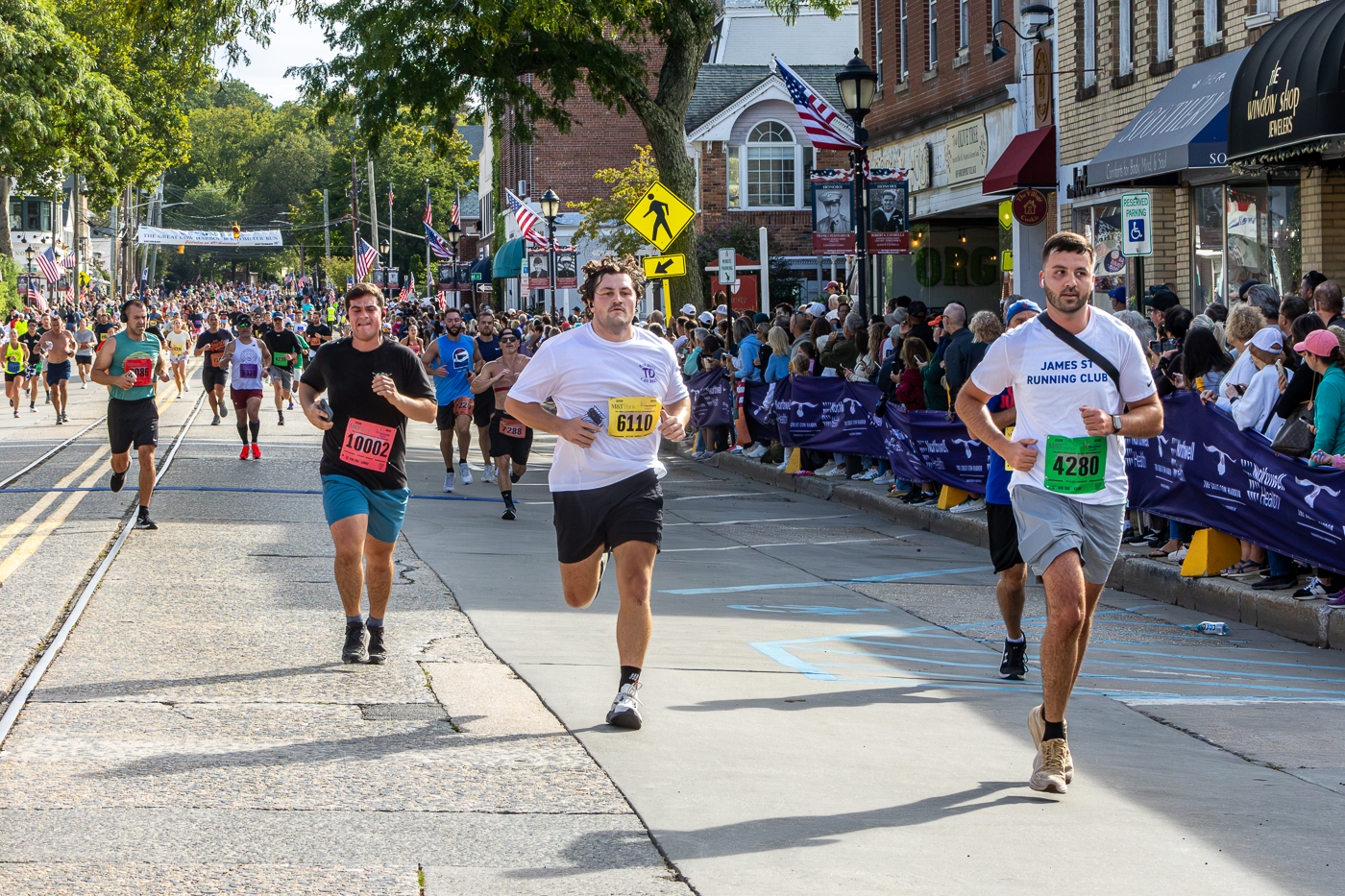
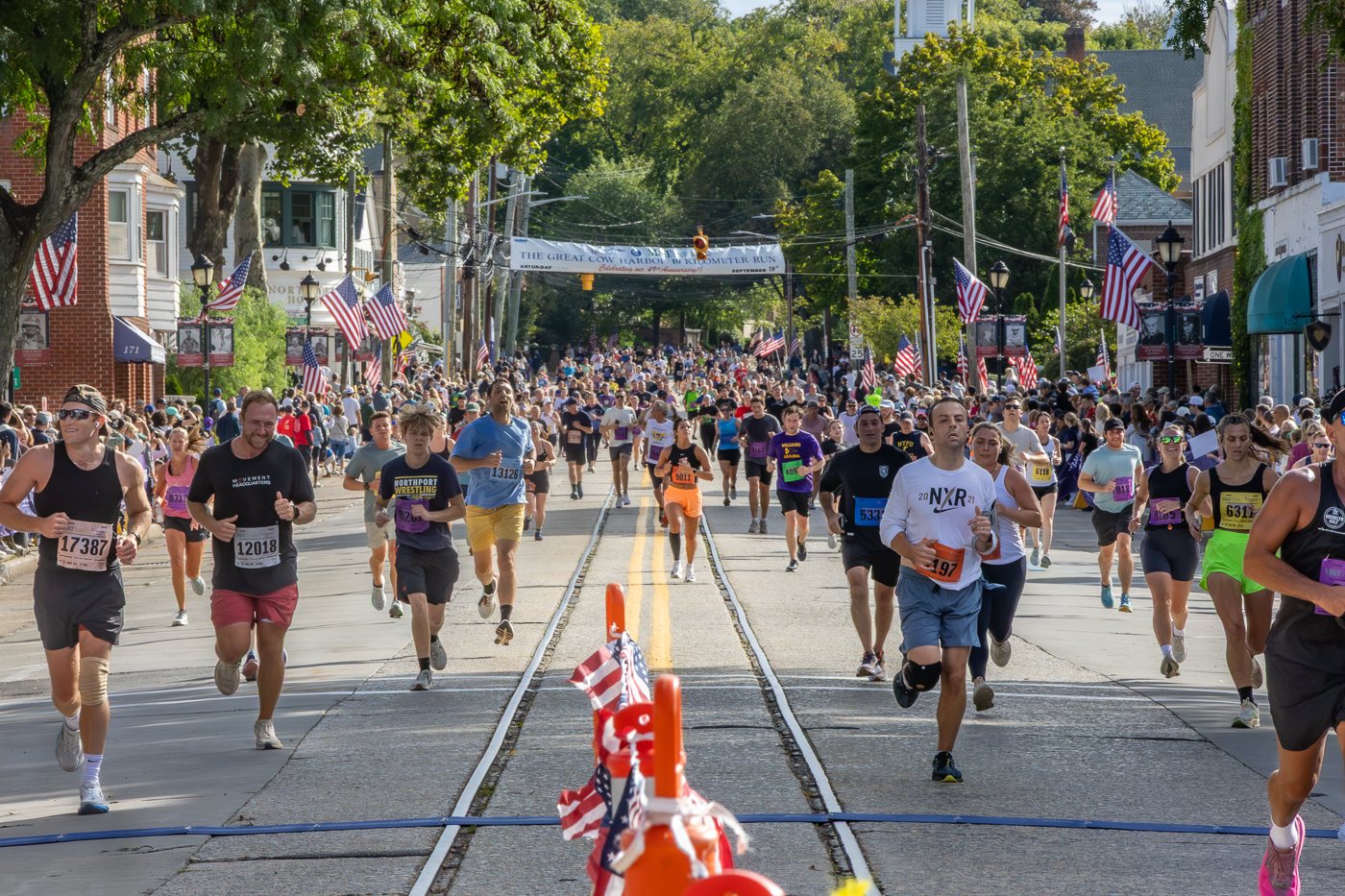
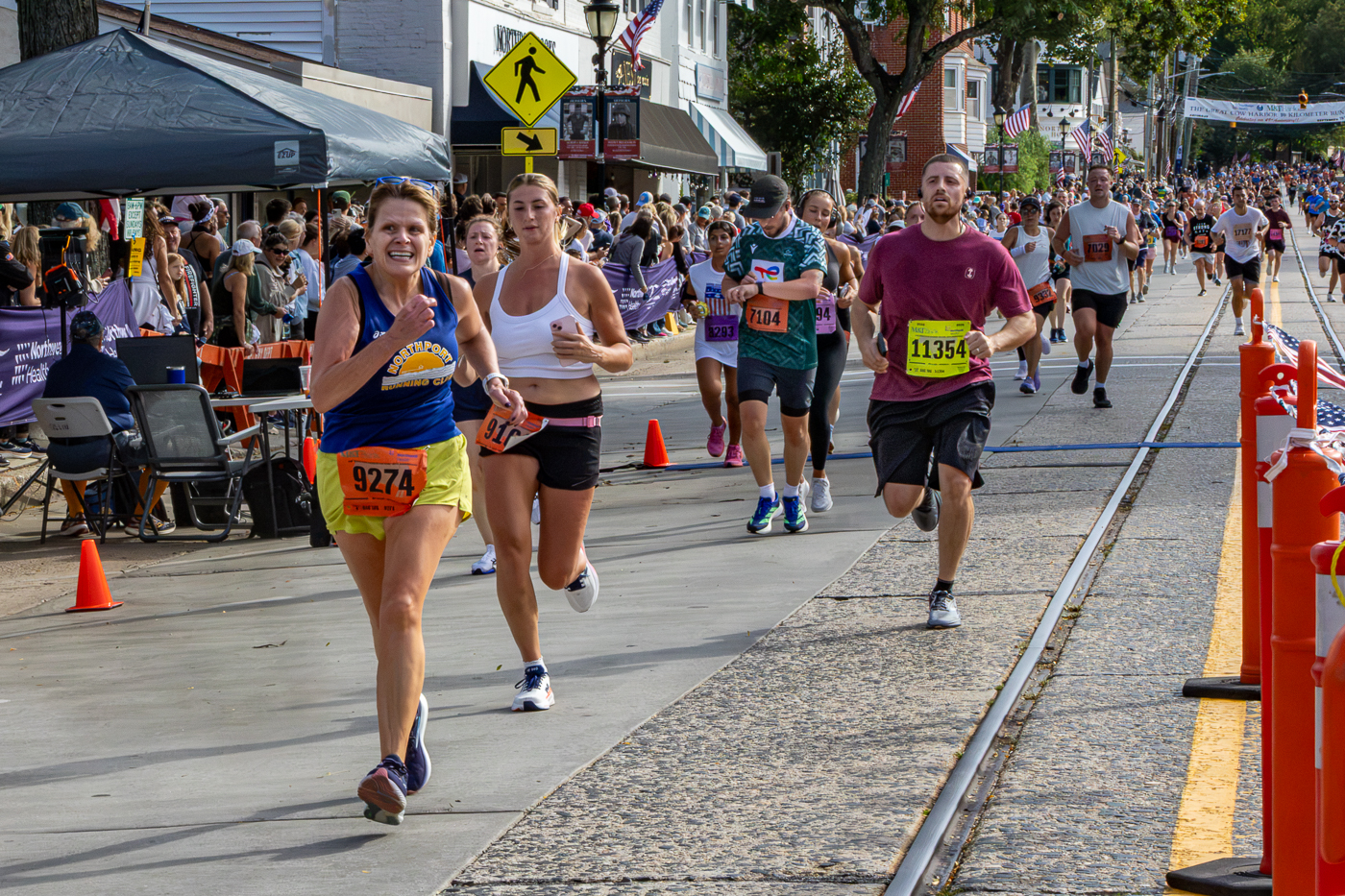
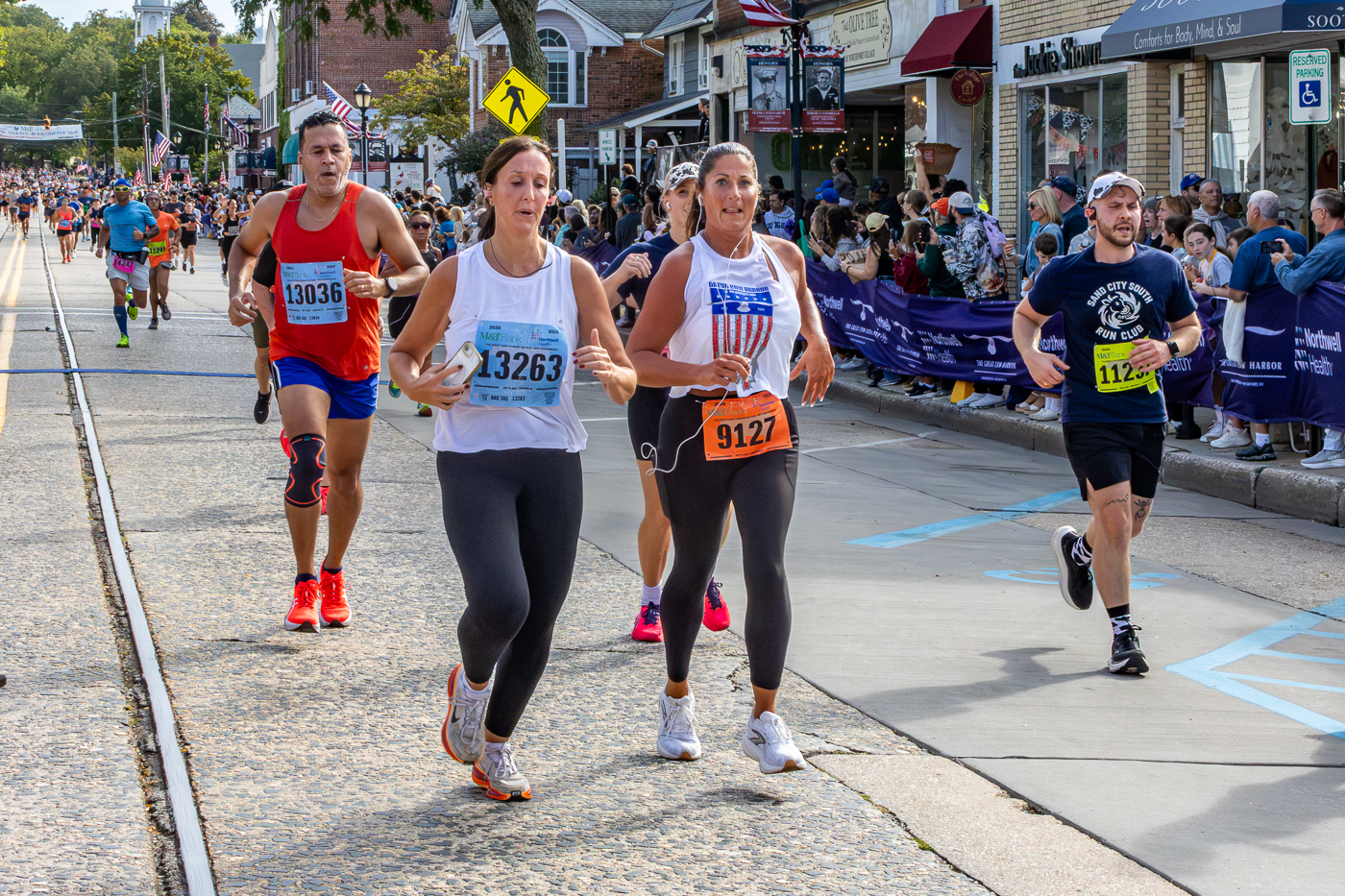
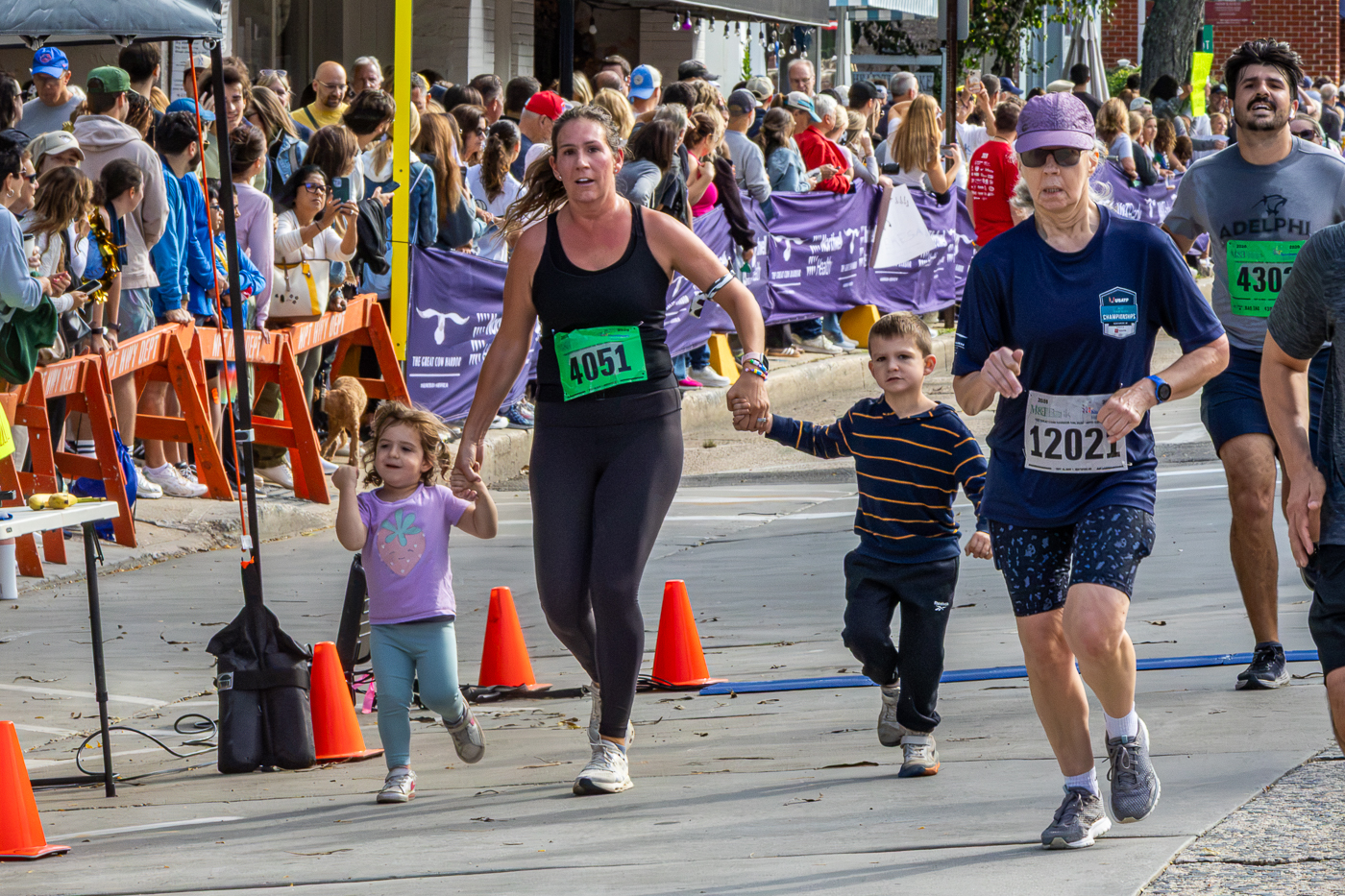
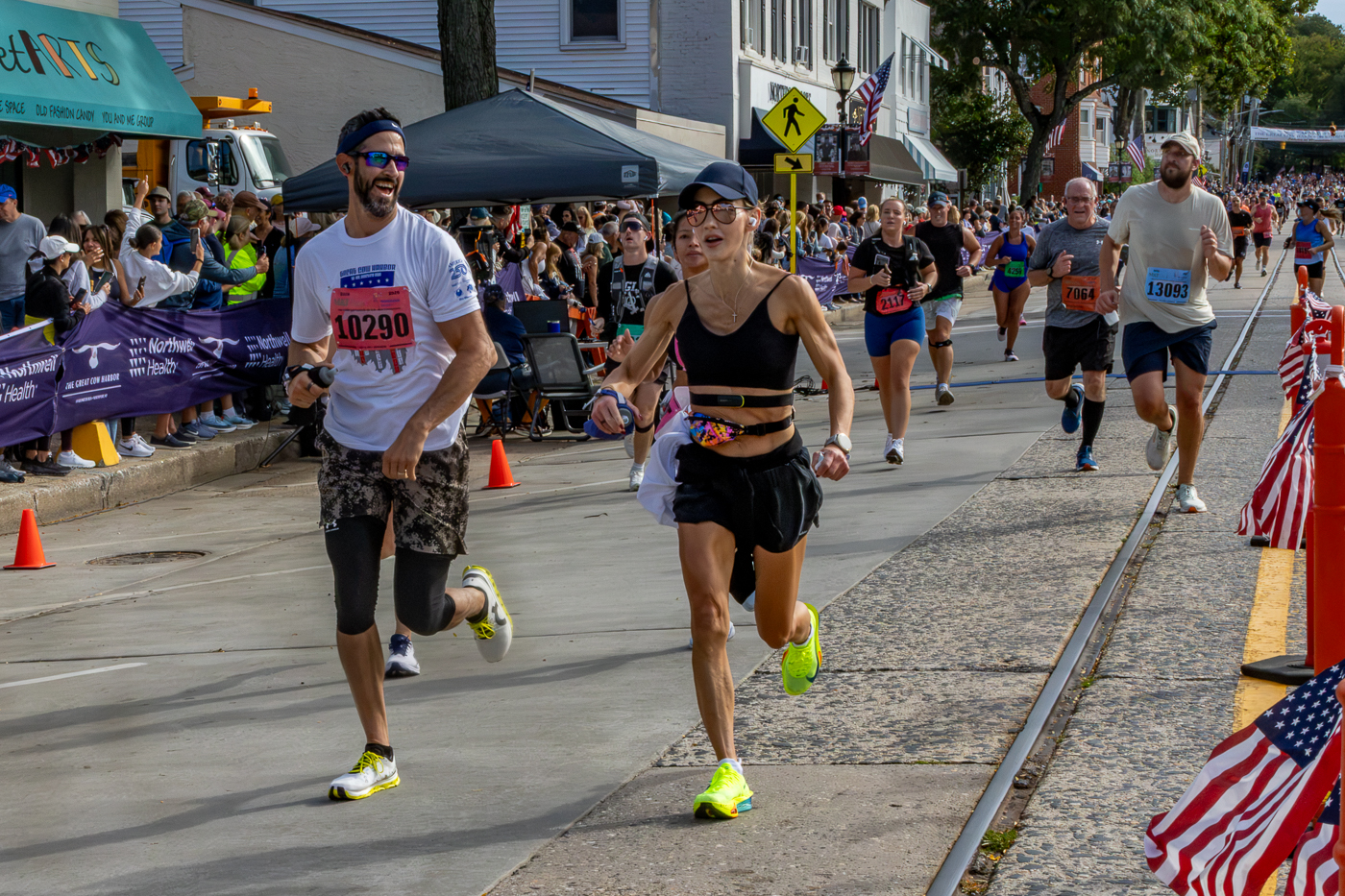
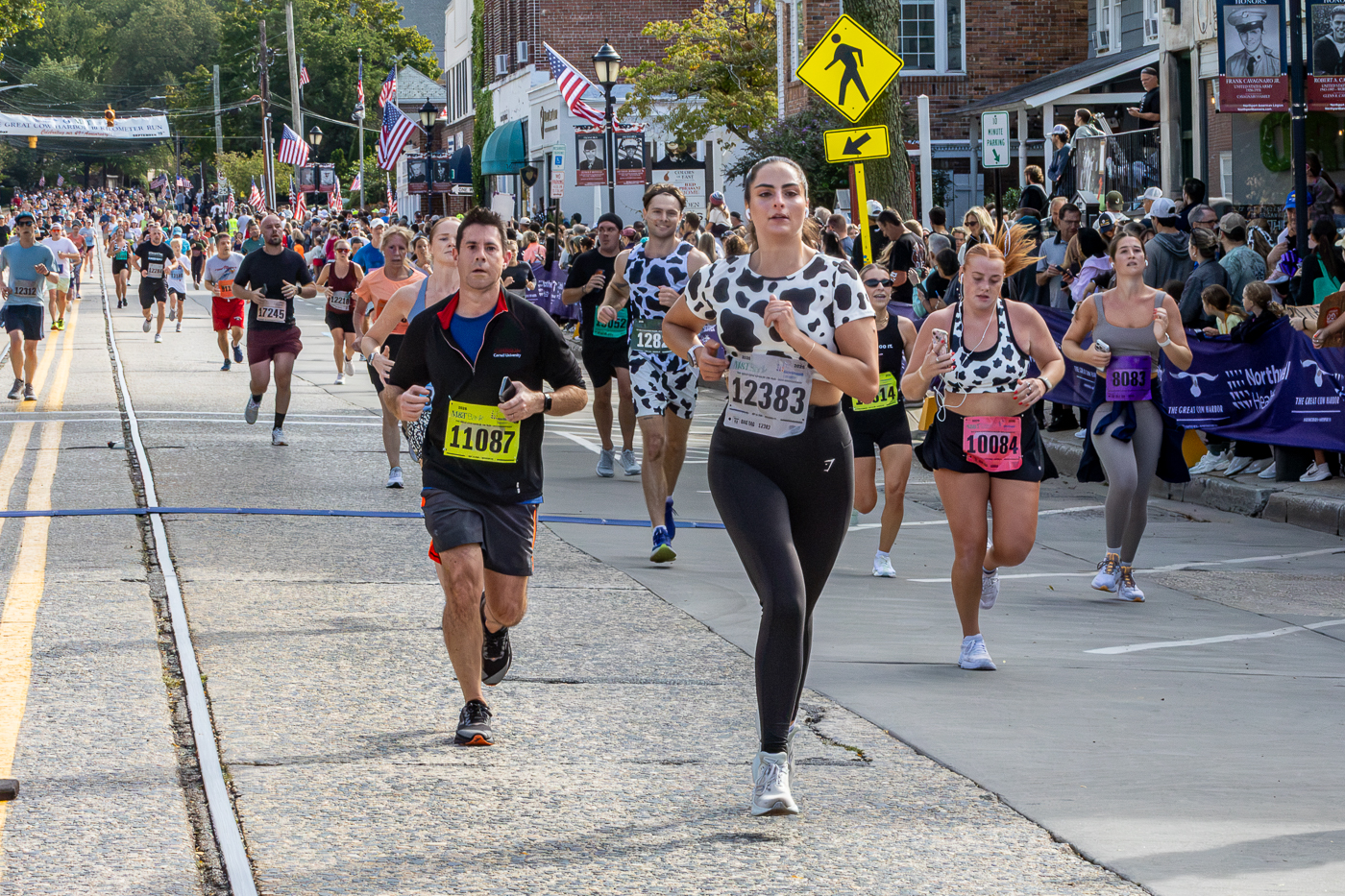
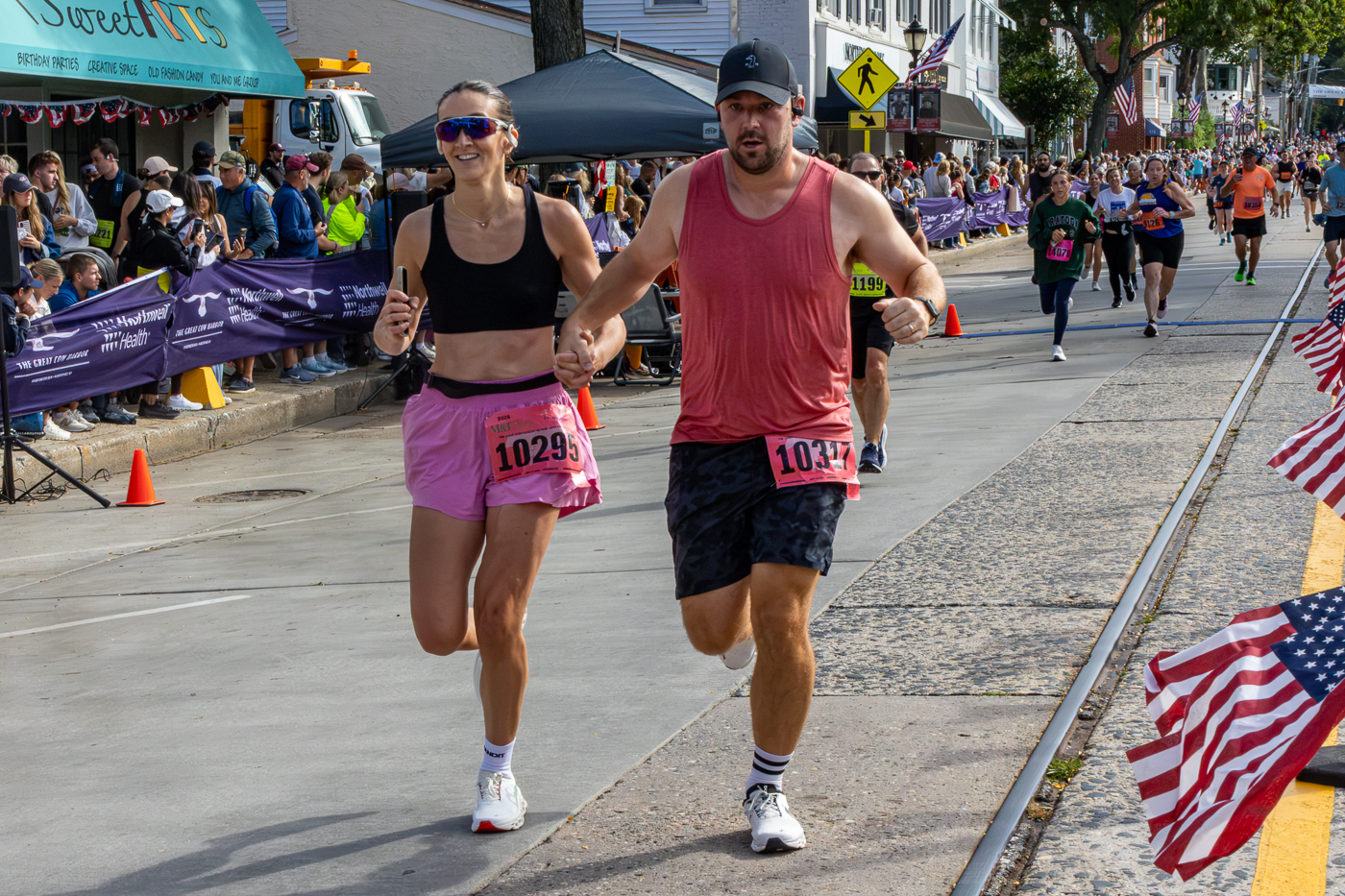
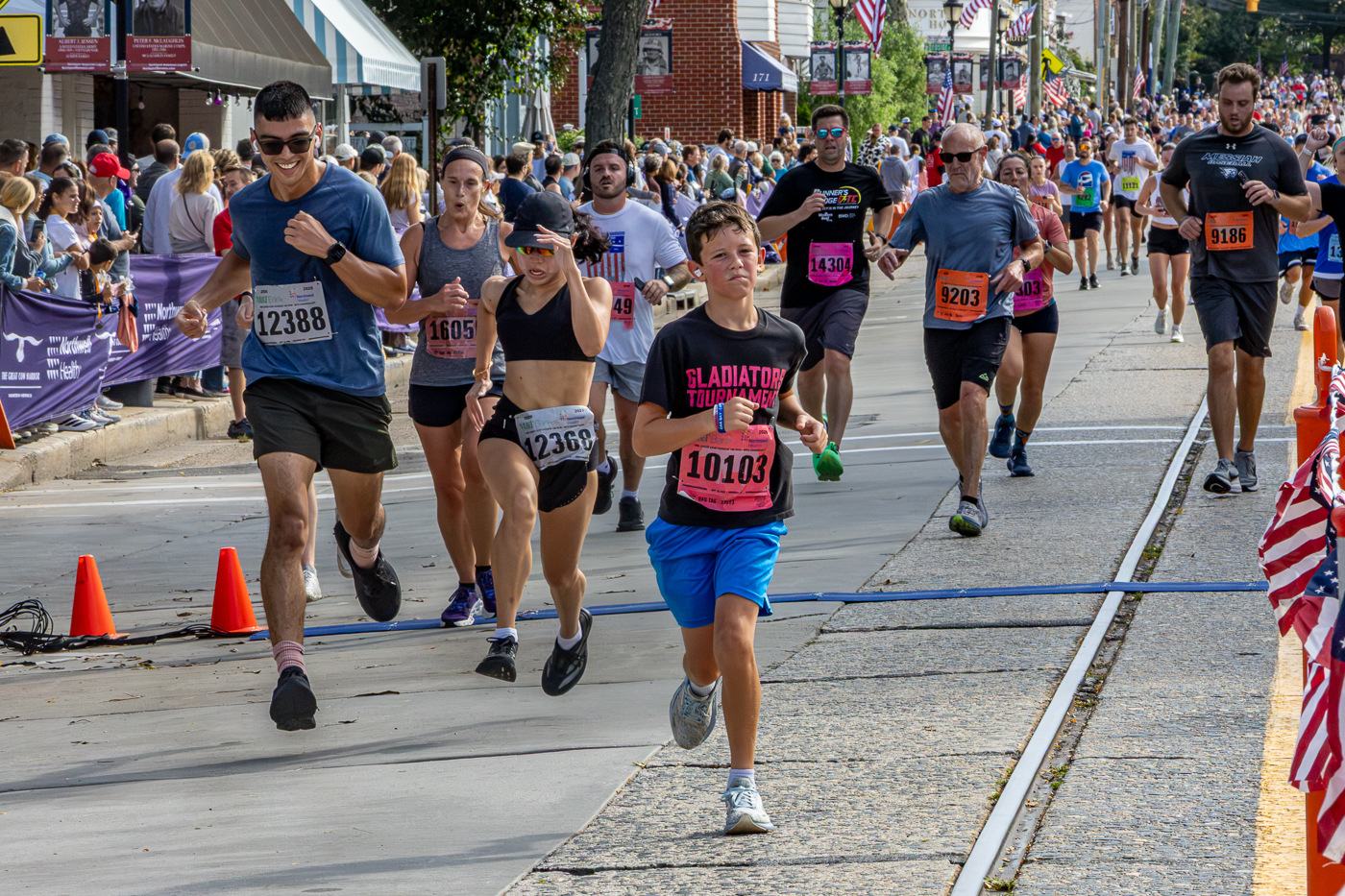
That feeling reaches well beyond the people who live here. At the Great Cow Harbor 10K Run on September 19, 2026, in Northport, visiting athletes, local runners and longtime volunteers described their own reasons for returning. The competition matters, and so do the people who make the experience possible.
A local race with a national draw
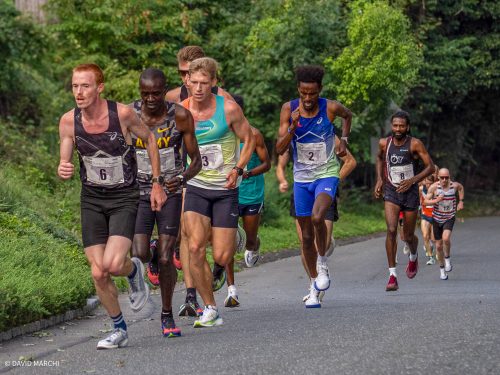
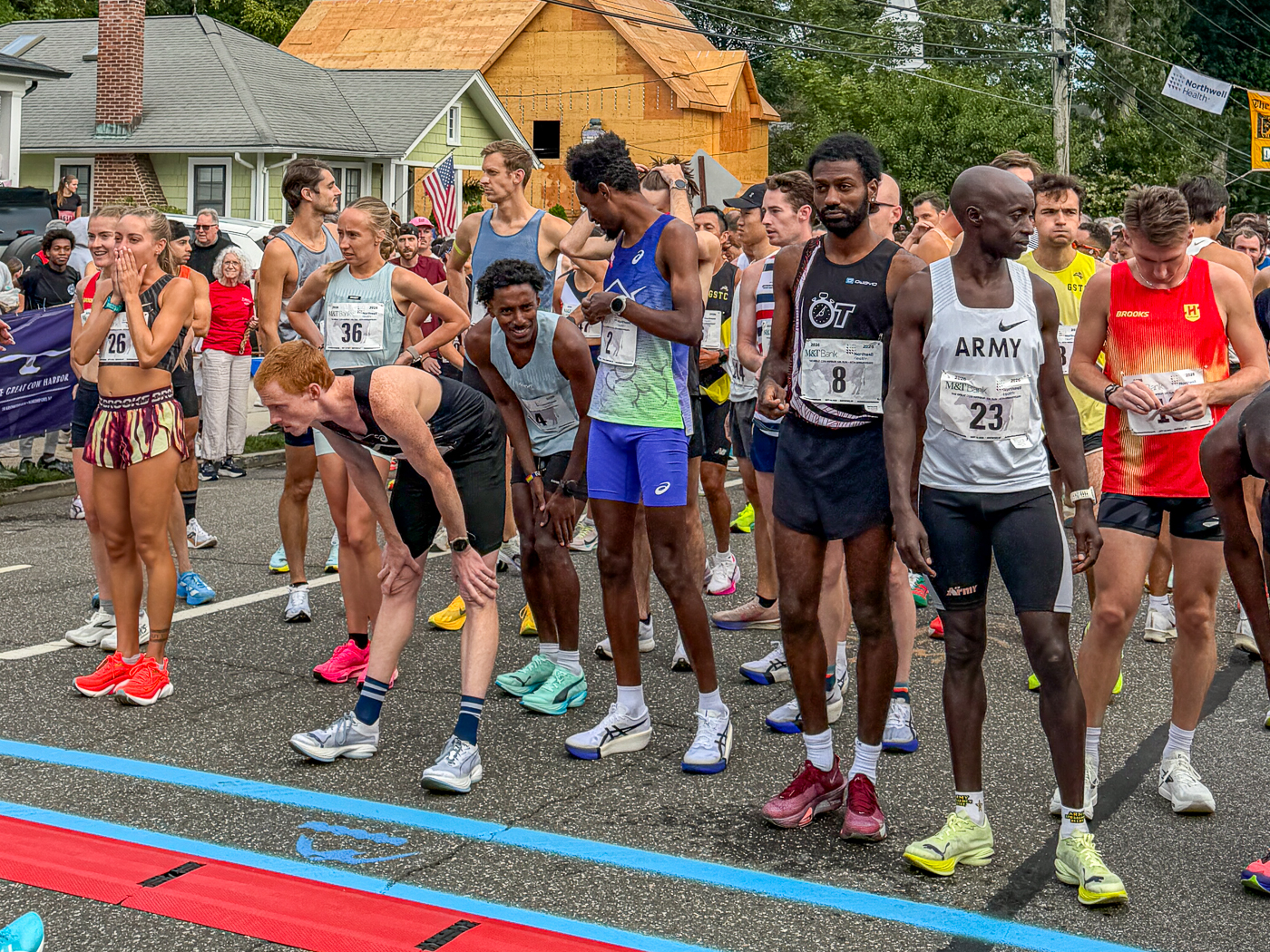
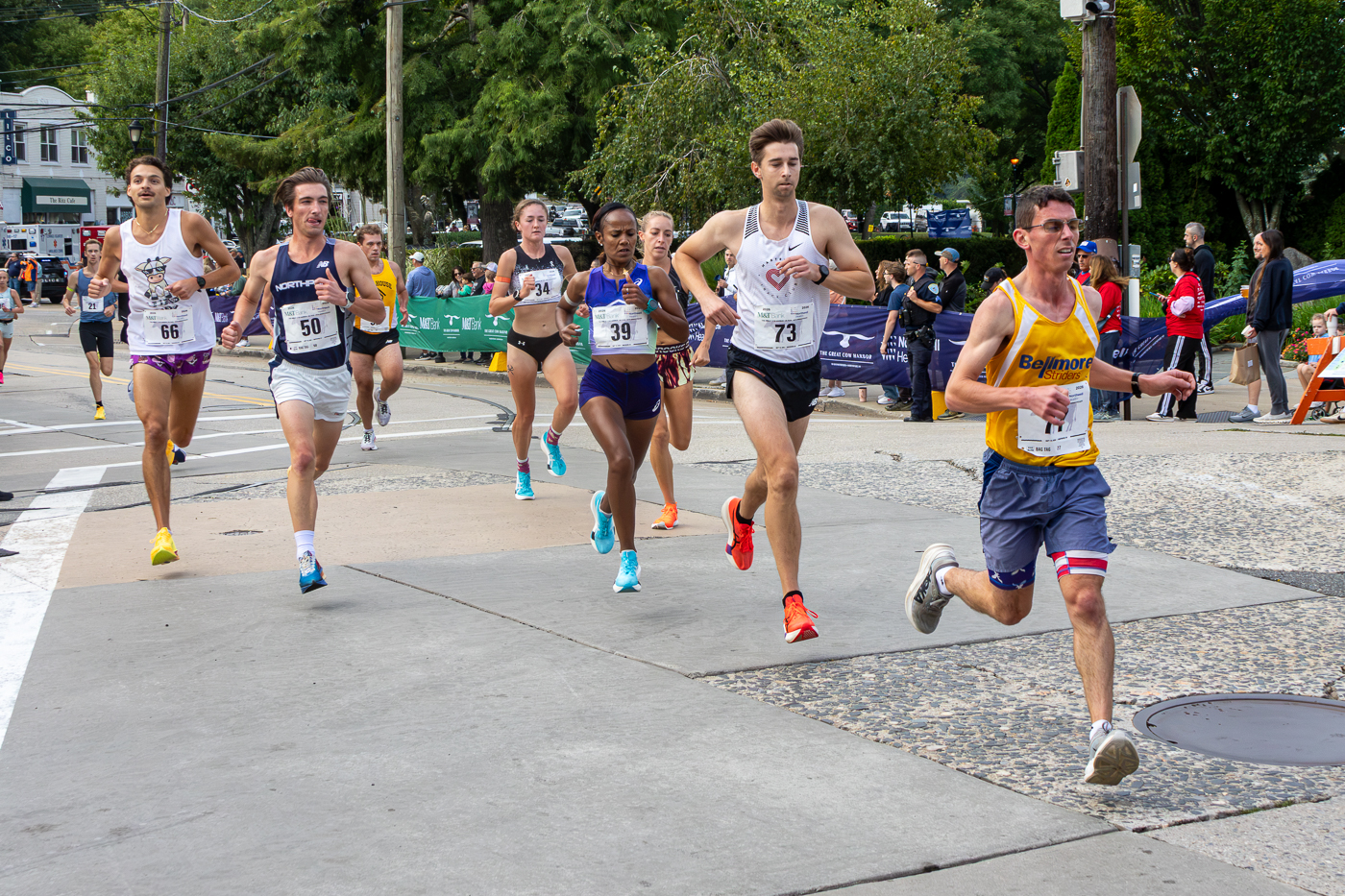
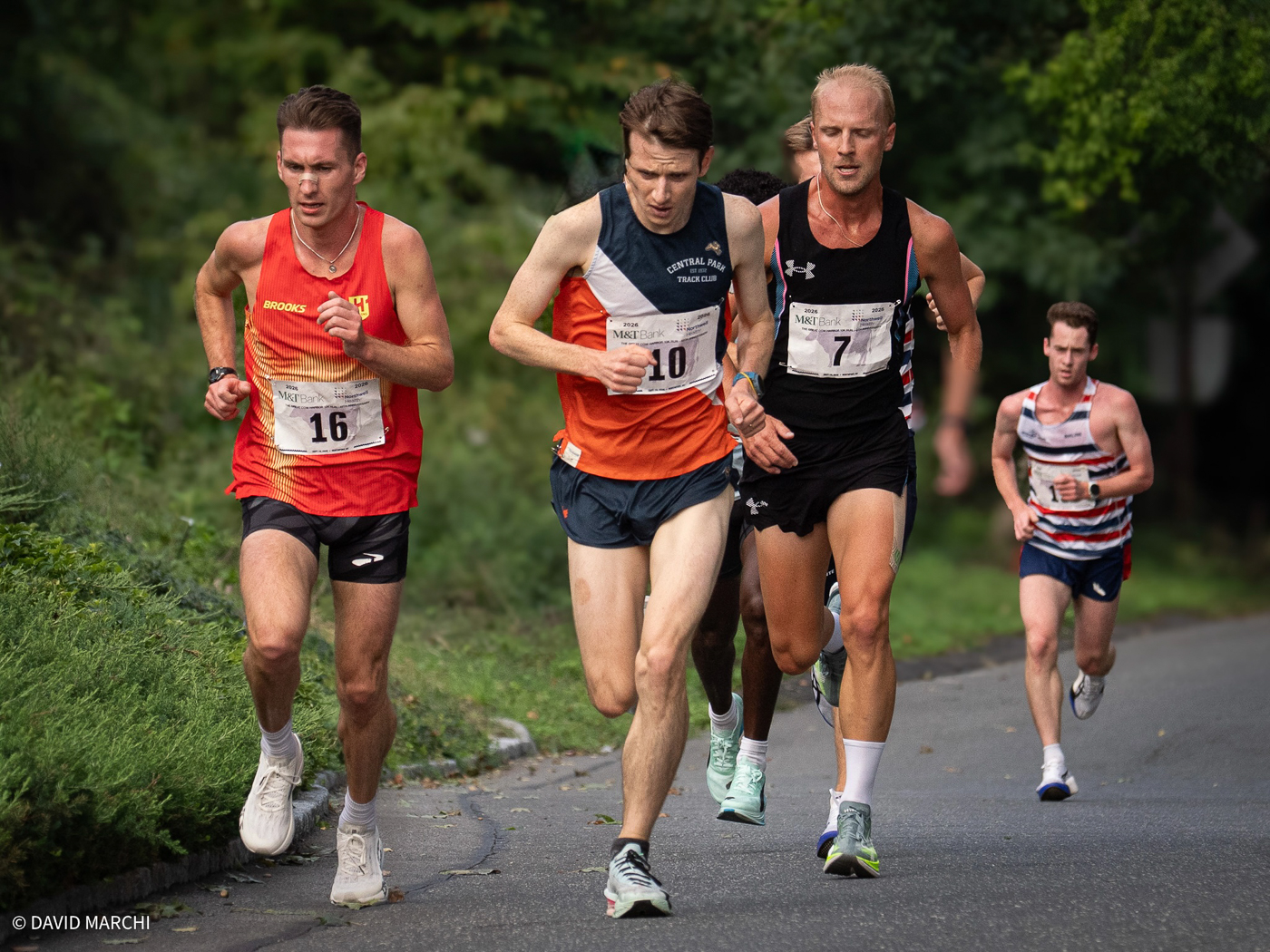
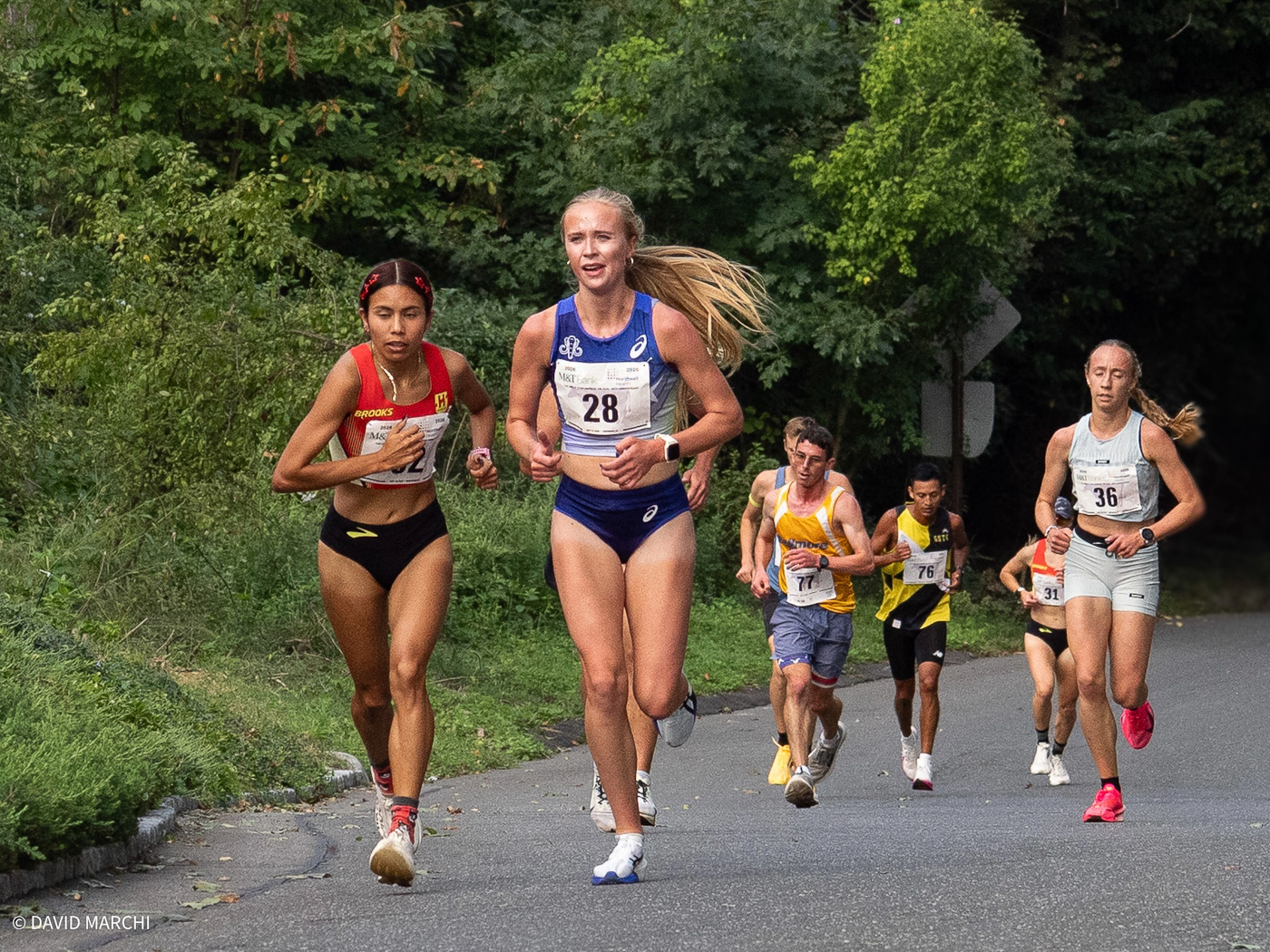
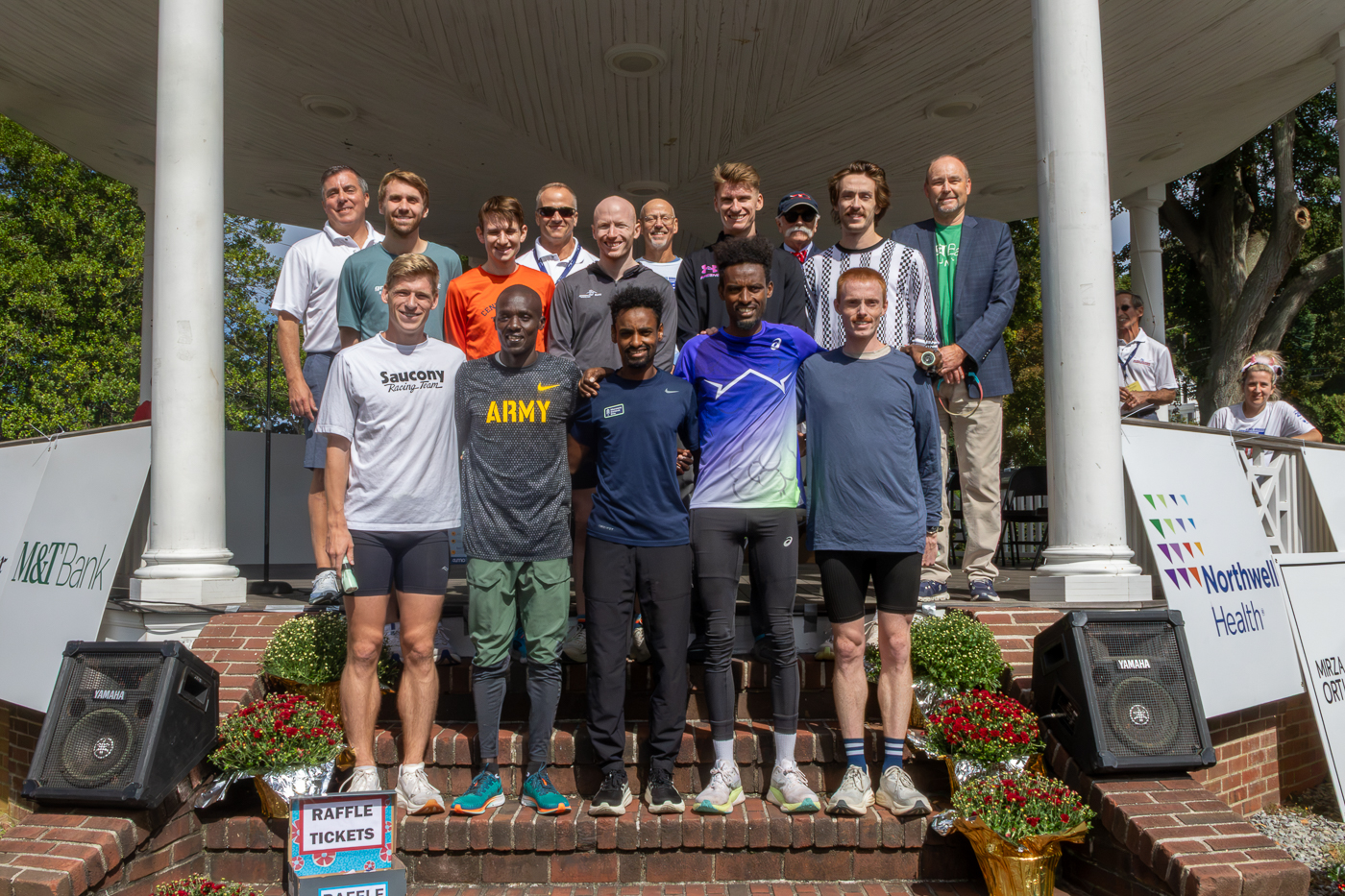
This year’s field brought runners from across the country to Northport. The men’s top ten included athletes based in Chicago, Colorado Springs, Minnesota, Arizona, South Carolina, Washington, D.C., and New York City. The women’s leaders included runners from Colorado, Iowa, Michigan, California and Utah, along with Long Island’s own Sag Harbor.
For those athletes, Cow Harbor is a destination race: a chance to compete against a strong field on a really tough course, with a town turning out to watch. For Northport, it means not just supporting their neighbors but welcoming people who have traveled from all over the country to run the streets that residents call home.
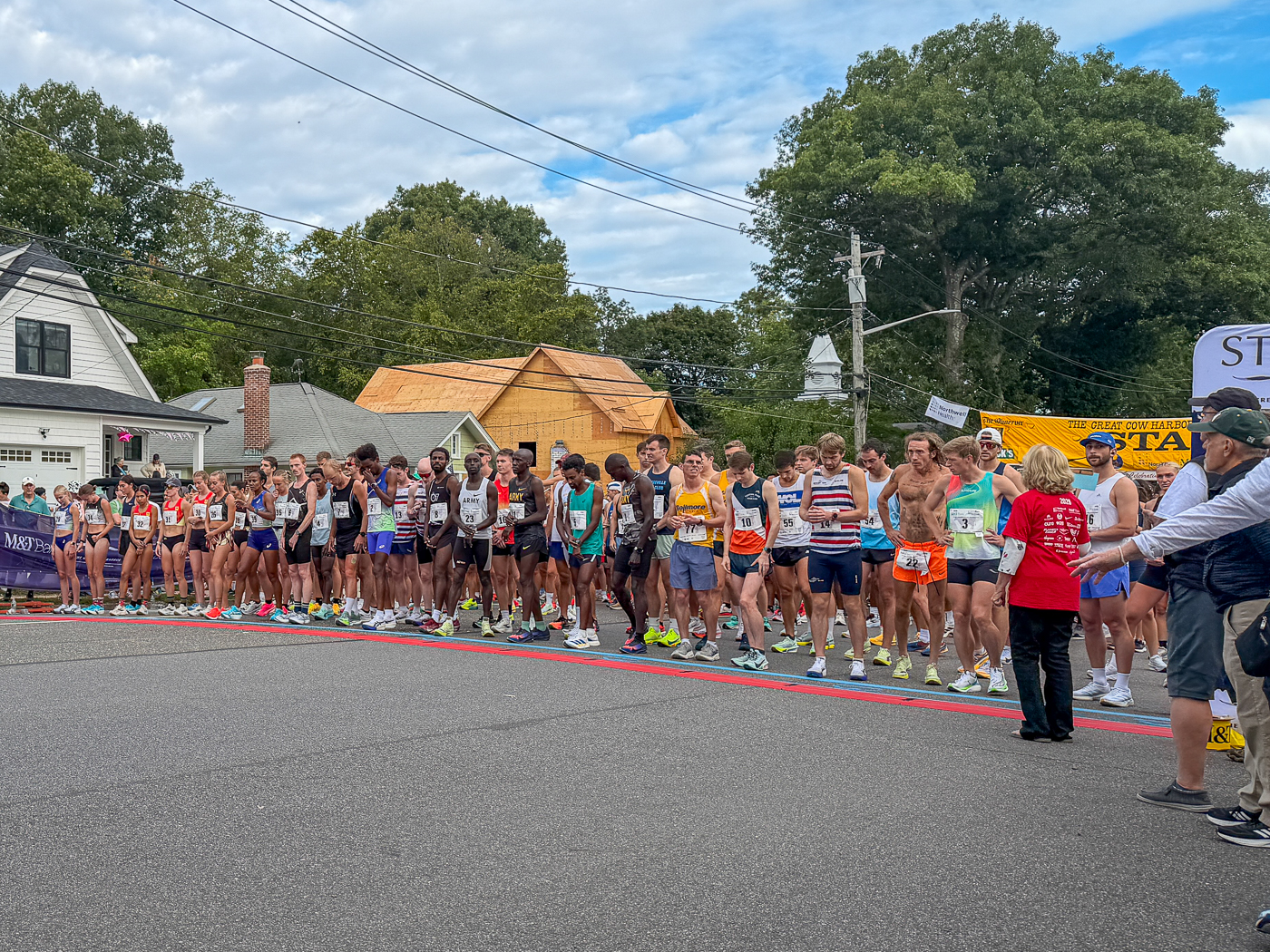
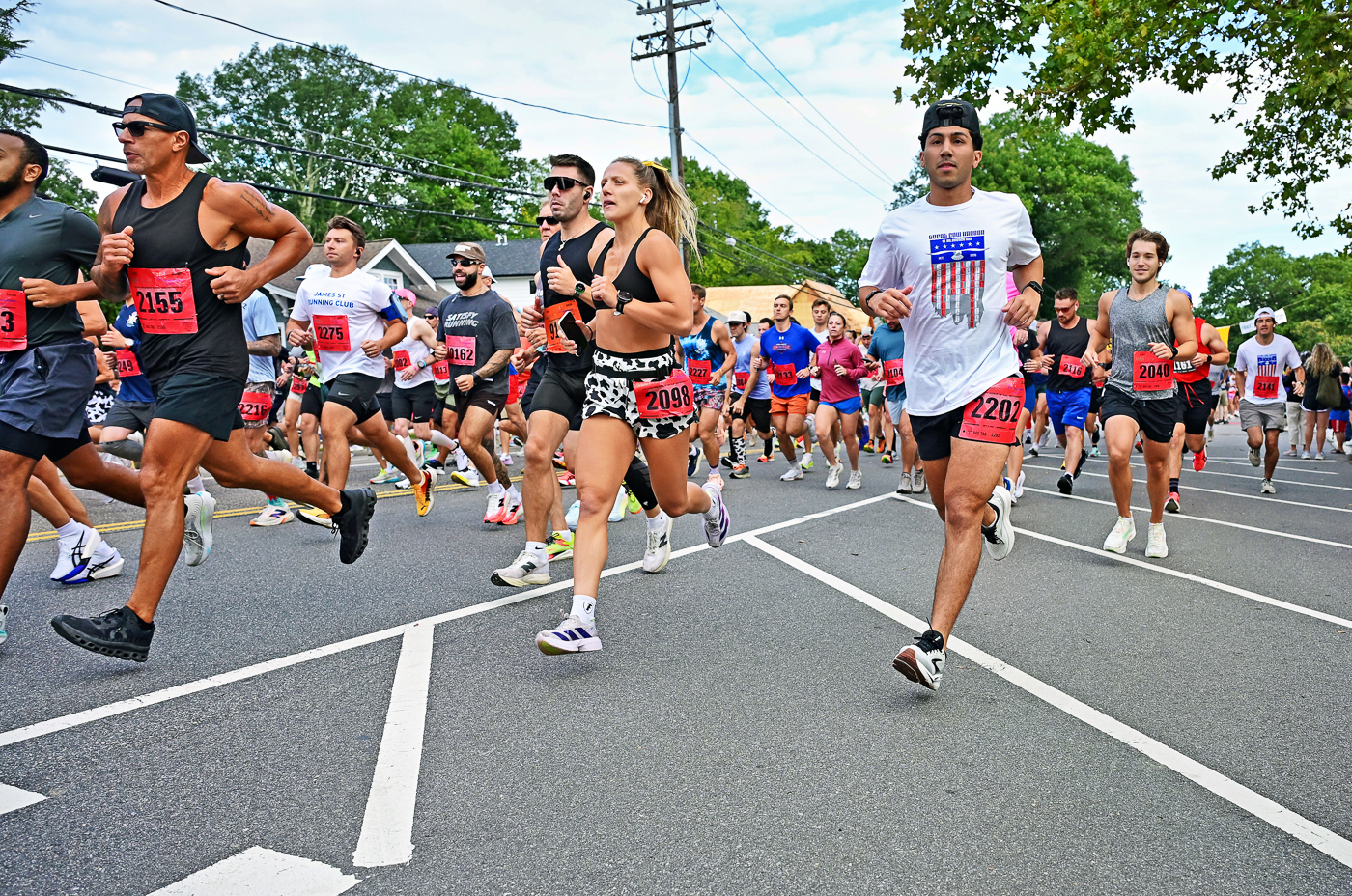
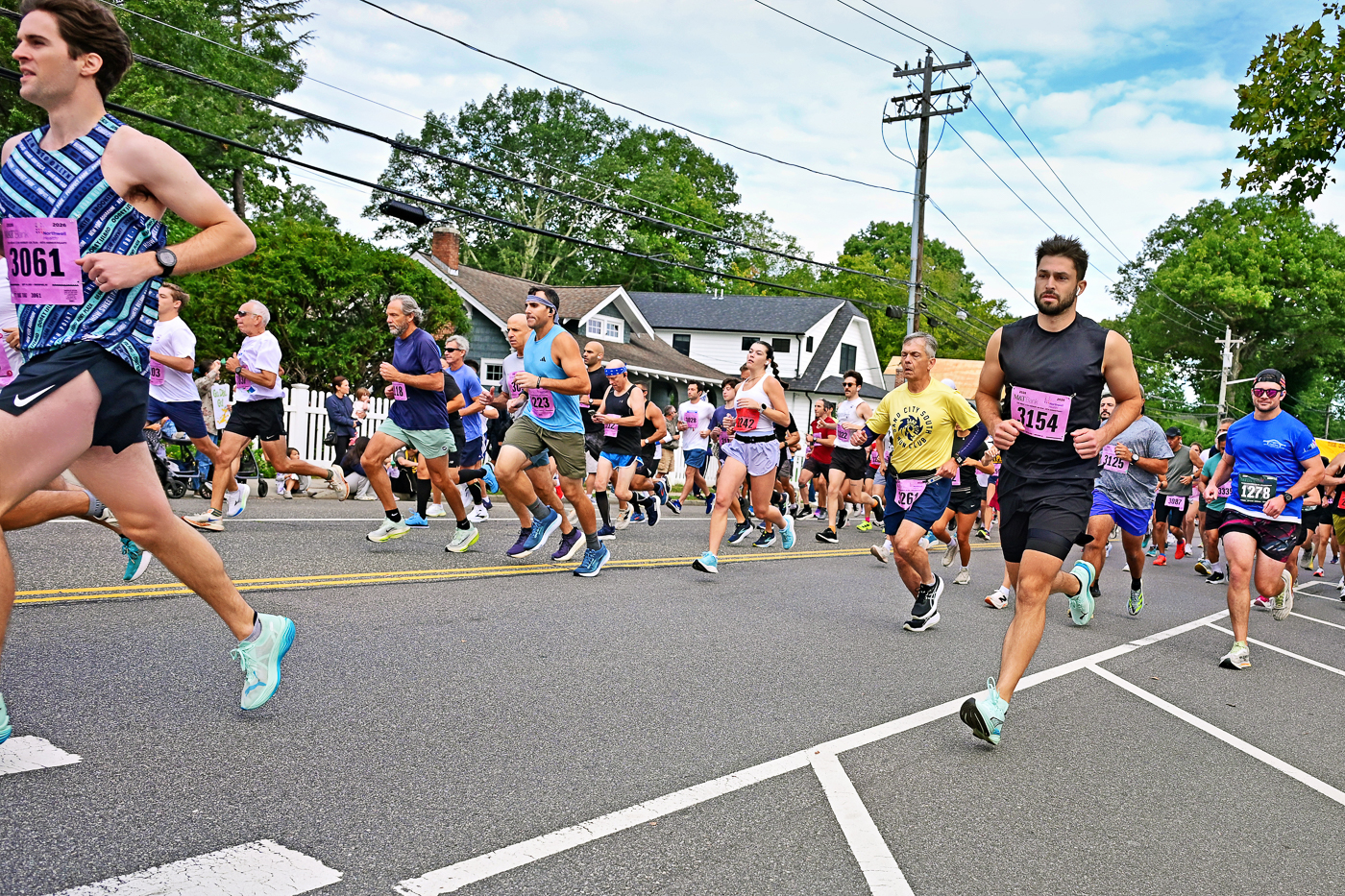
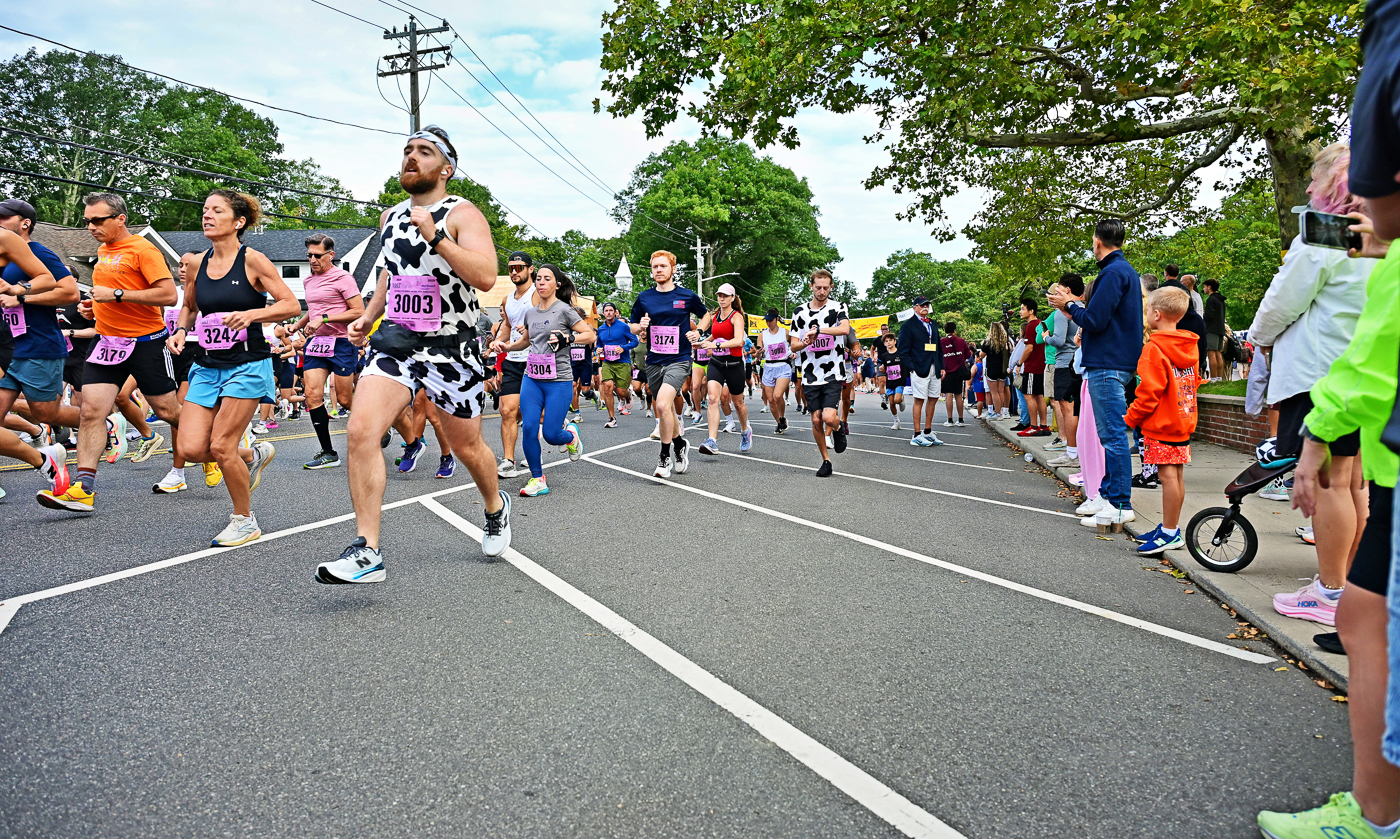
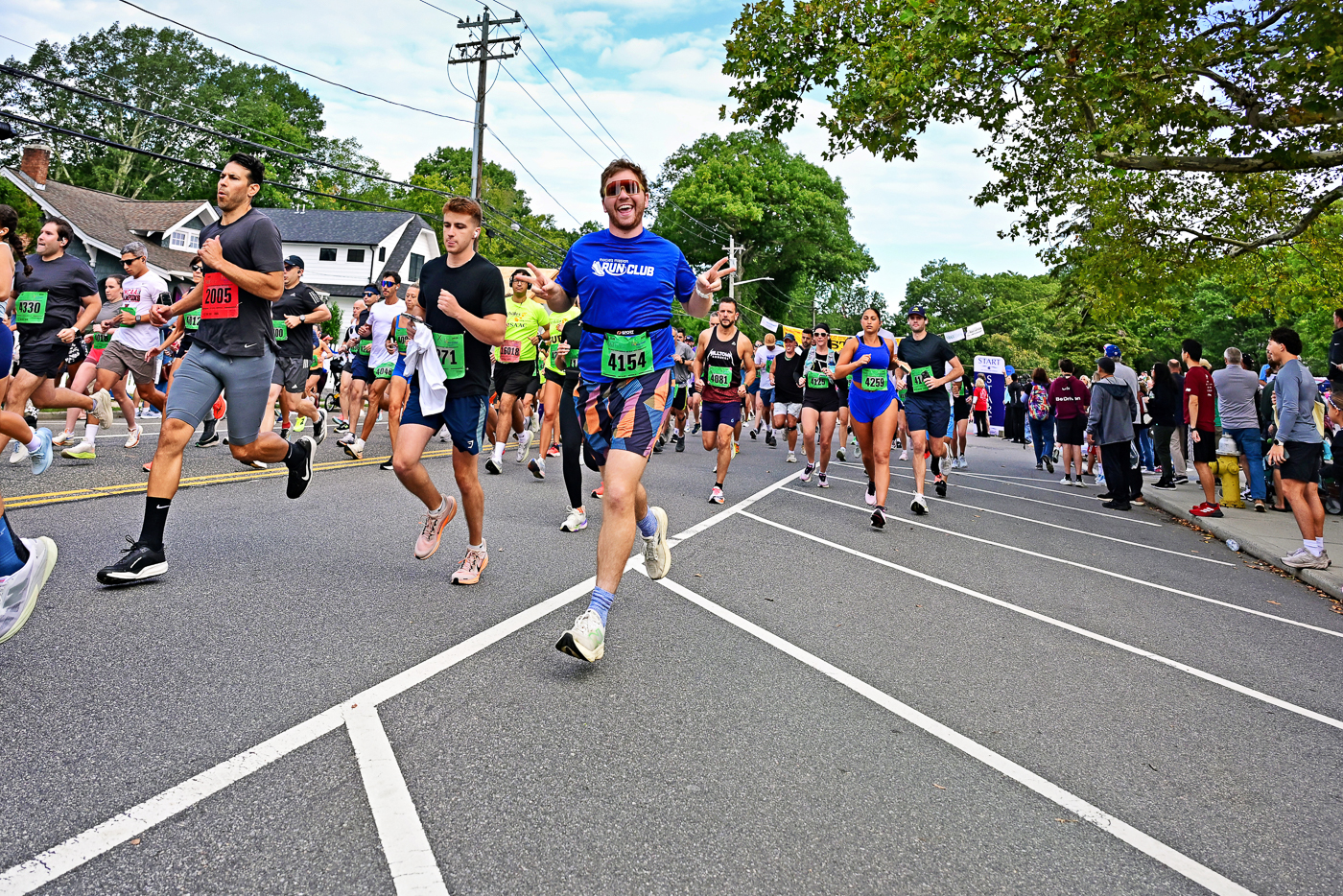
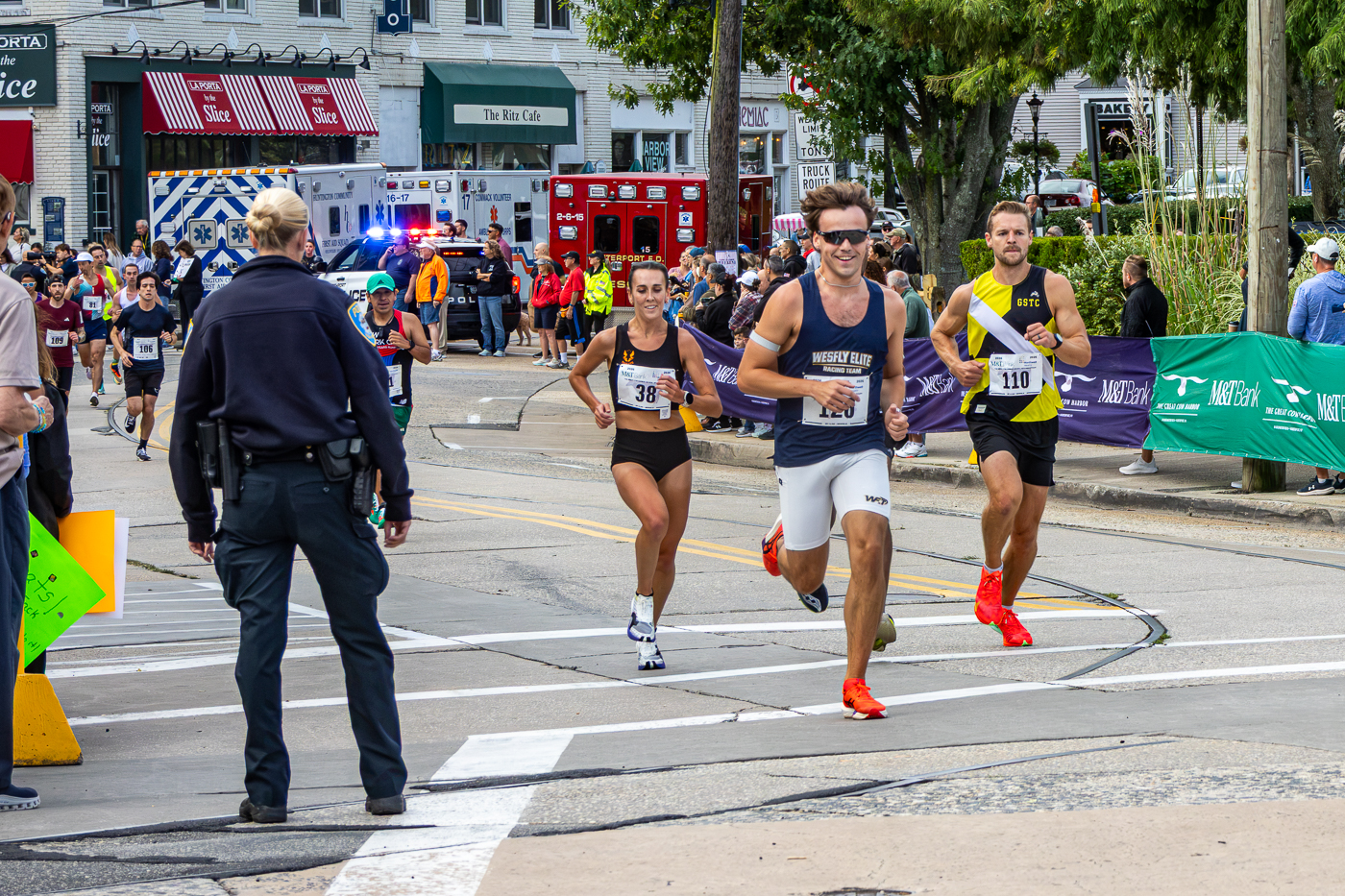
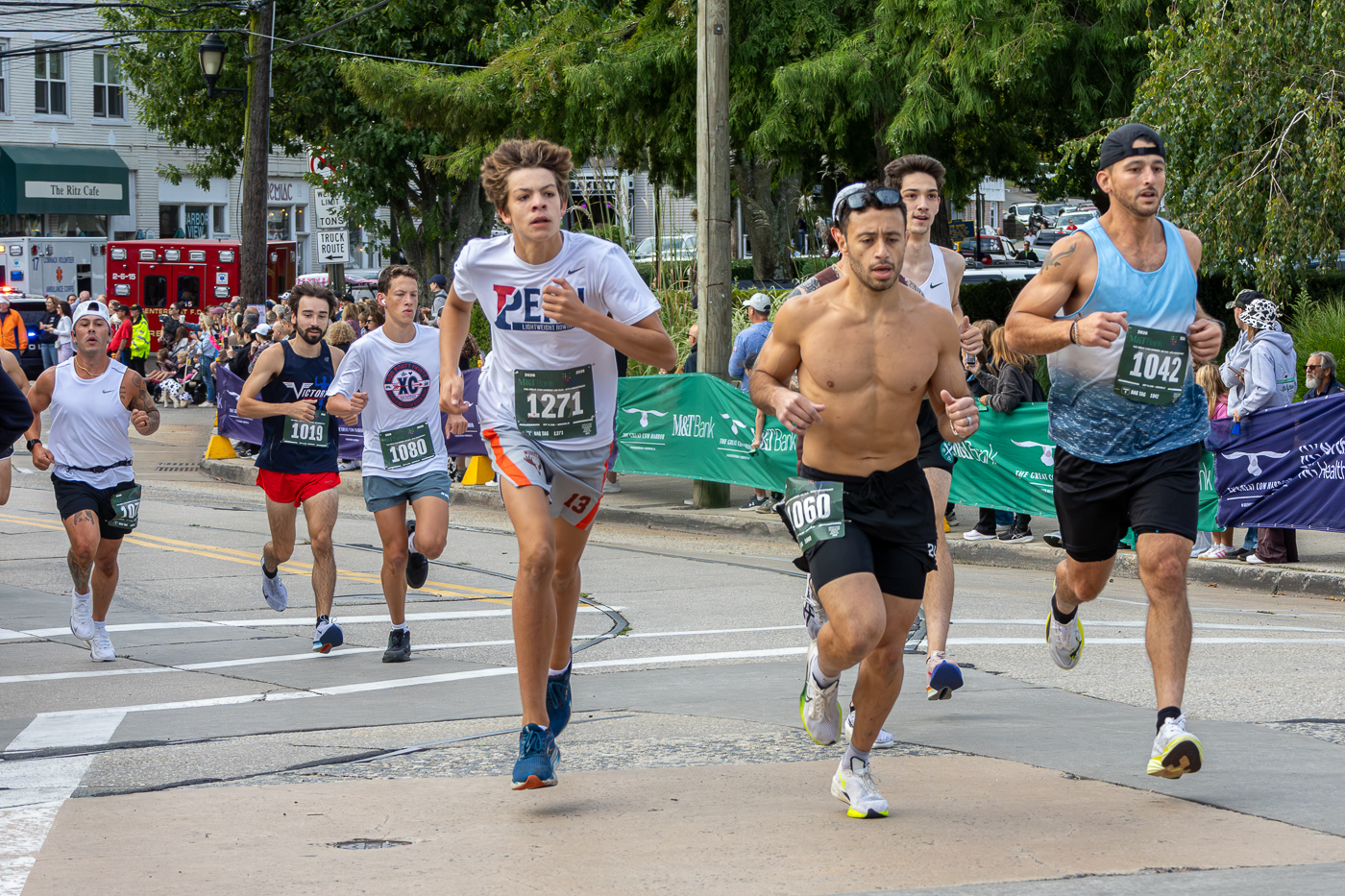
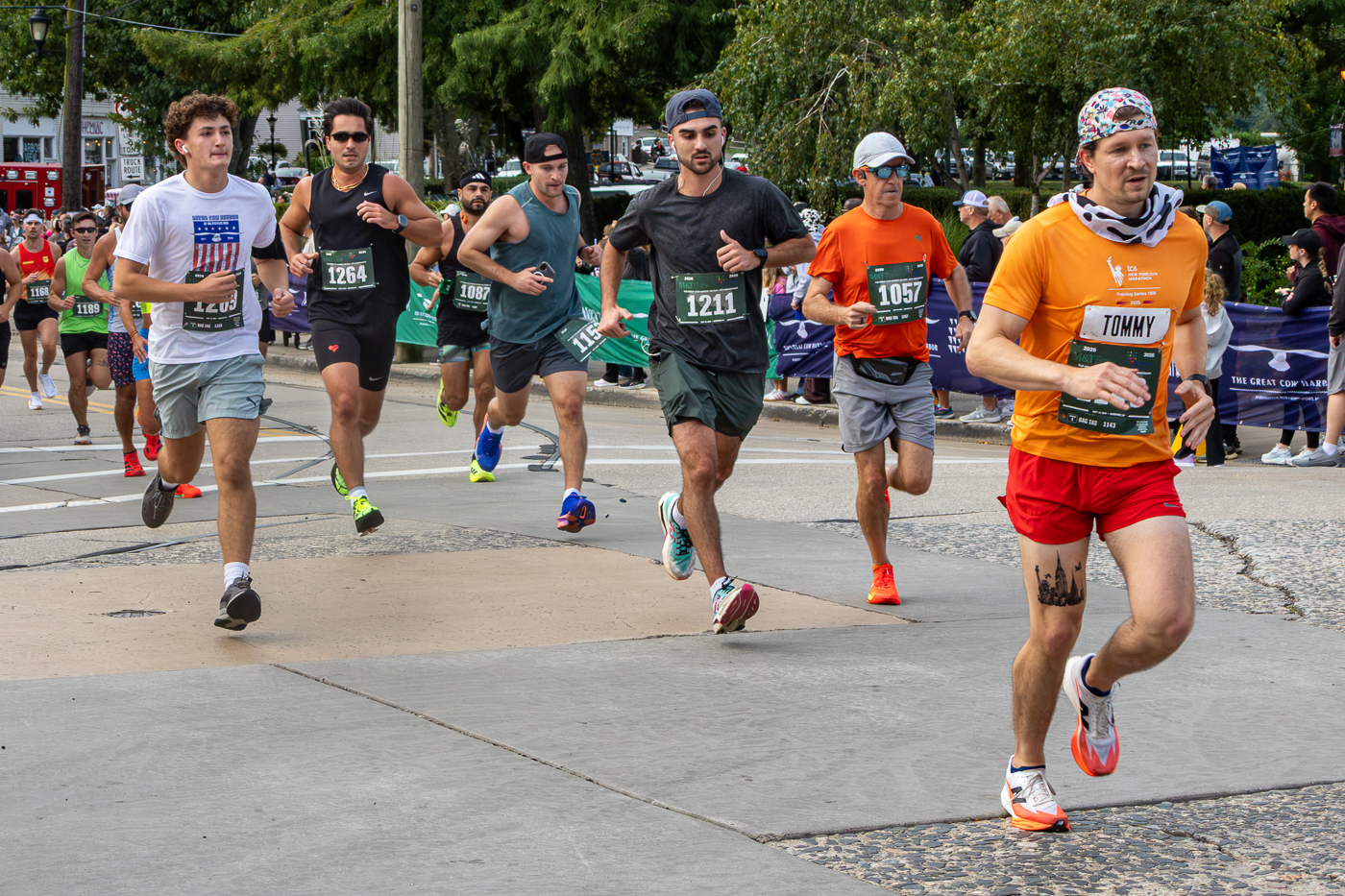
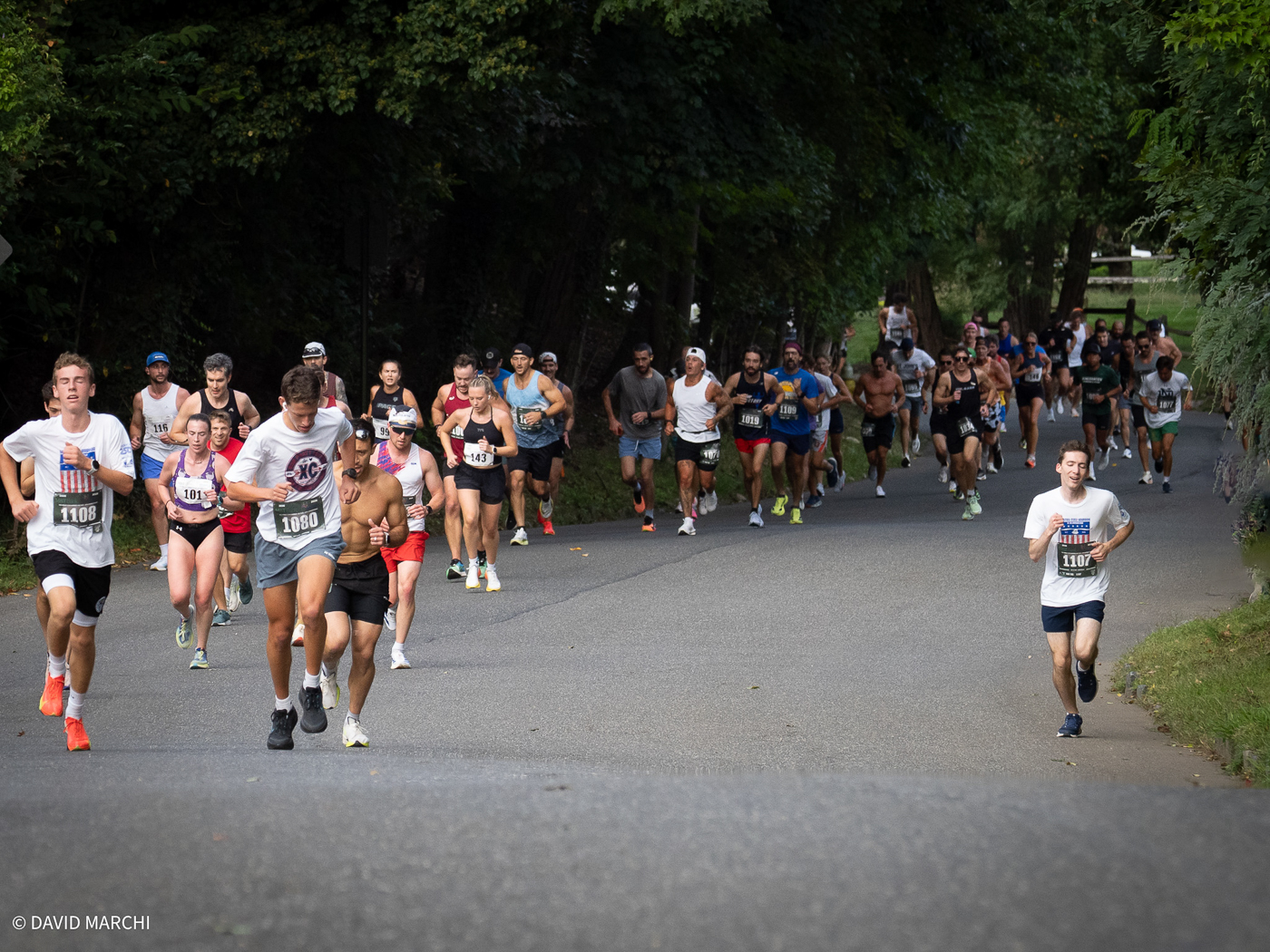
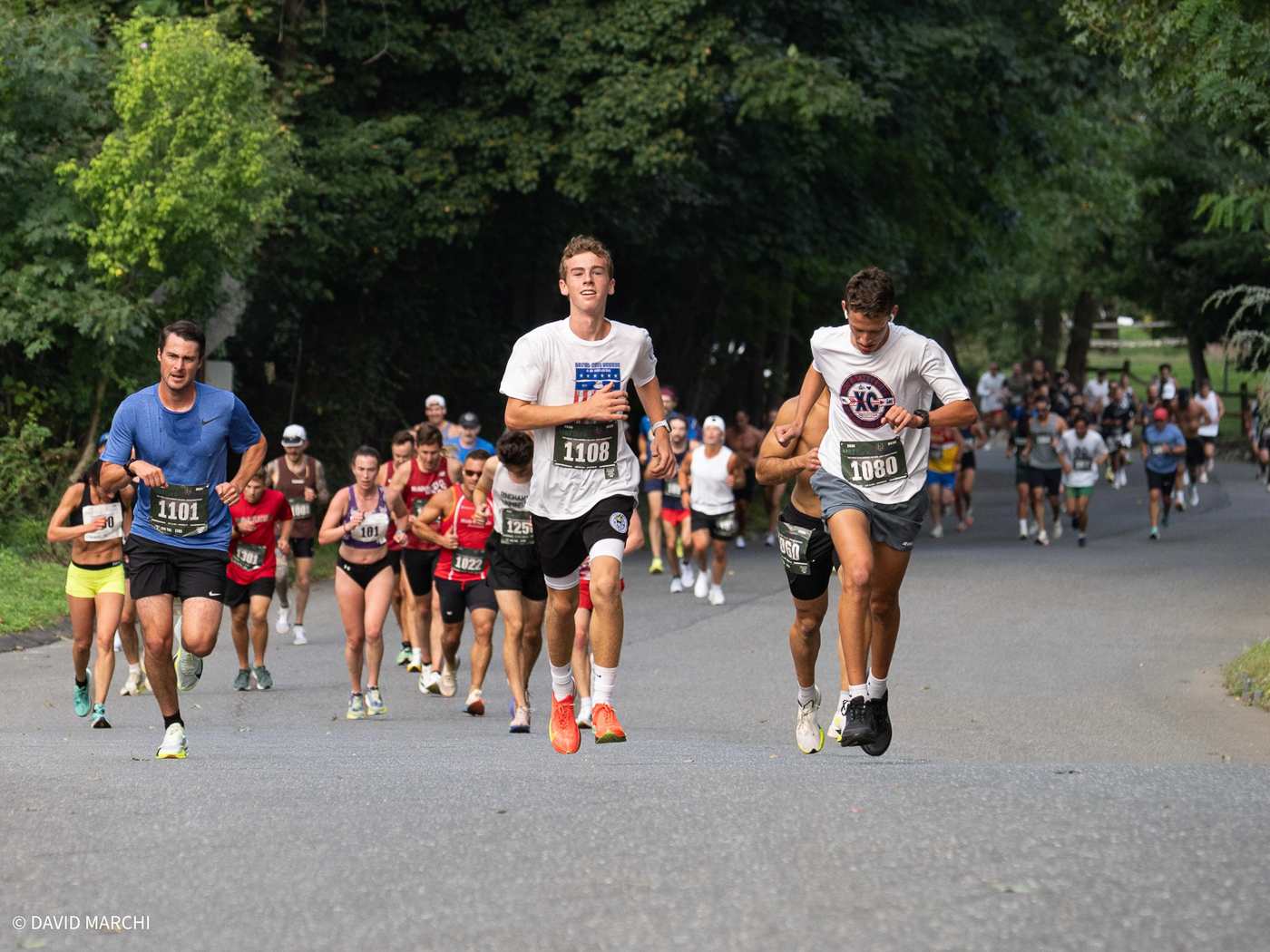
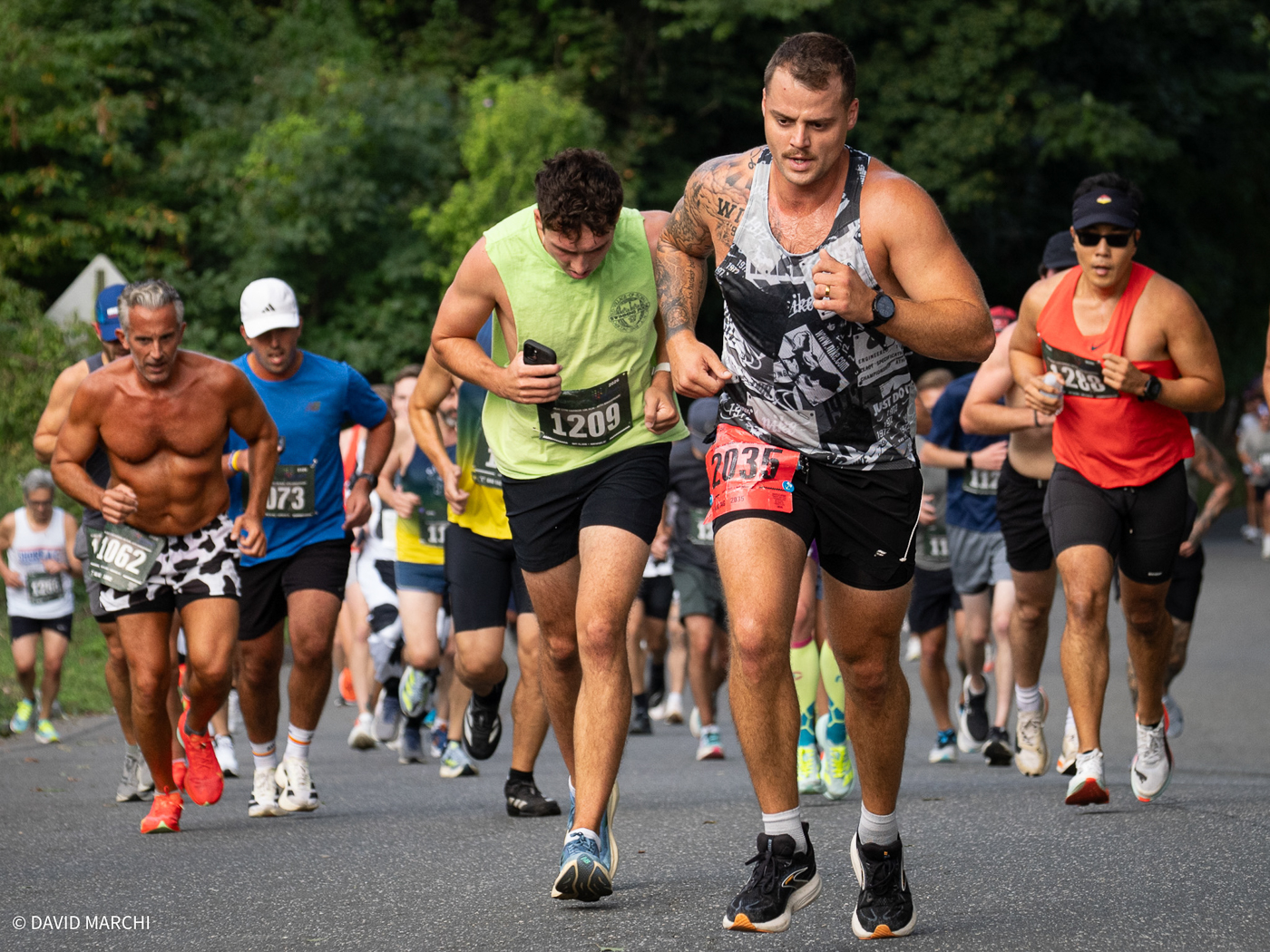
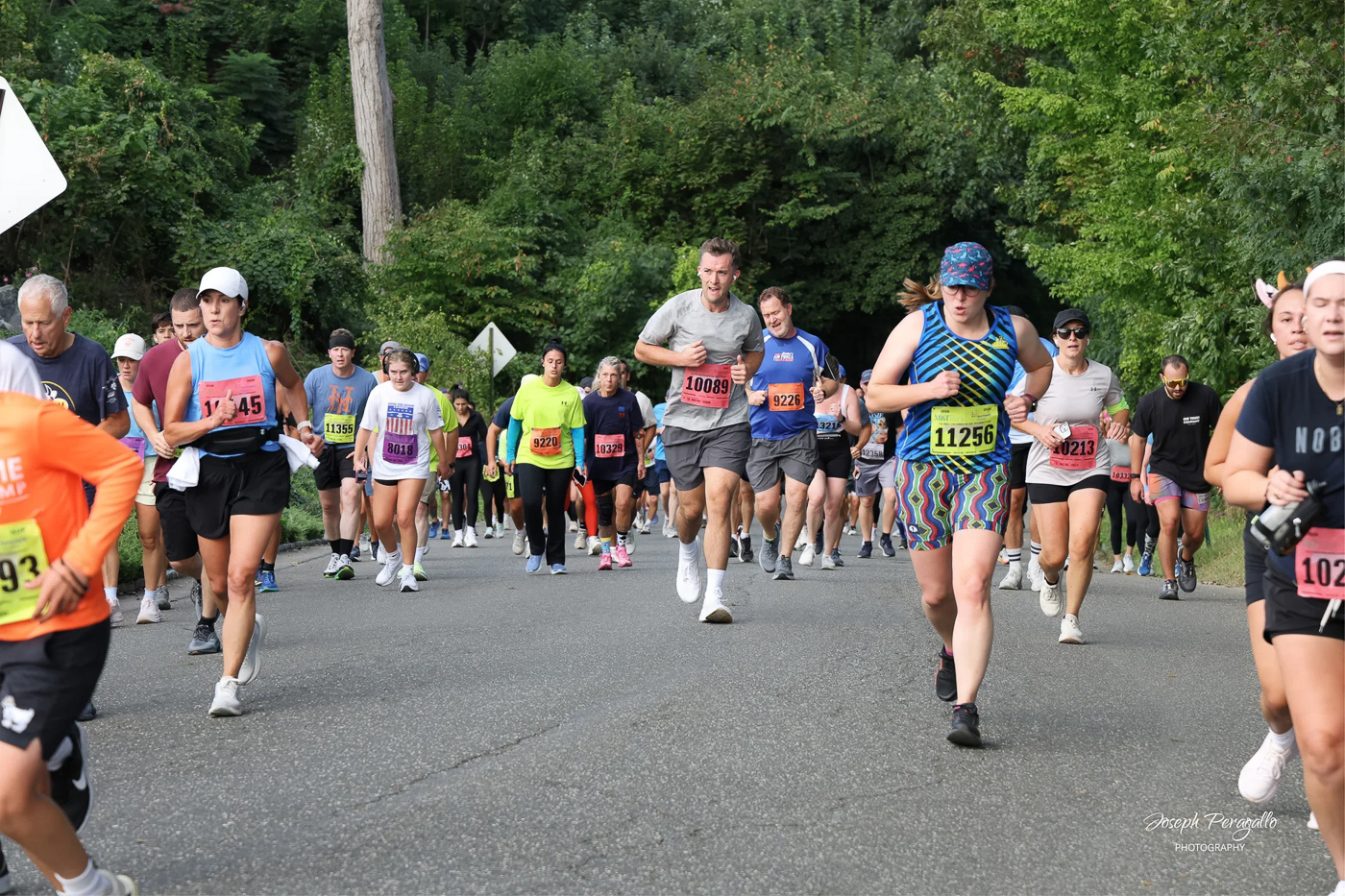
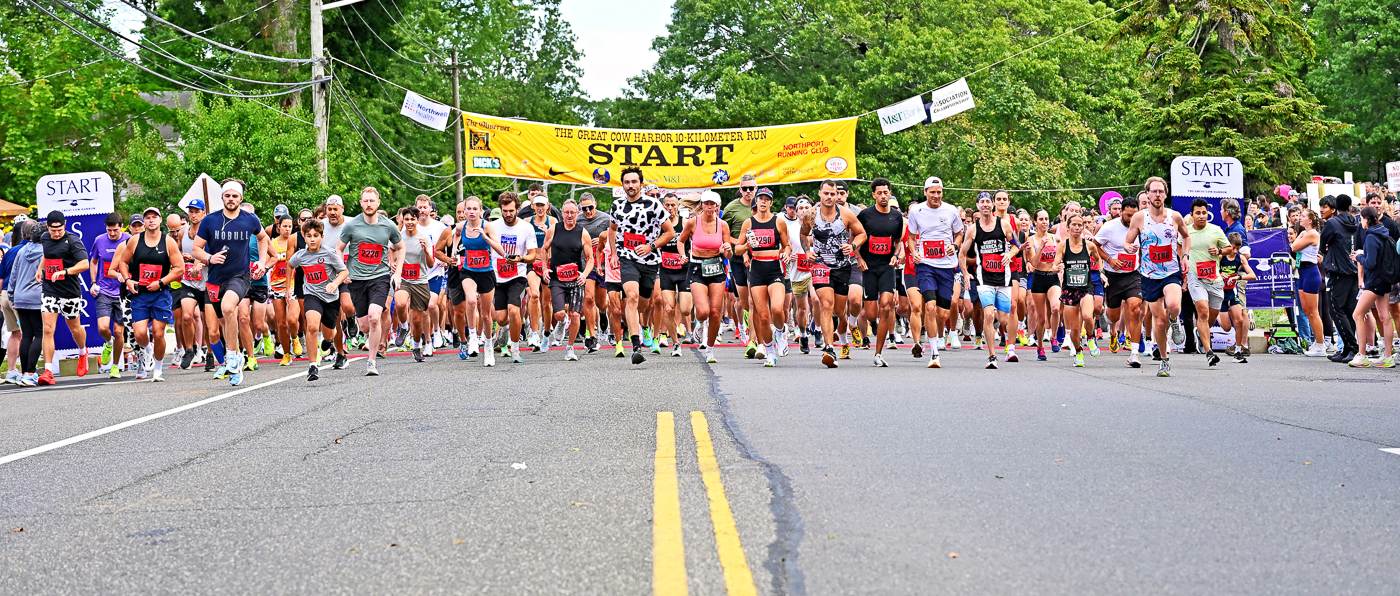
Co-Race Director and Elite Athlete Coordinator Will Fodor described a field of roughly 5,000 finishers and 18 staggered starts. Behind that scale are Host Families, Committee Chairs, Volunteers and Sponsors helping the event work for runners with very different goals. The Elite competition gives spectators a close look at top-level distance running, while the rest of the field brings personal milestones and hometown reunions.
A town that knows the race
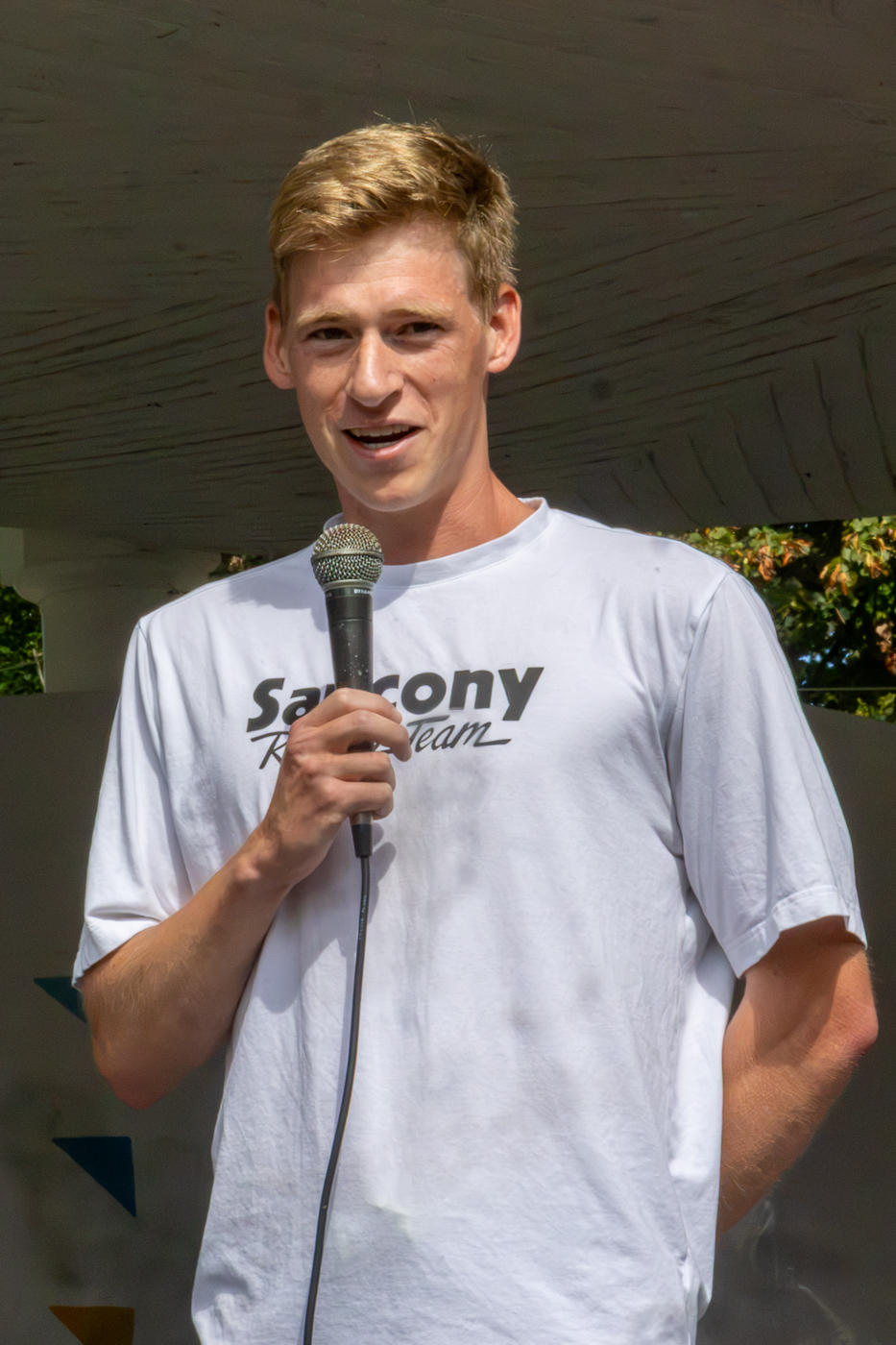
For Elite Runner Chandler Gibbens, sponsored by Saucony, returning meant another chance at the top spot.
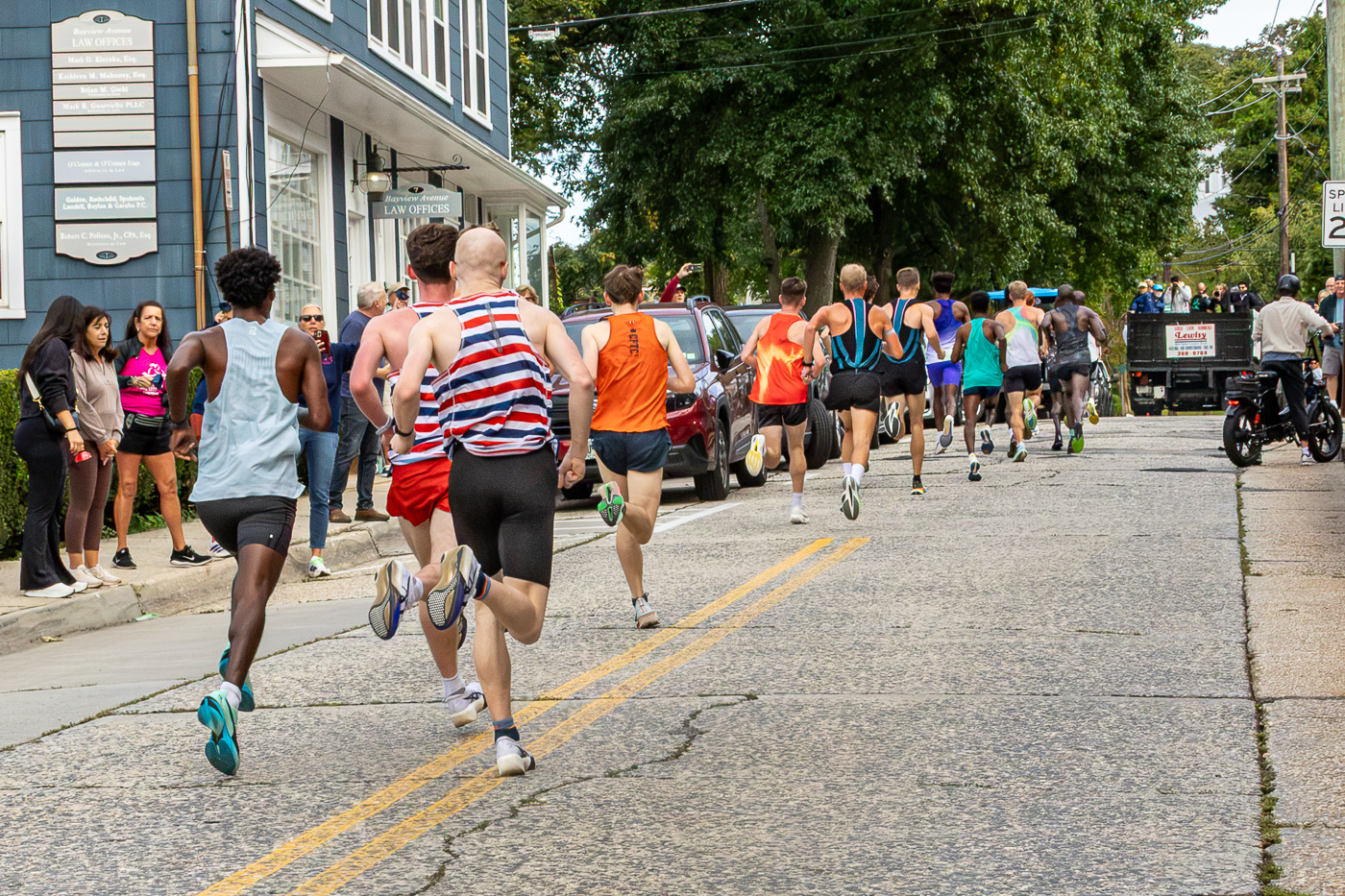
Speaking at Friday’s pre-race dinner, Gibbens recalled finishing second the previous year and learning something about Cow Harbor’s hills. He had prepared for James Street, but the late climb at Pumpernickel Hill had caught him out. This time, he wanted to use that knowledge to race smarter.
“I was second last year. I want to improve on that,” he said.
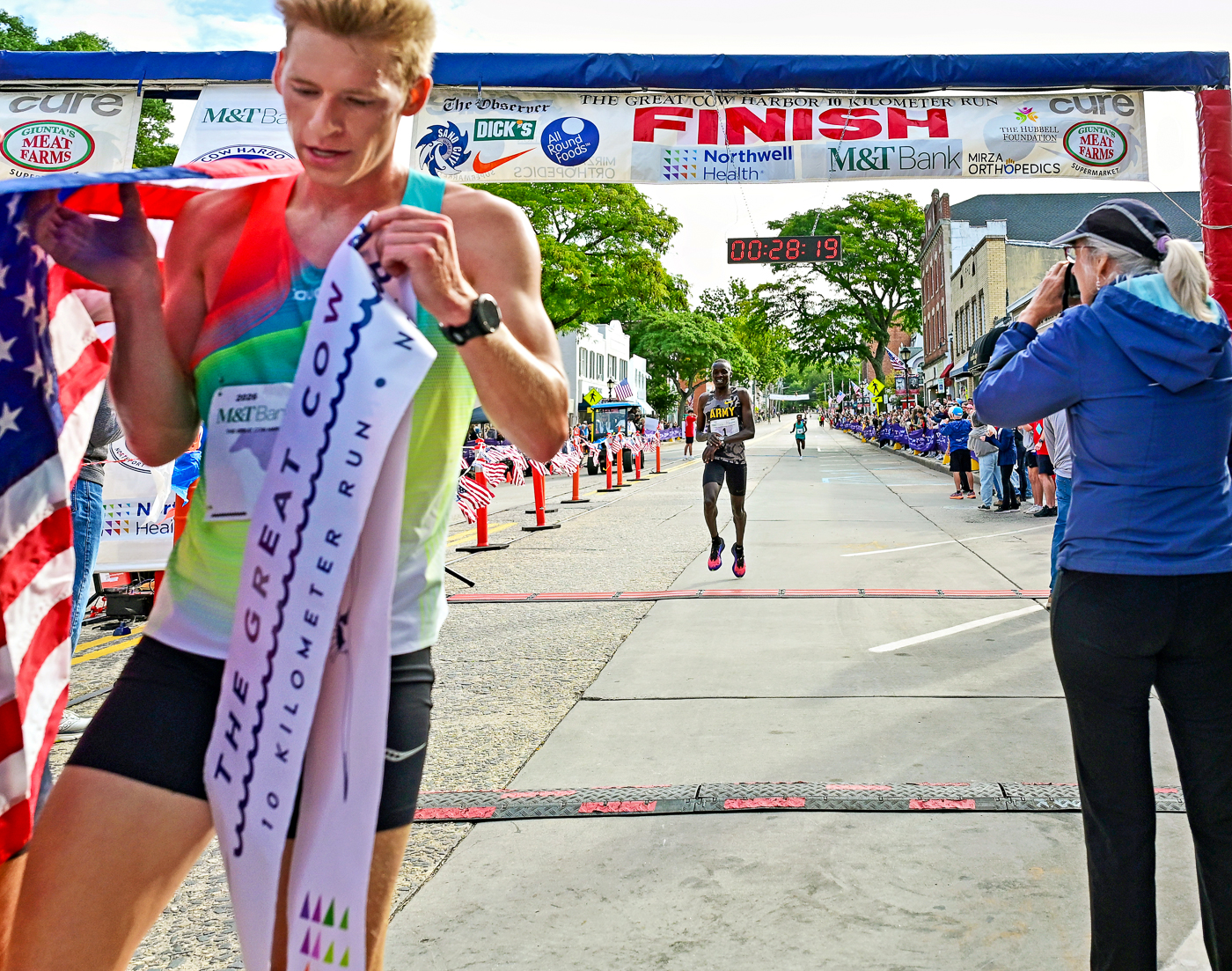
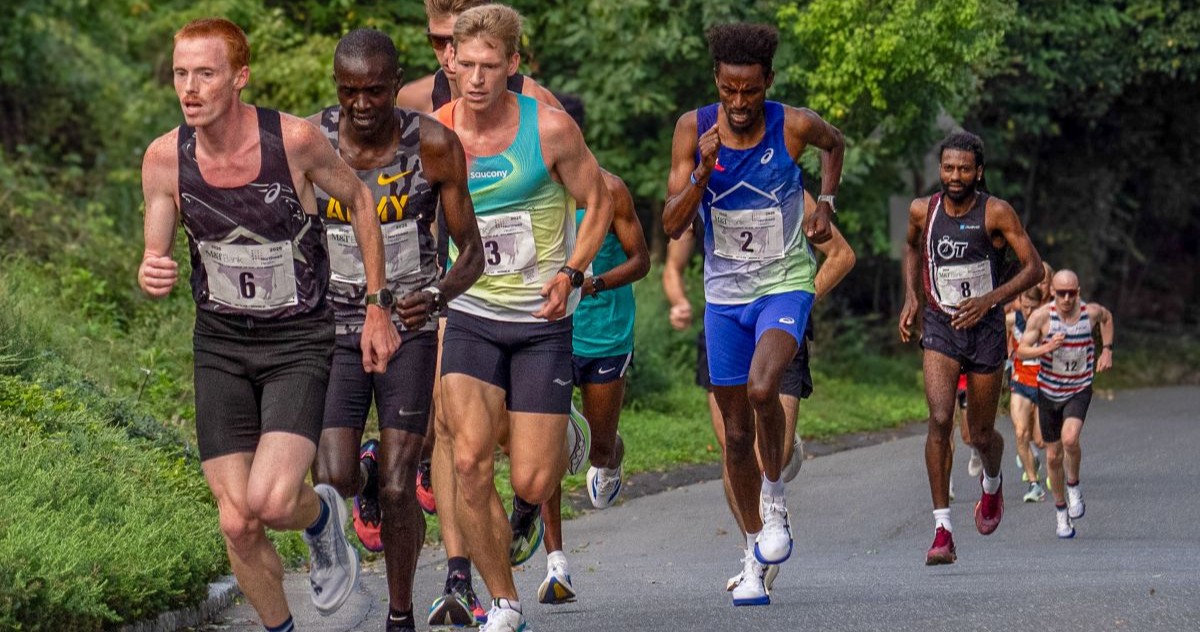
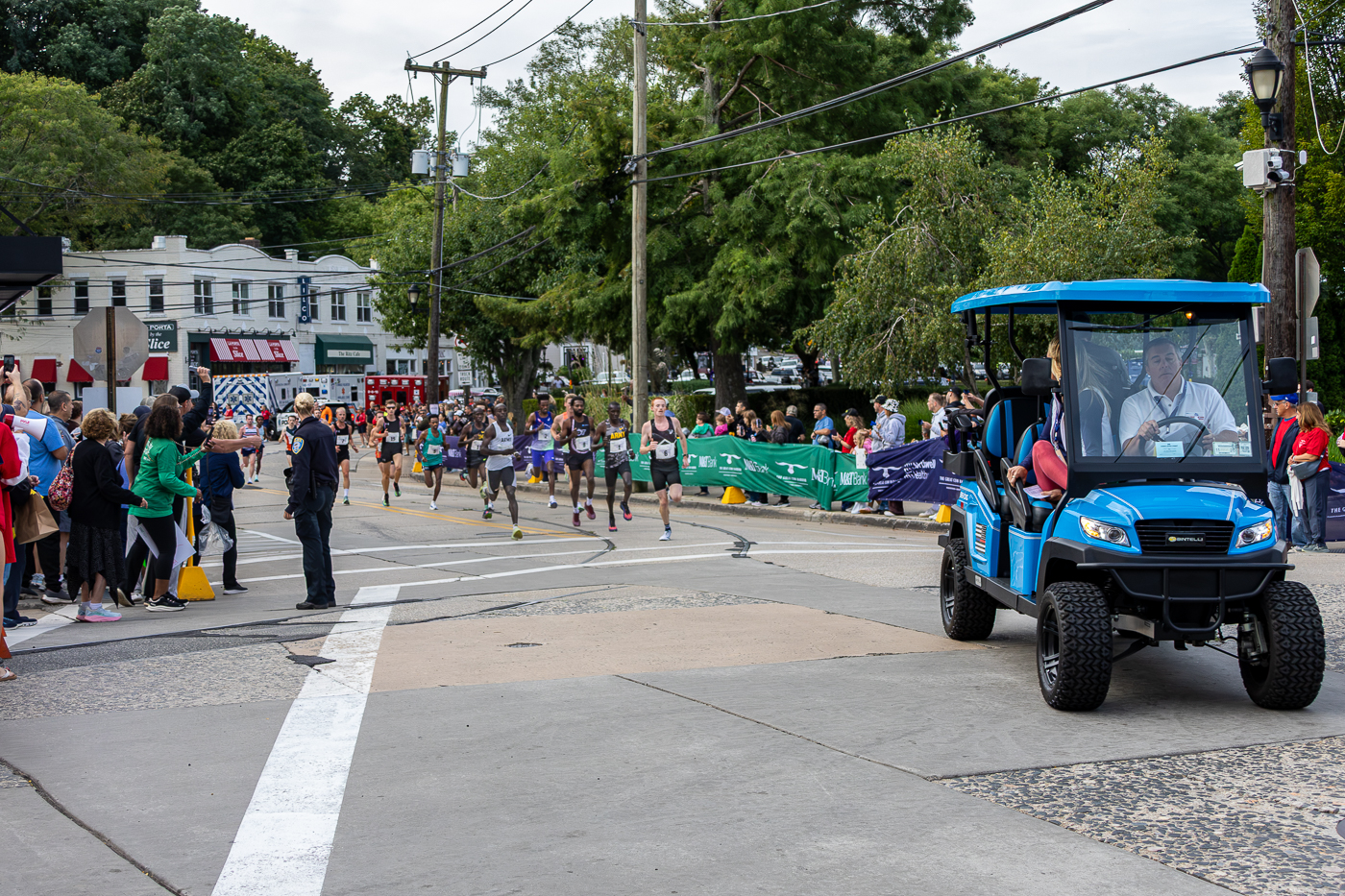
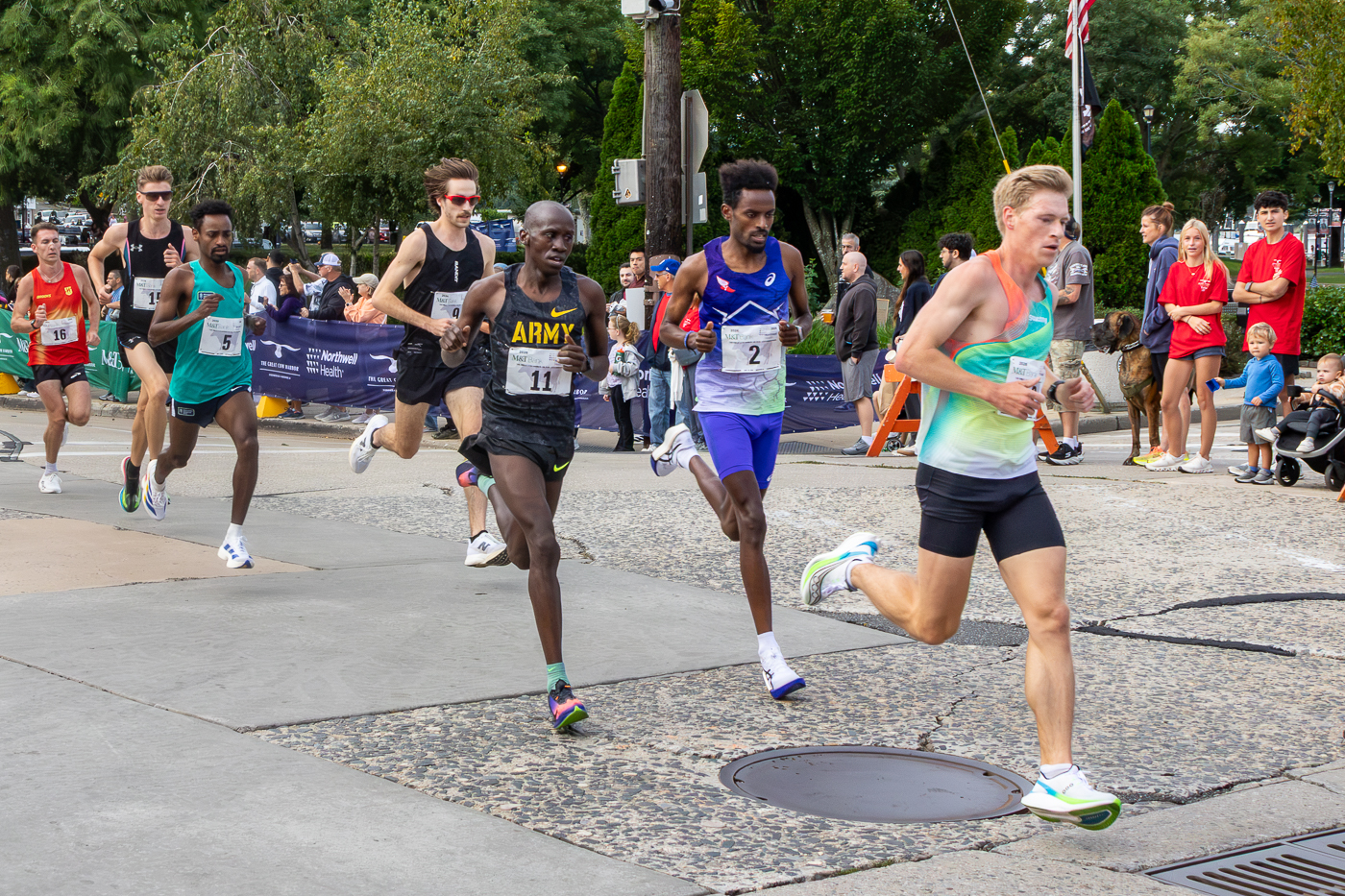
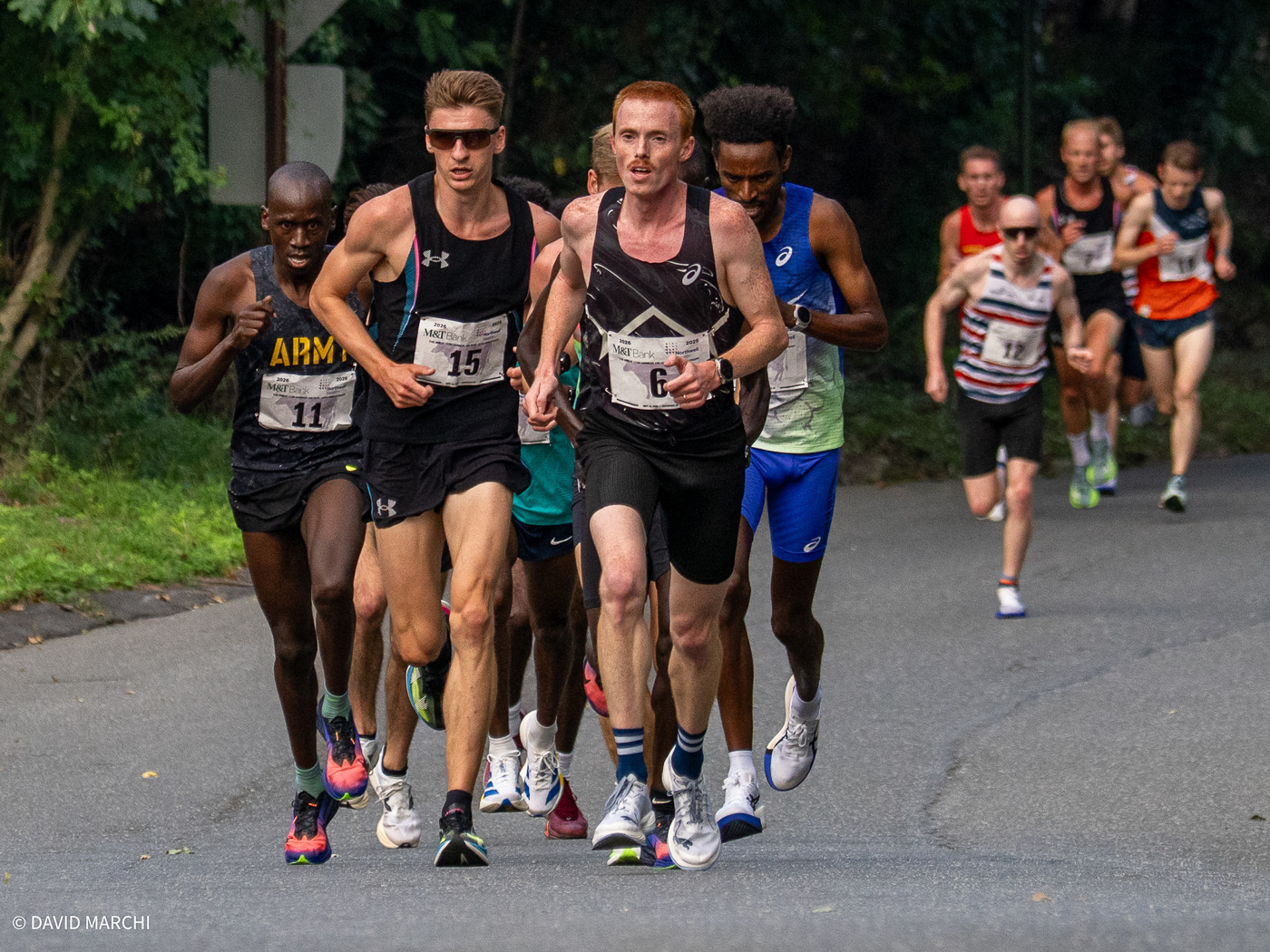
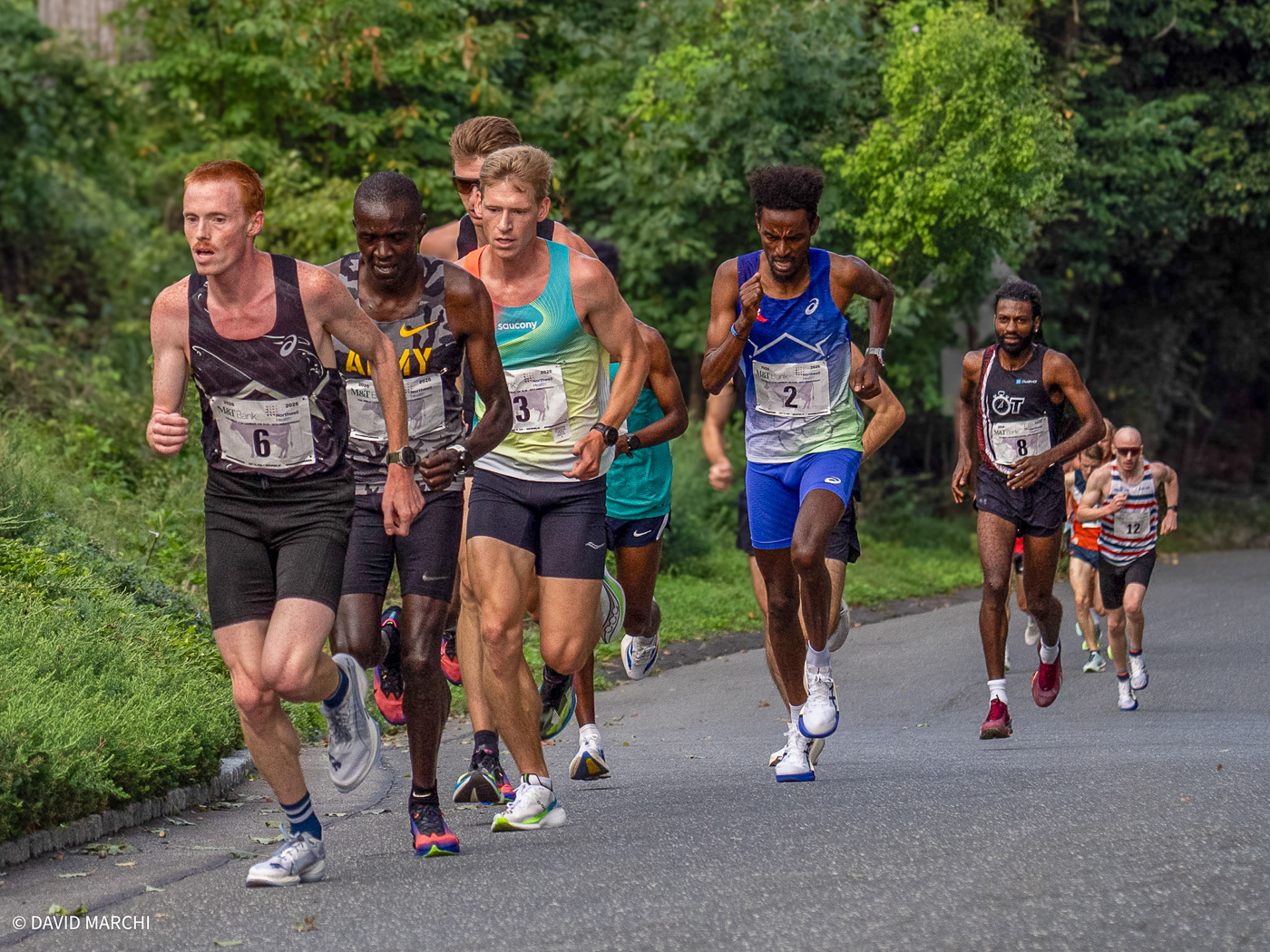
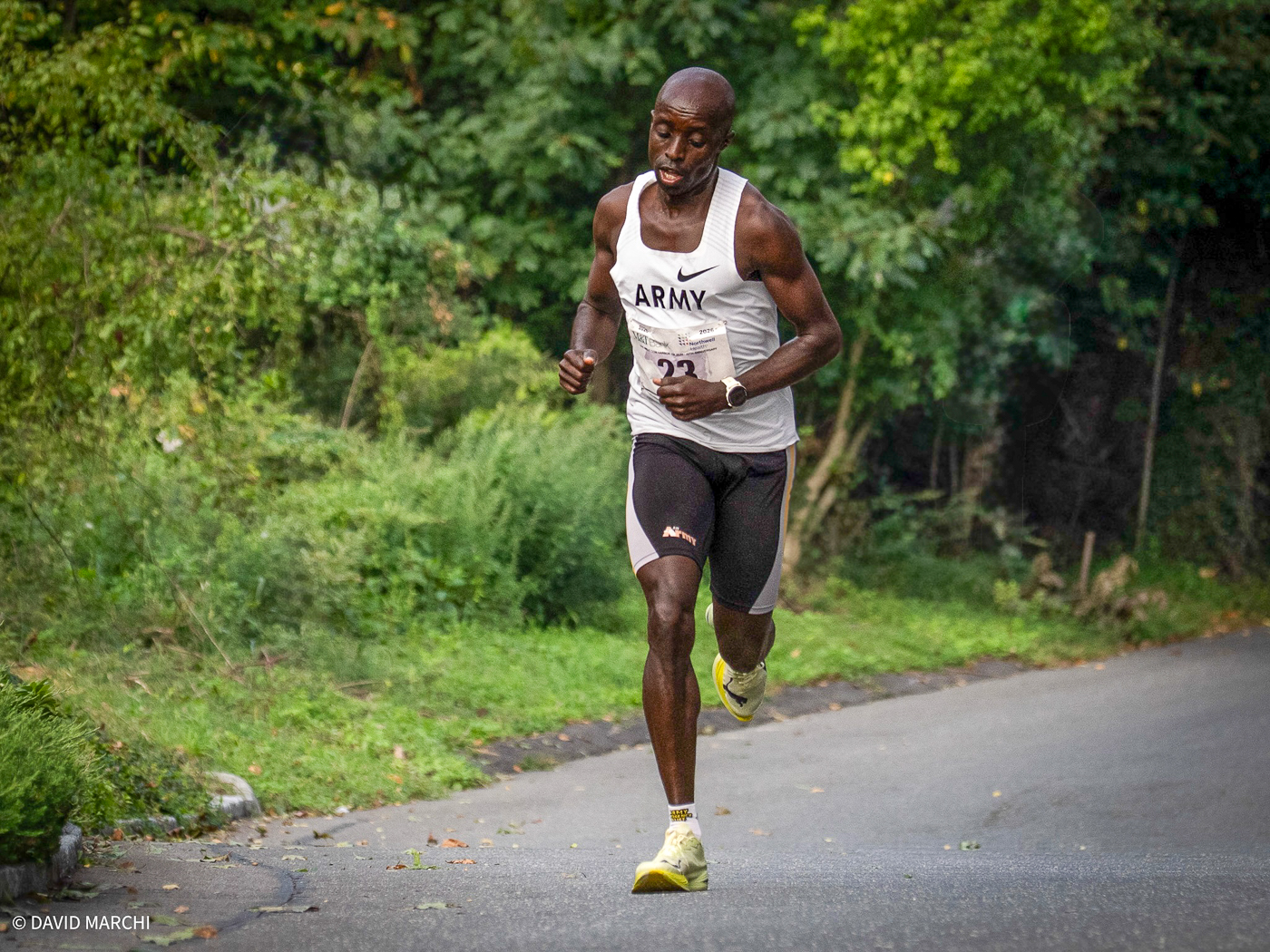
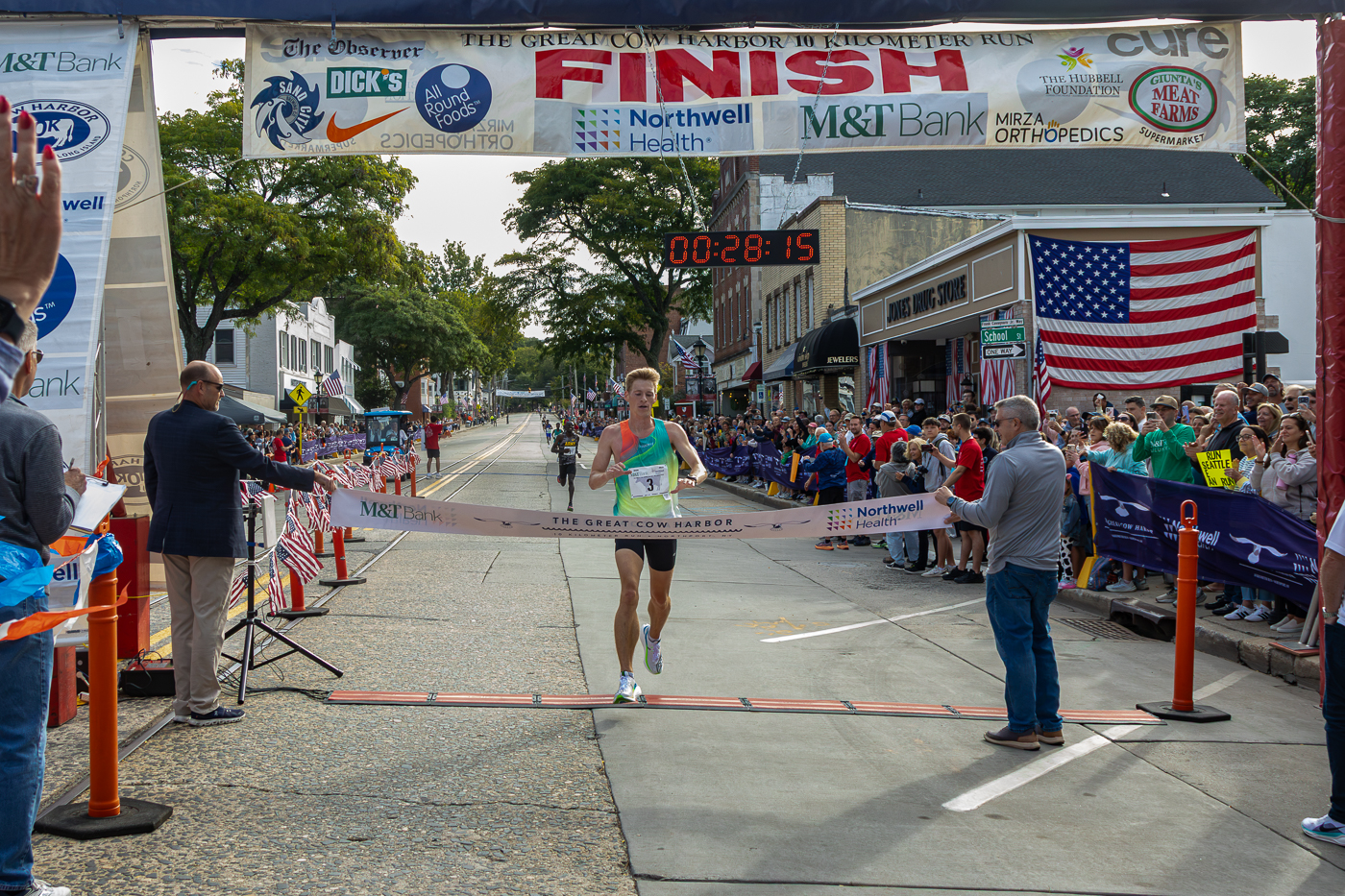
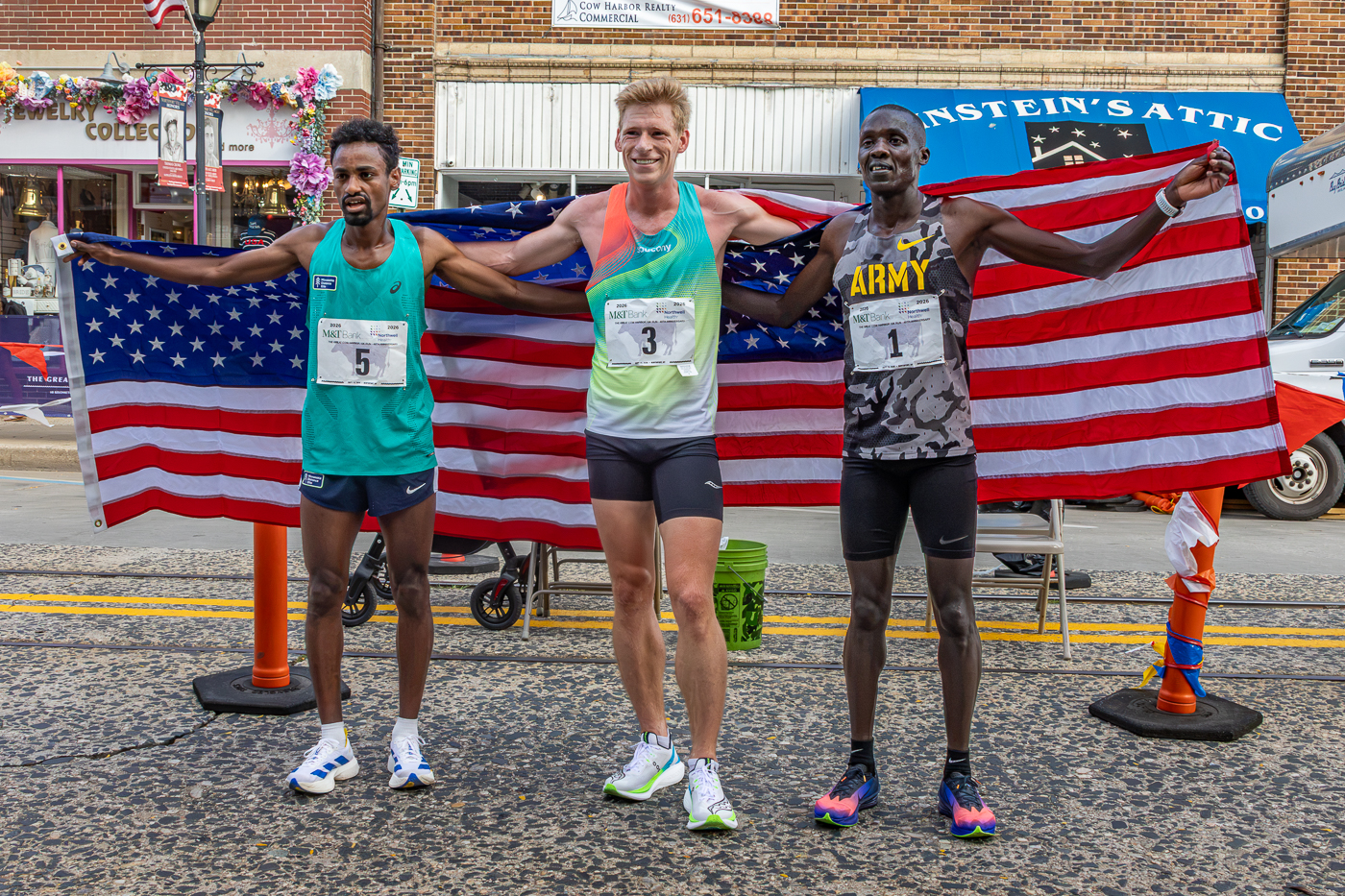
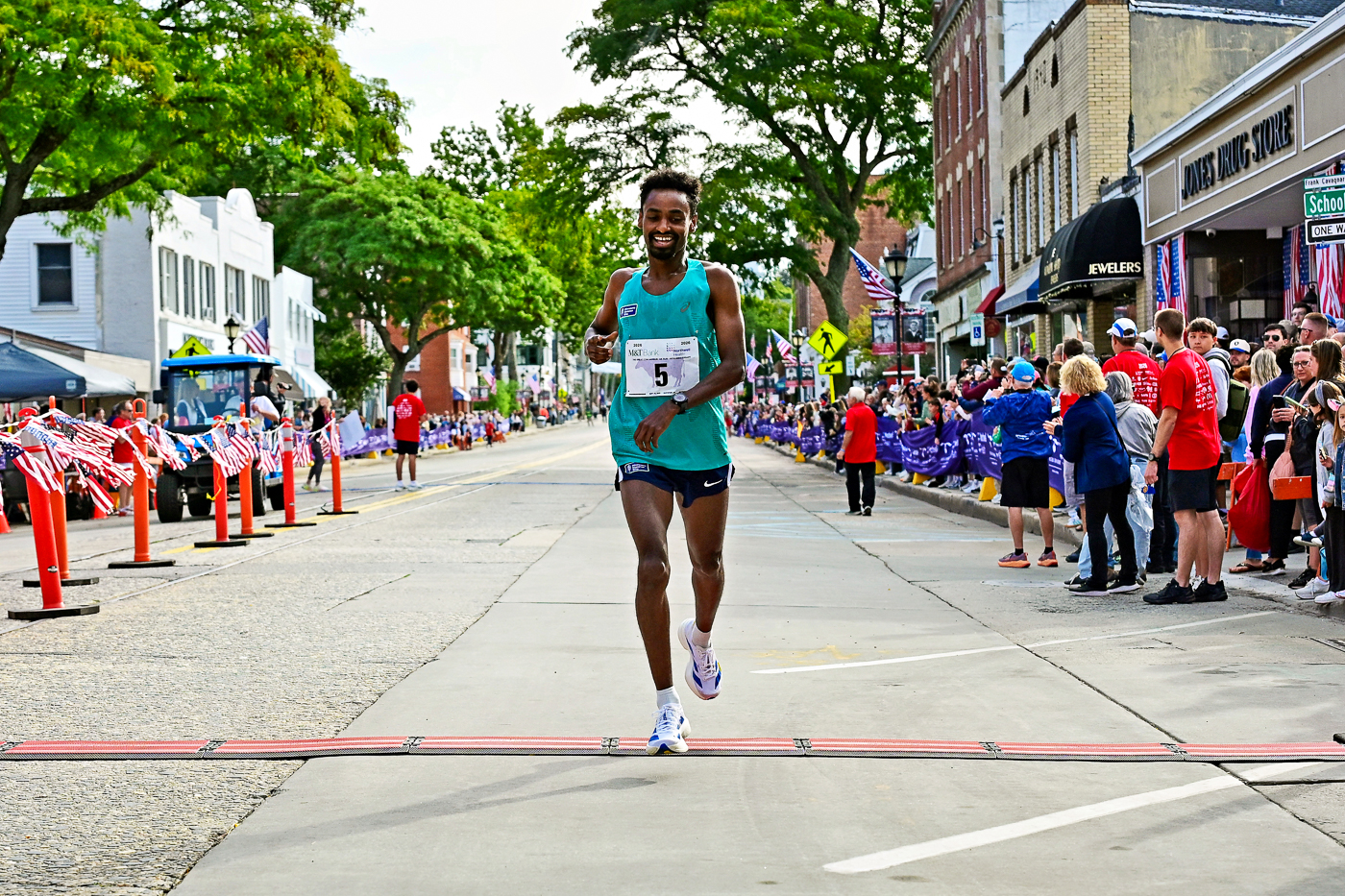
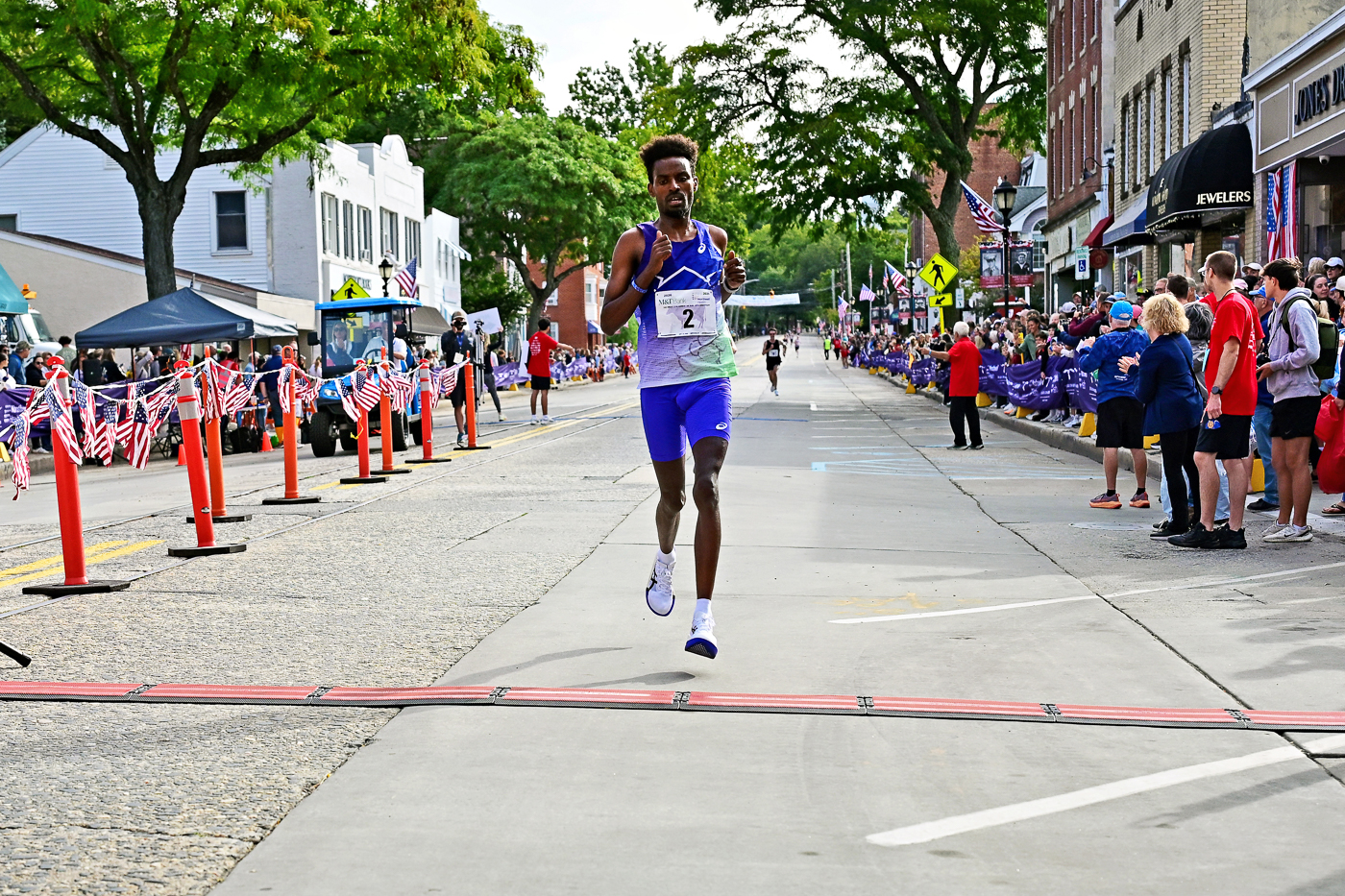
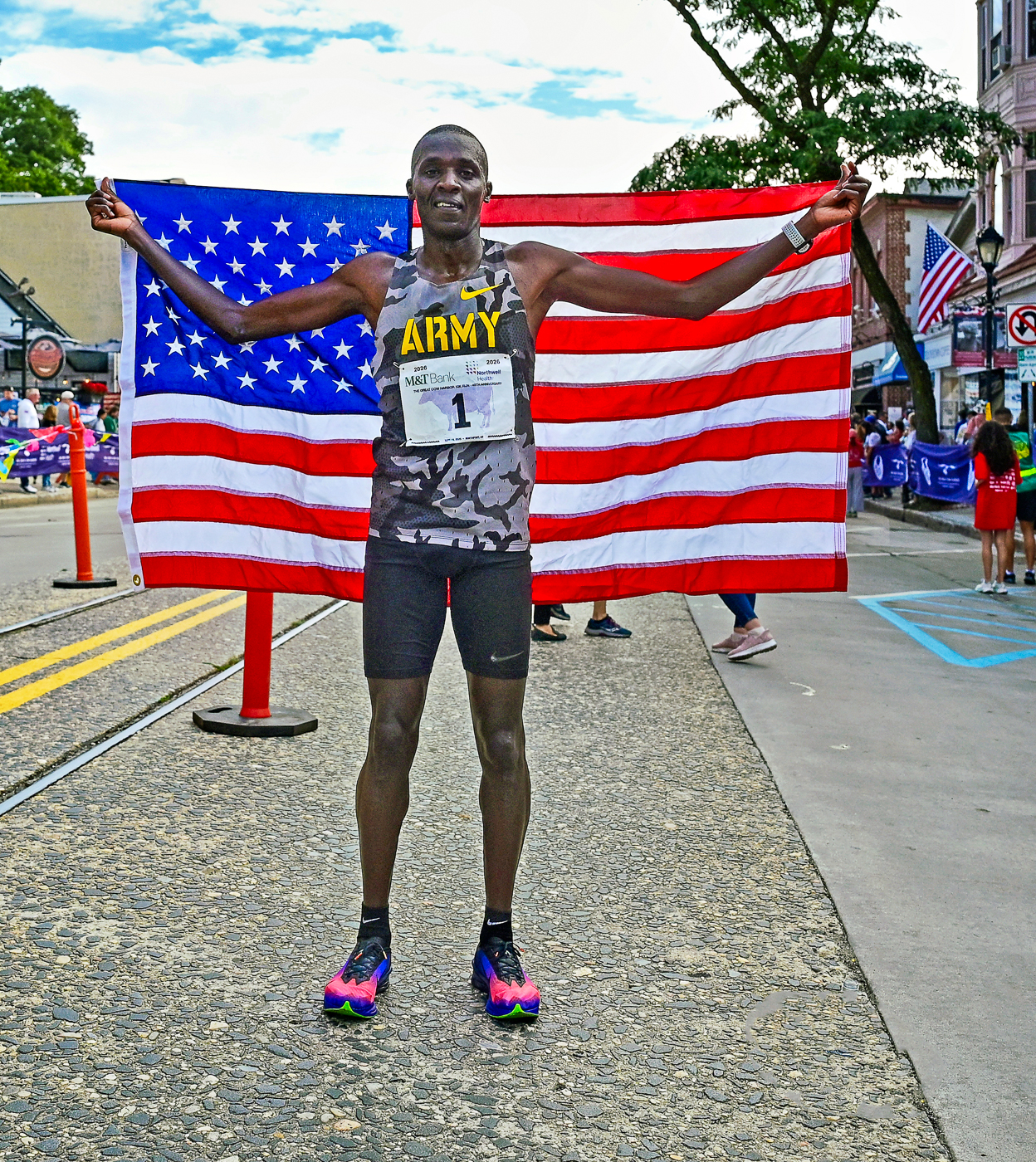
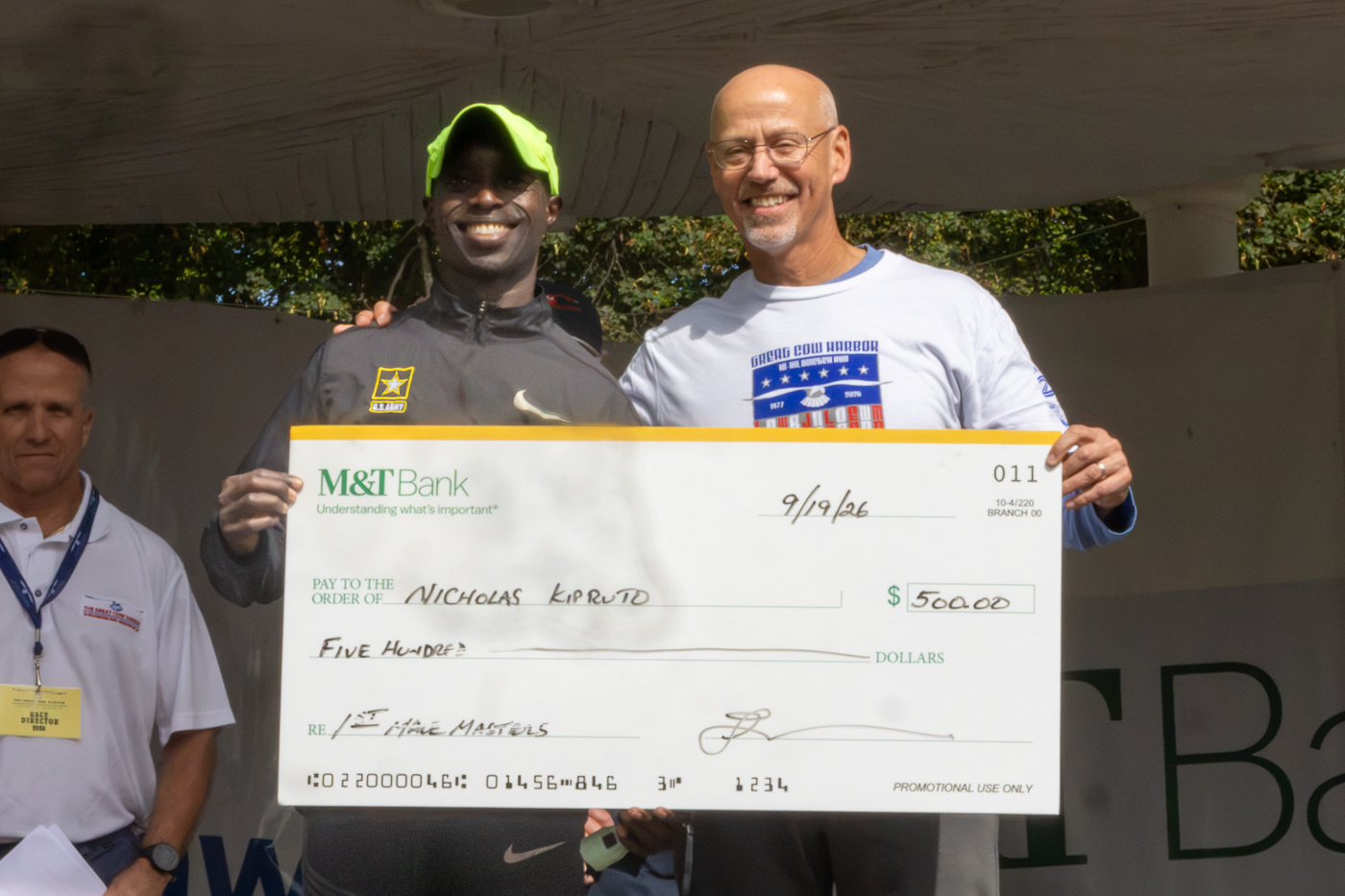
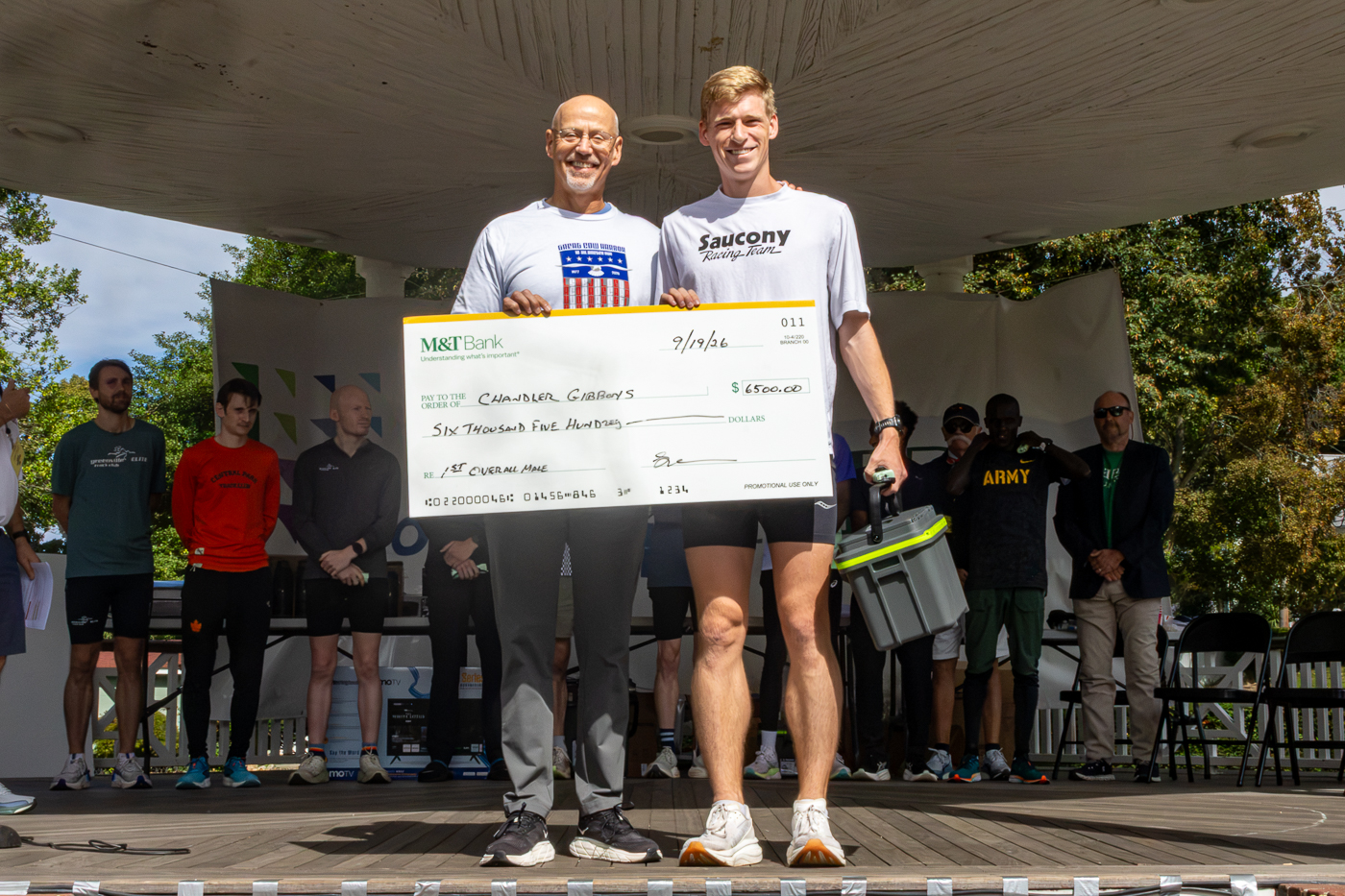
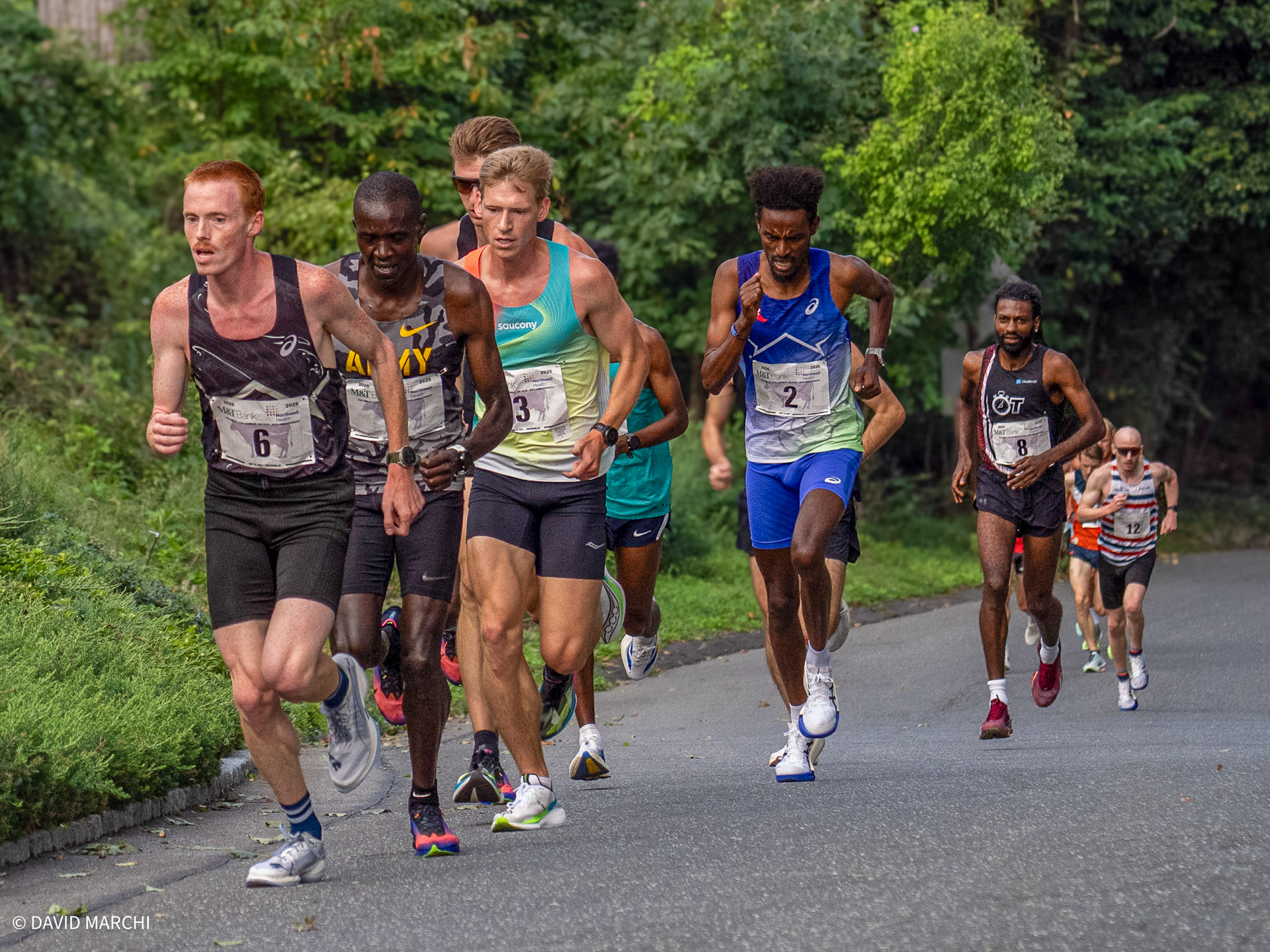
Gibbens made good on that goal, winning in 28:15.68 and earning $6,500. Sgt. Anthony Rotich, US Army, finished second in 28:19.13, just 3.45 seconds behind. Rotich’s $4,000 second-place award plus the $500 bonus for leading at 5K brought his earnings to $4,500. Merga Gemeda completed the men’s top three in 28:24.74, earning $2,500.
Afterward, Fodor described Gibbens and Rotich racing closely from the top of Pumpernickel Hill toward the finish, reversing their previous year’s places. Familiarity with the course had given Gibbens something concrete to work on and another reason to return.
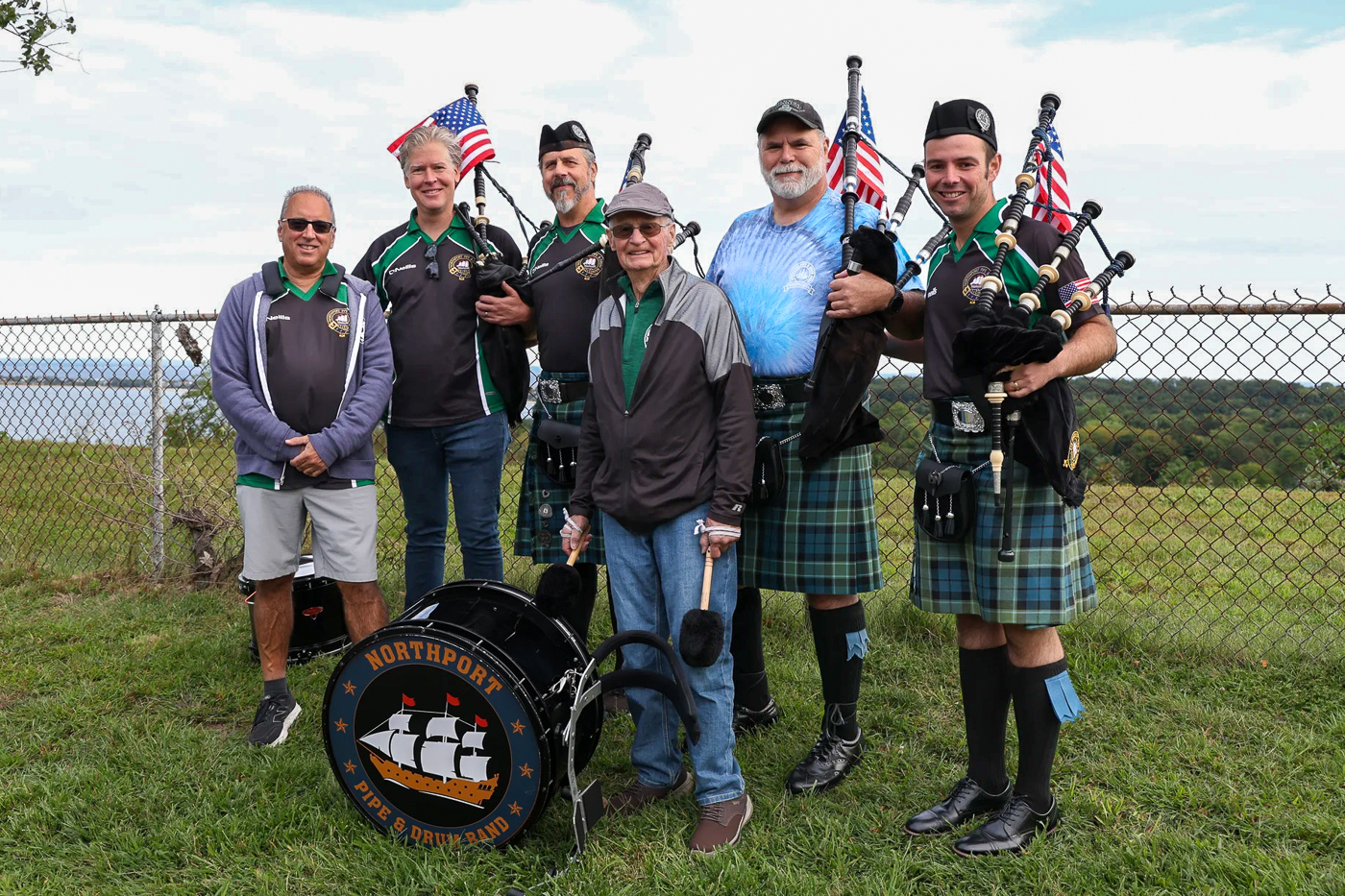
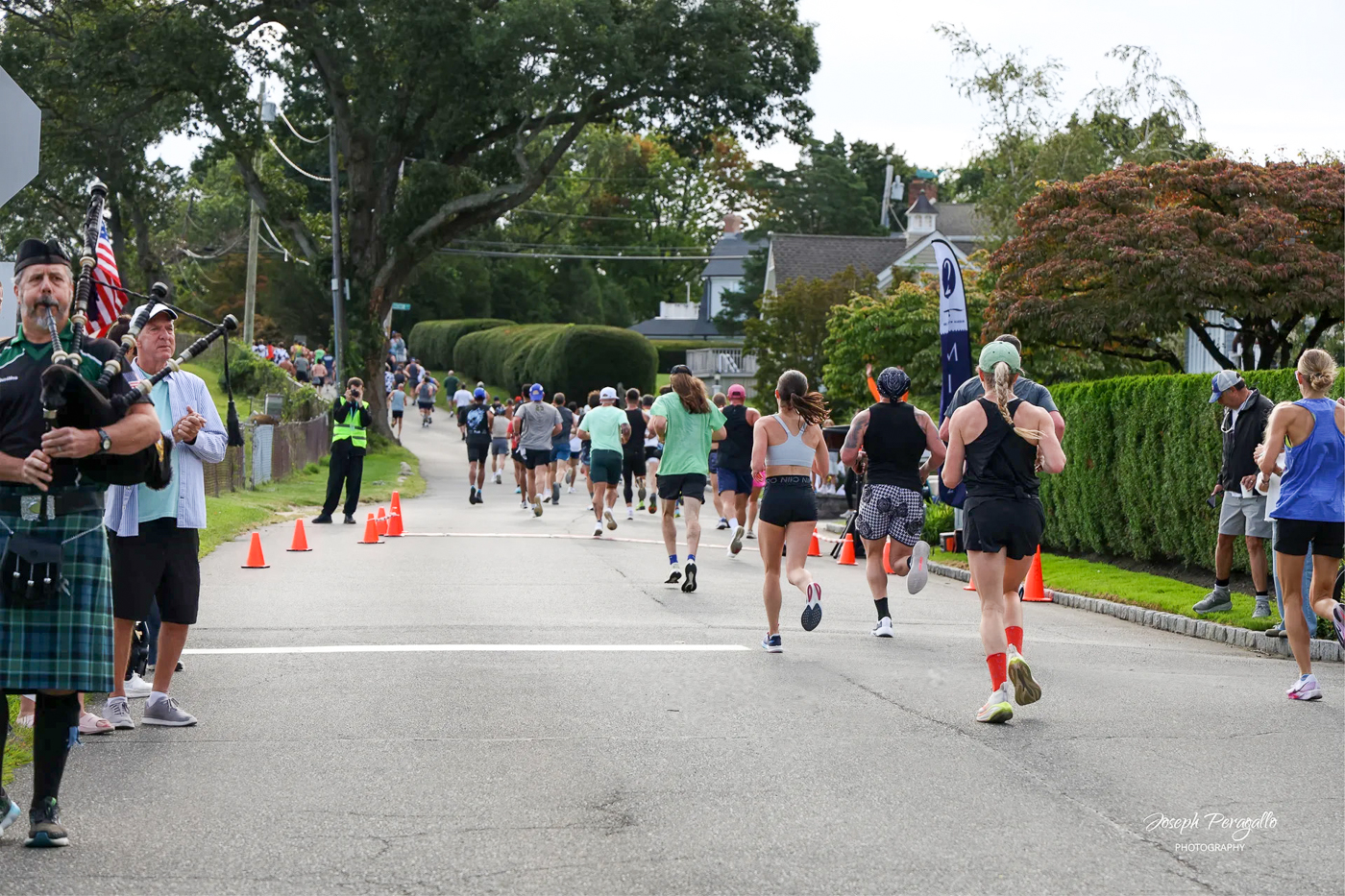
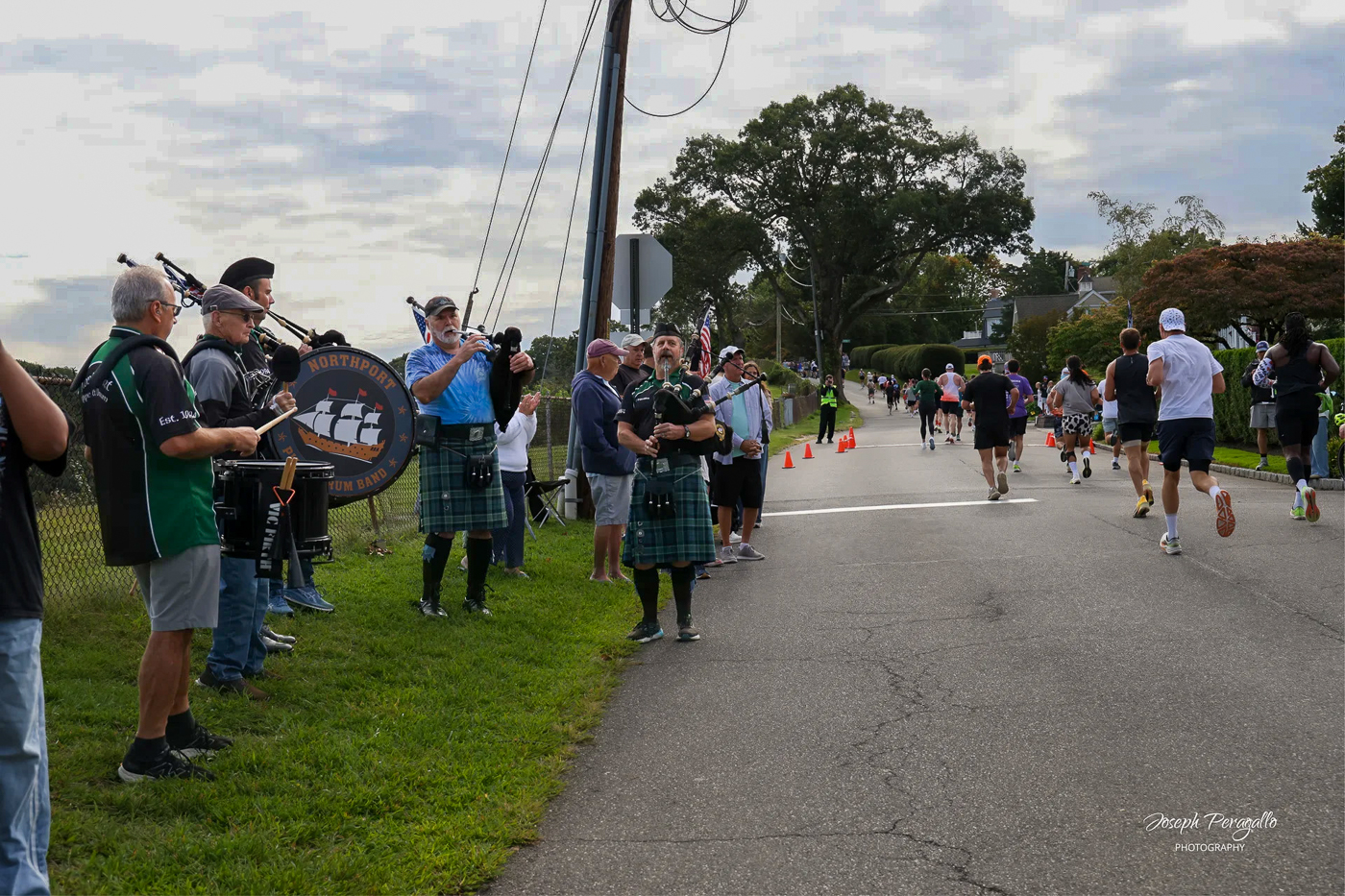
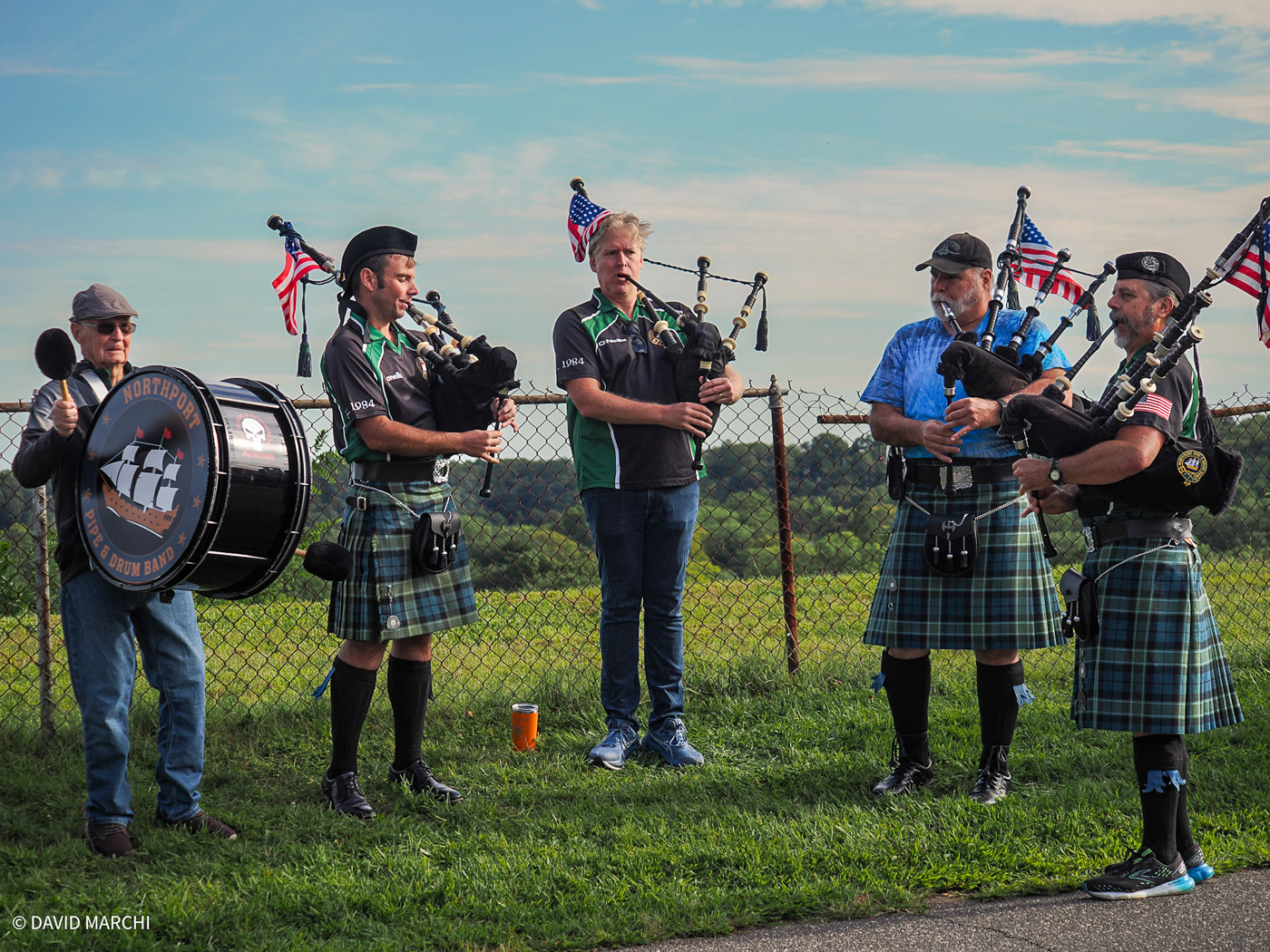
The competitive challenge was only part of Gibbens’s reason for coming back. He remembered conversations in a local restaurant where people had plenty to say about the race. One person’s sons ran it every year. Someone else knew the course firsthand. They talked about how to run it and the bagpipes at the top of James Street.
For a visiting athlete, those exchanges made a big impression. They understood what he was there to do, and it mattered to them.
“Having a community be fully behind it is just so amazing to be a part of,” Gibbens said.
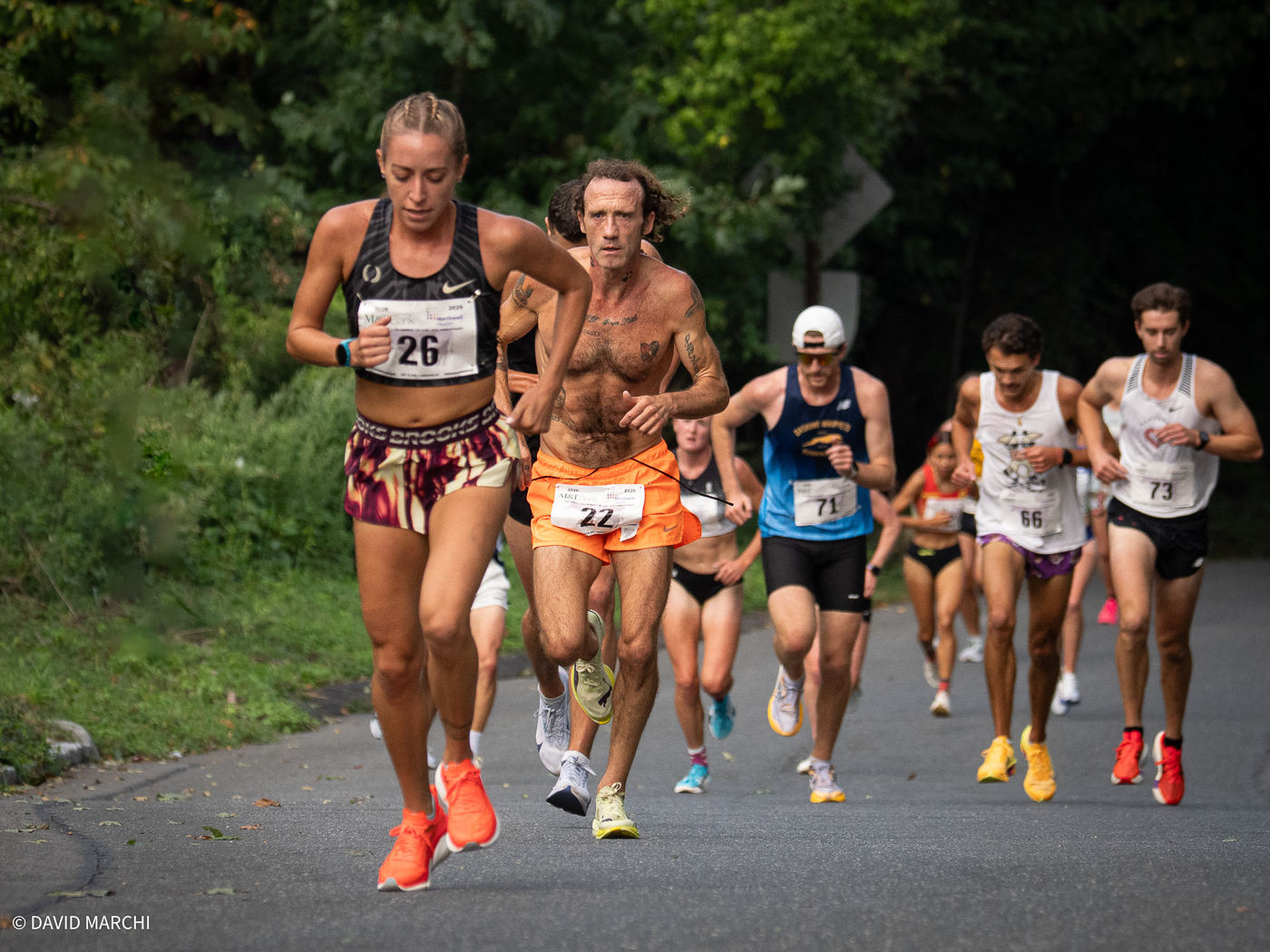
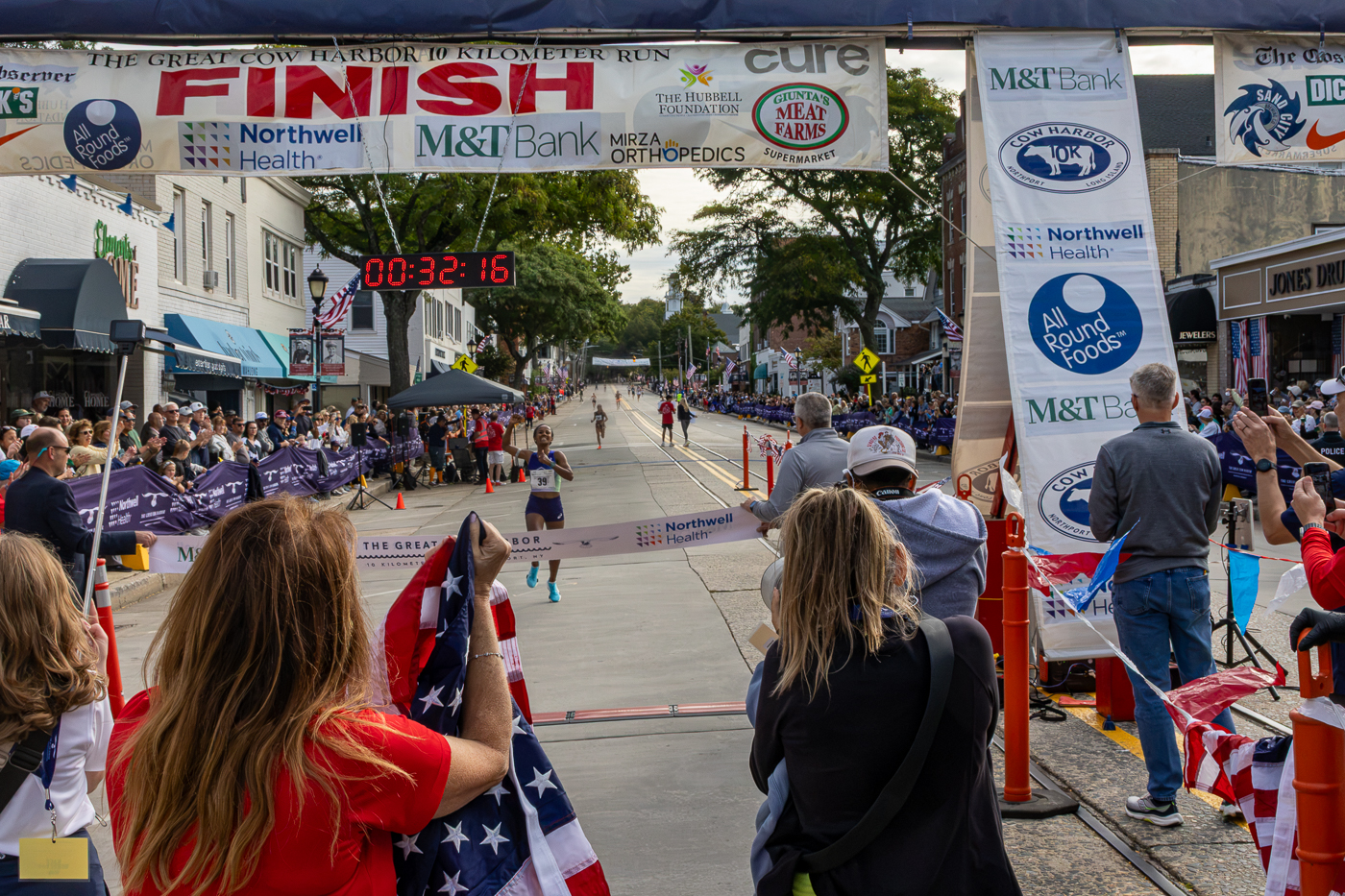
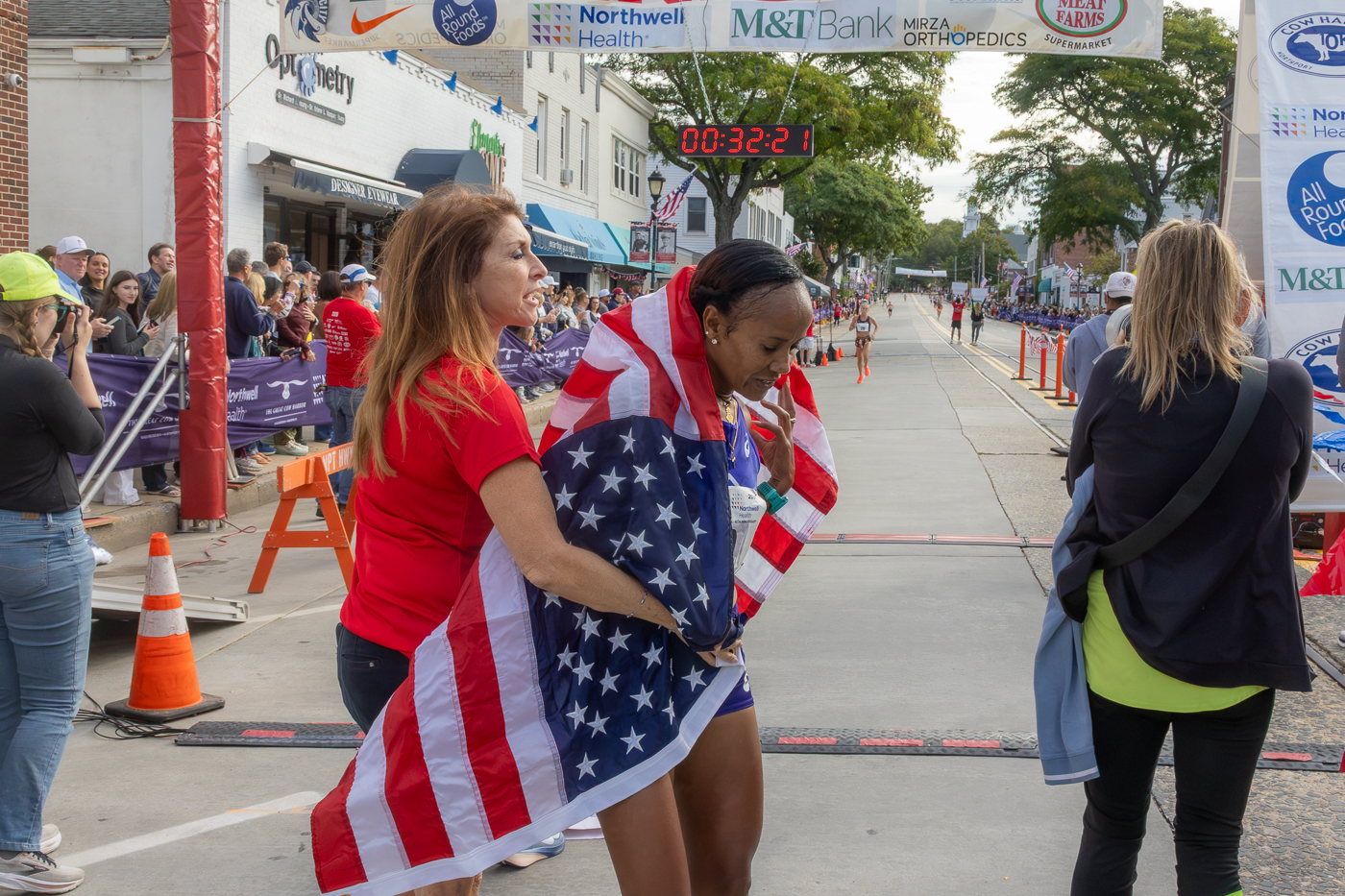
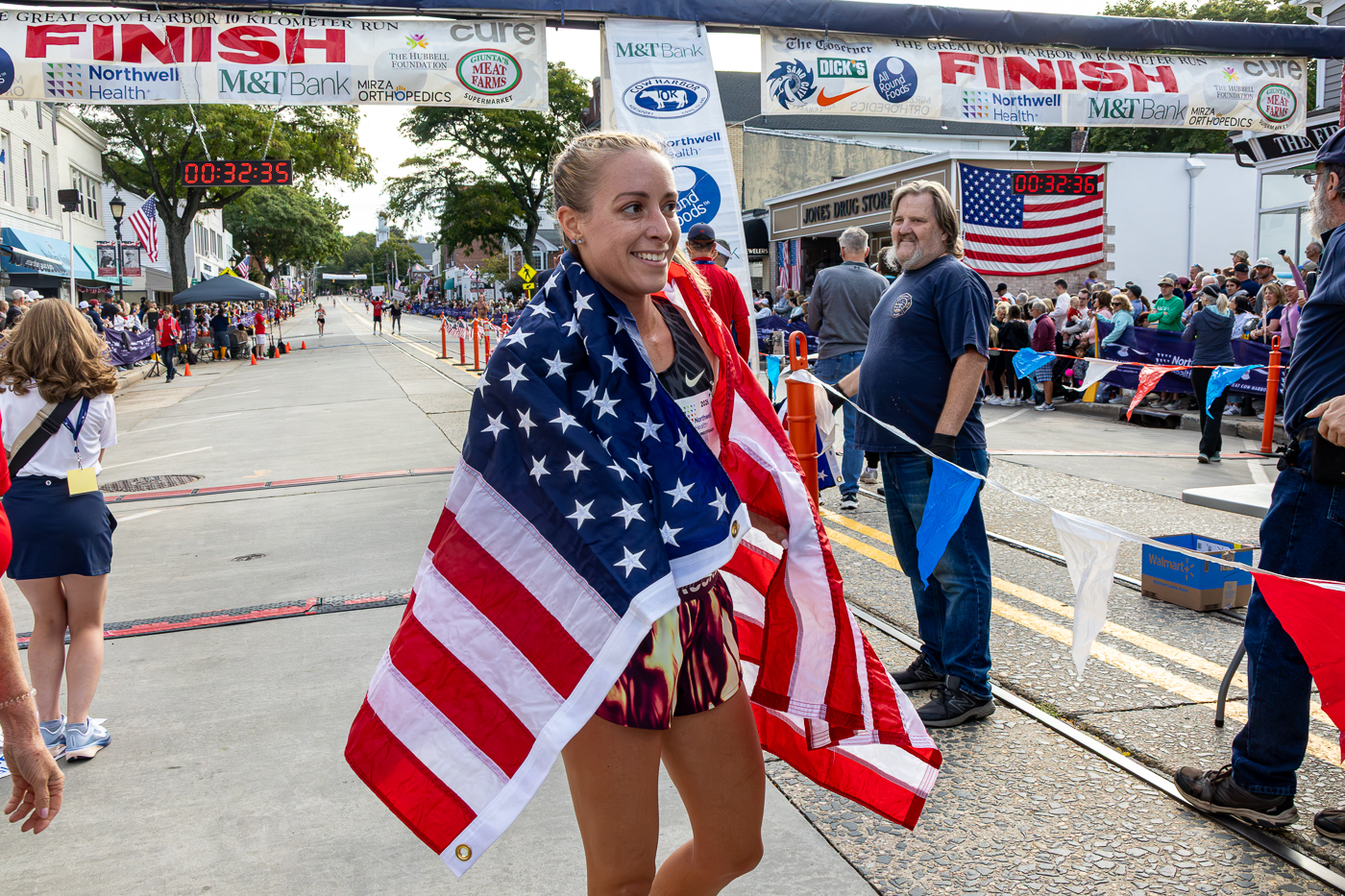
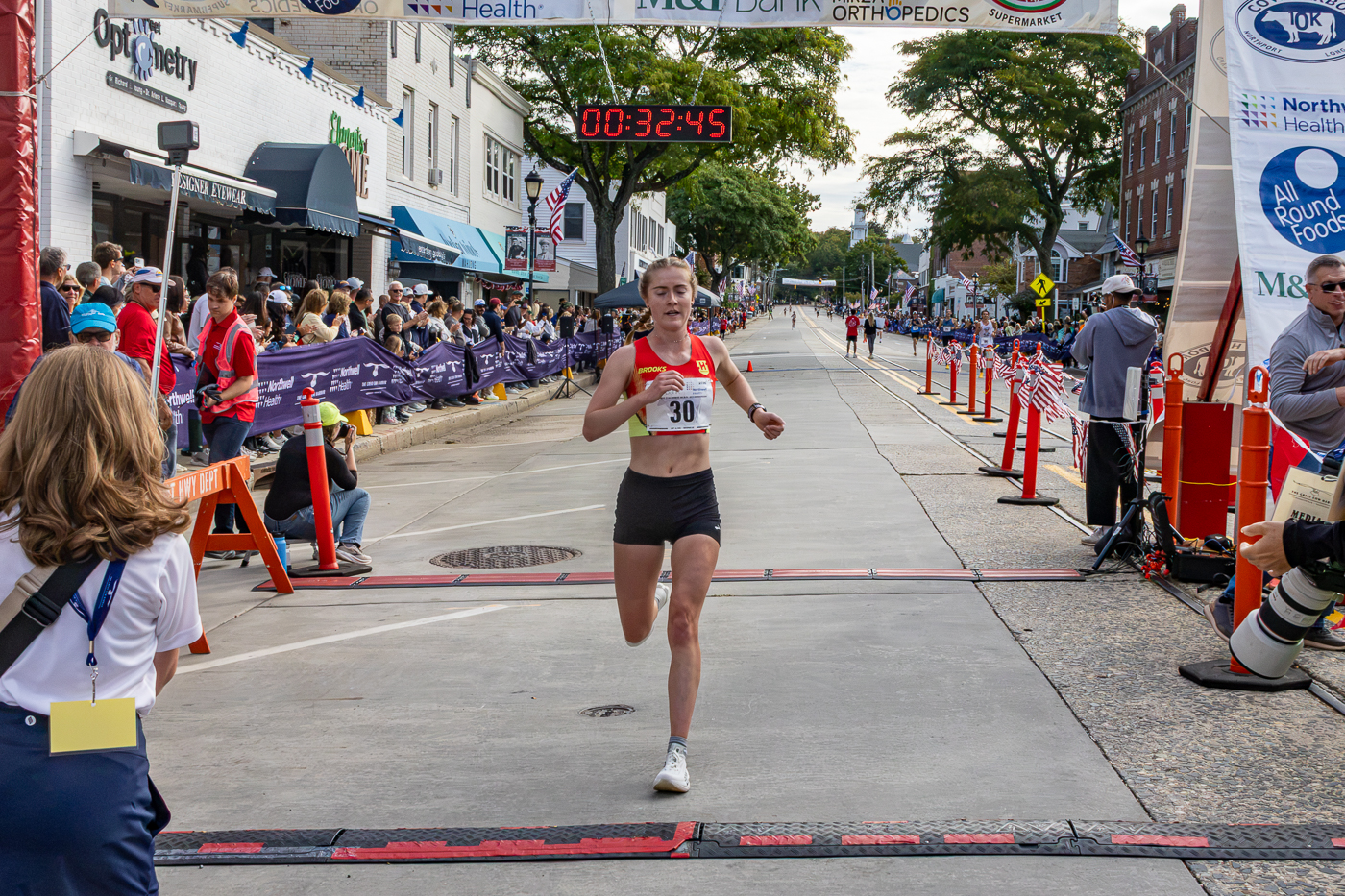
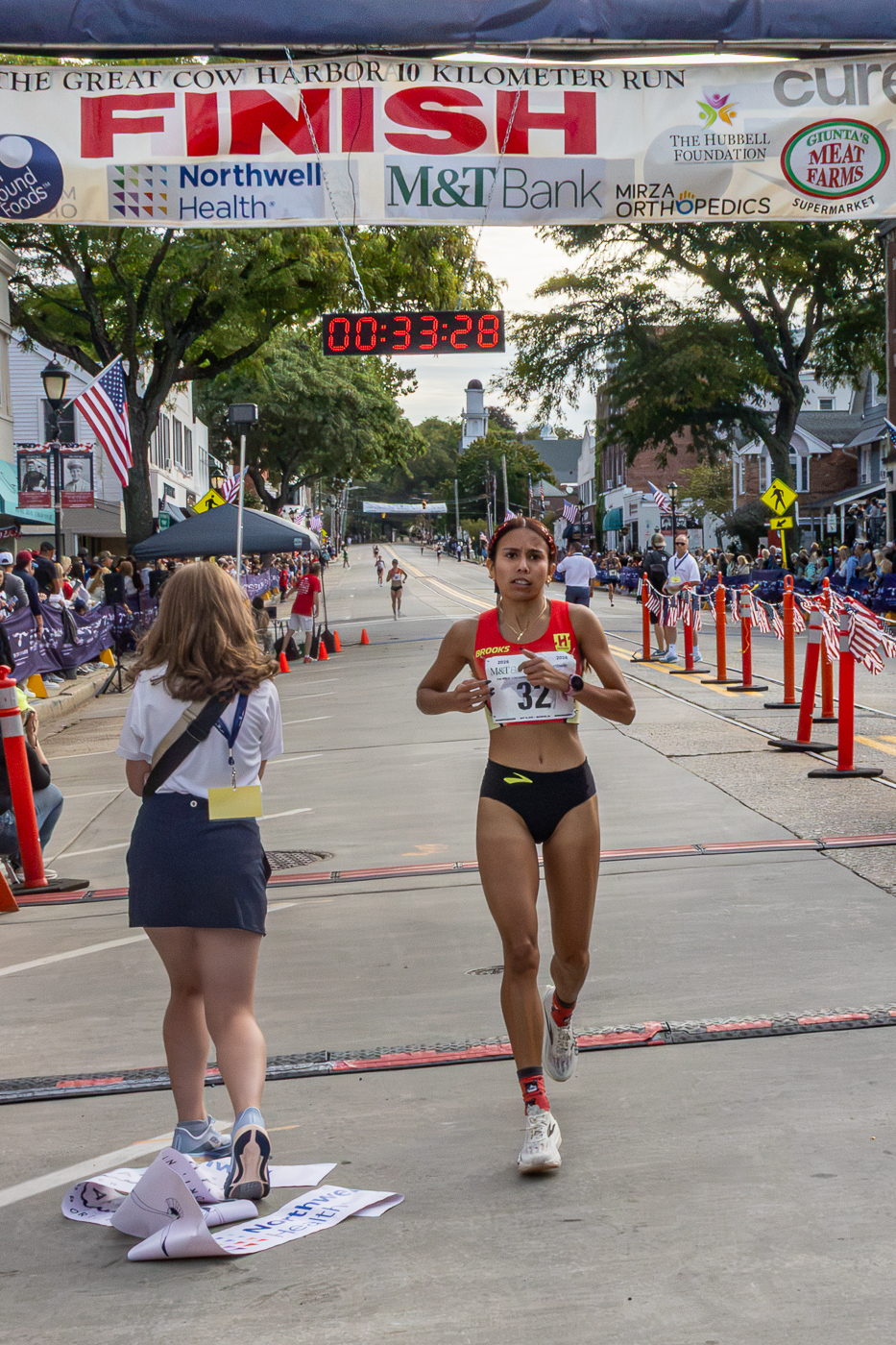
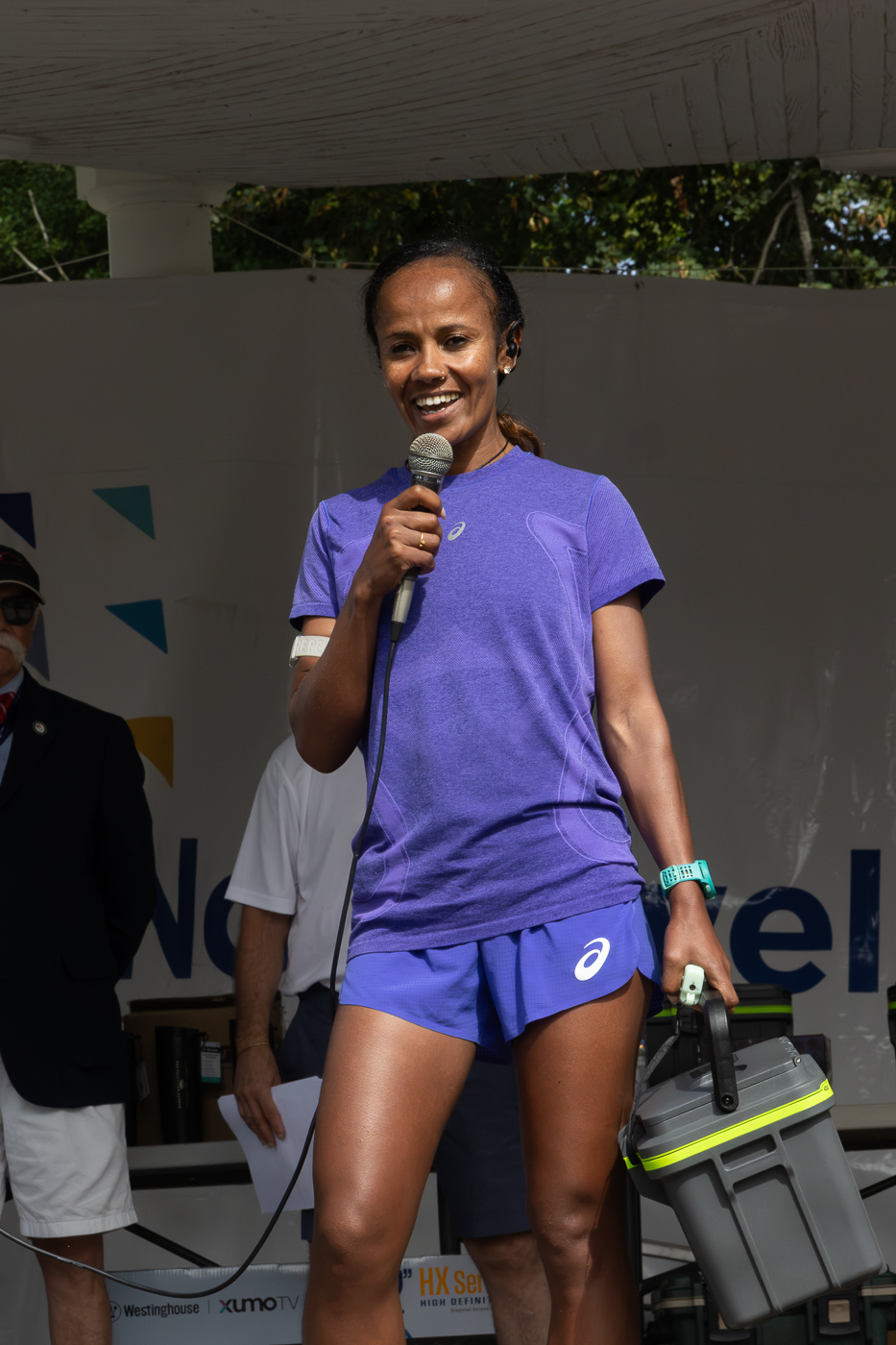
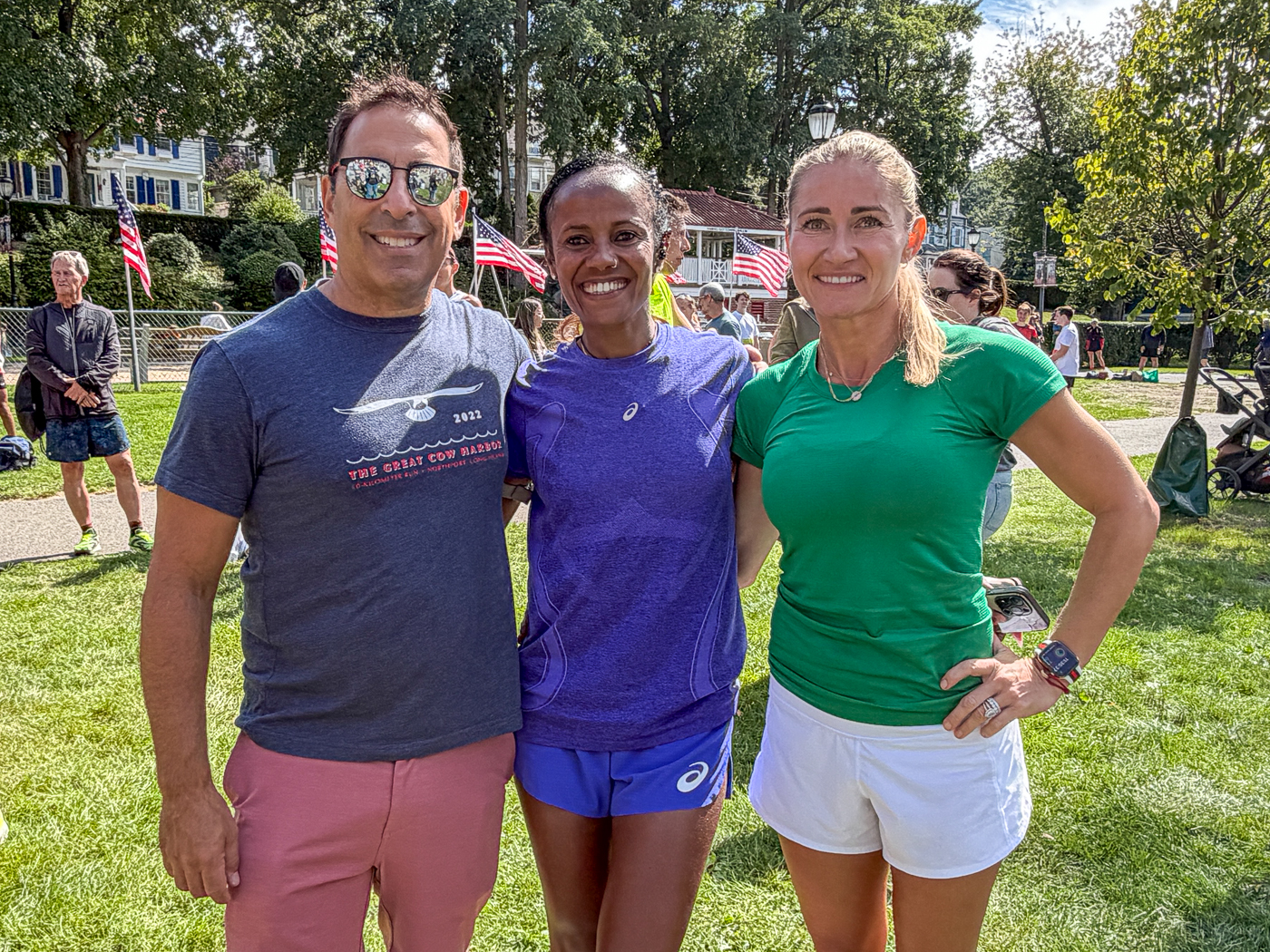
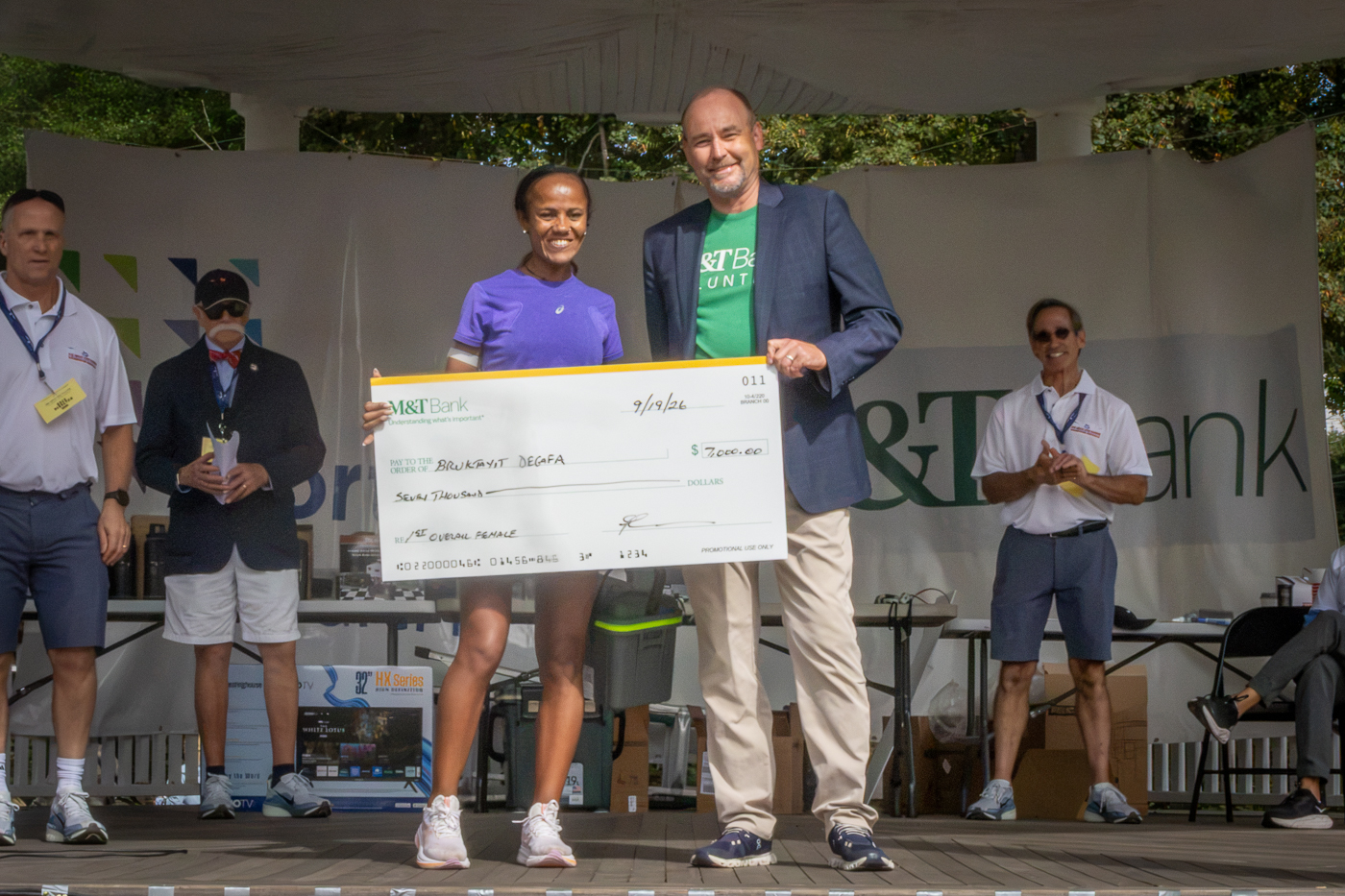
Biruktayit “Birka” Degefa, based in Colorado Springs and running for Harambee, won the women’s race in 32:17.97. Her $6,500 first-place award and $500 bonus for leading at 5K brought her total to $7,000. Kassie Parker of Waverly, Iowa running on the Hansons-Brooks Team, followed in 32:26.35, with Eva Jess third in 32:45.49 also running on Hansons-Brooks.
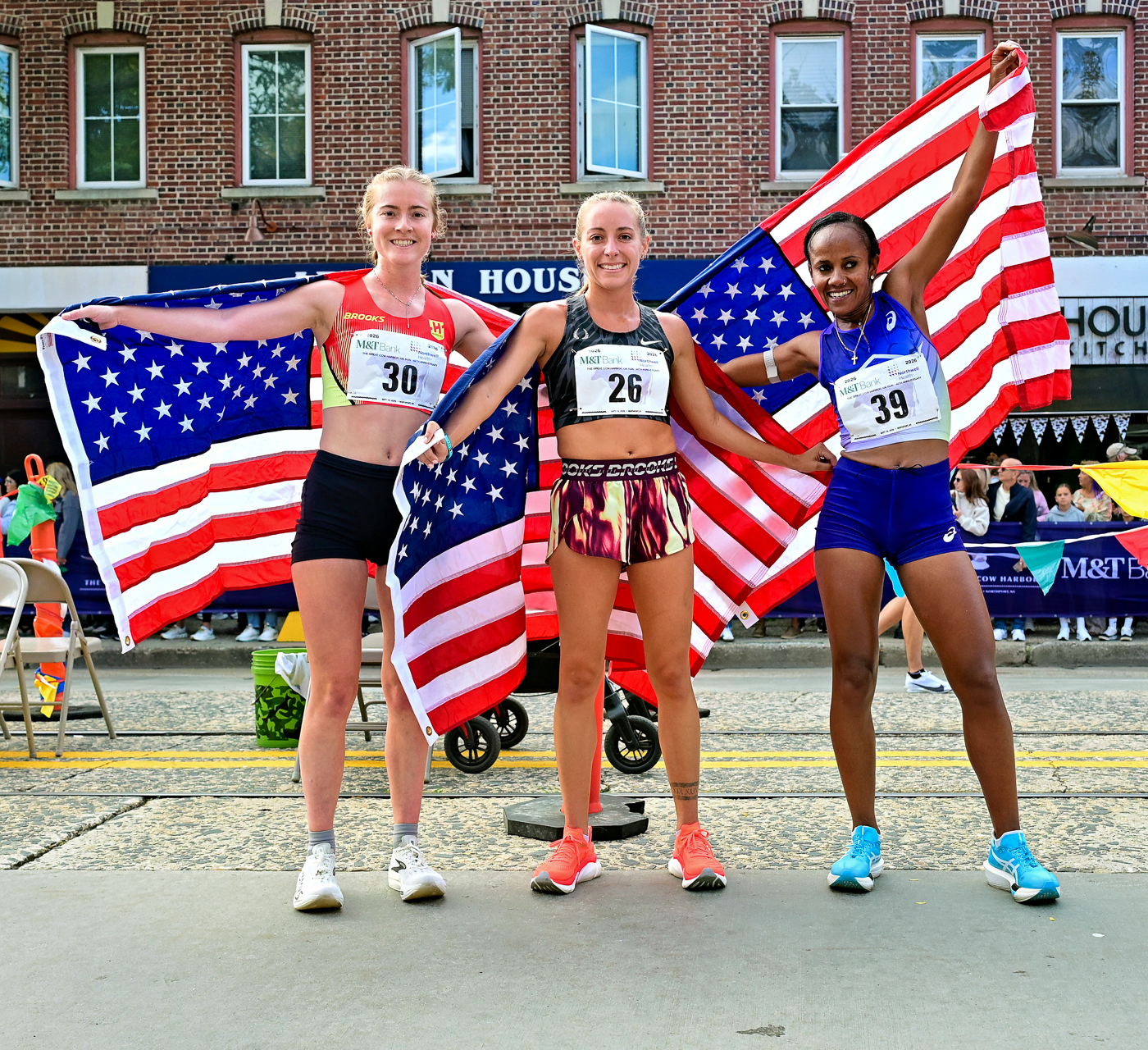
Interviewed before the race, Degefa pointed to both the community and the course as reasons to come back. The hills were part of its appeal.
“I like a challenge,” she said.
Her friend and fellow runner Merga Gemeda, who helped translate during the interview, described returning for a third year after making Cow Harbor his first road race in 2024. A member of Minnesota Distance Elite, he appreciated the Host Families and the community, while taking the course seriously: hill training and a pre-race course preview helped him think about where to push and where to make a move.
Coming back to friends
Ask Fodor why Elite Athletes return, and his answer begins with hospitality.
The Host Family program gives visiting runners a connection to Northport that often continues long after race weekend. Fodor said athletes frequently request the same families when they return, and some visit their hosts at other times of year.
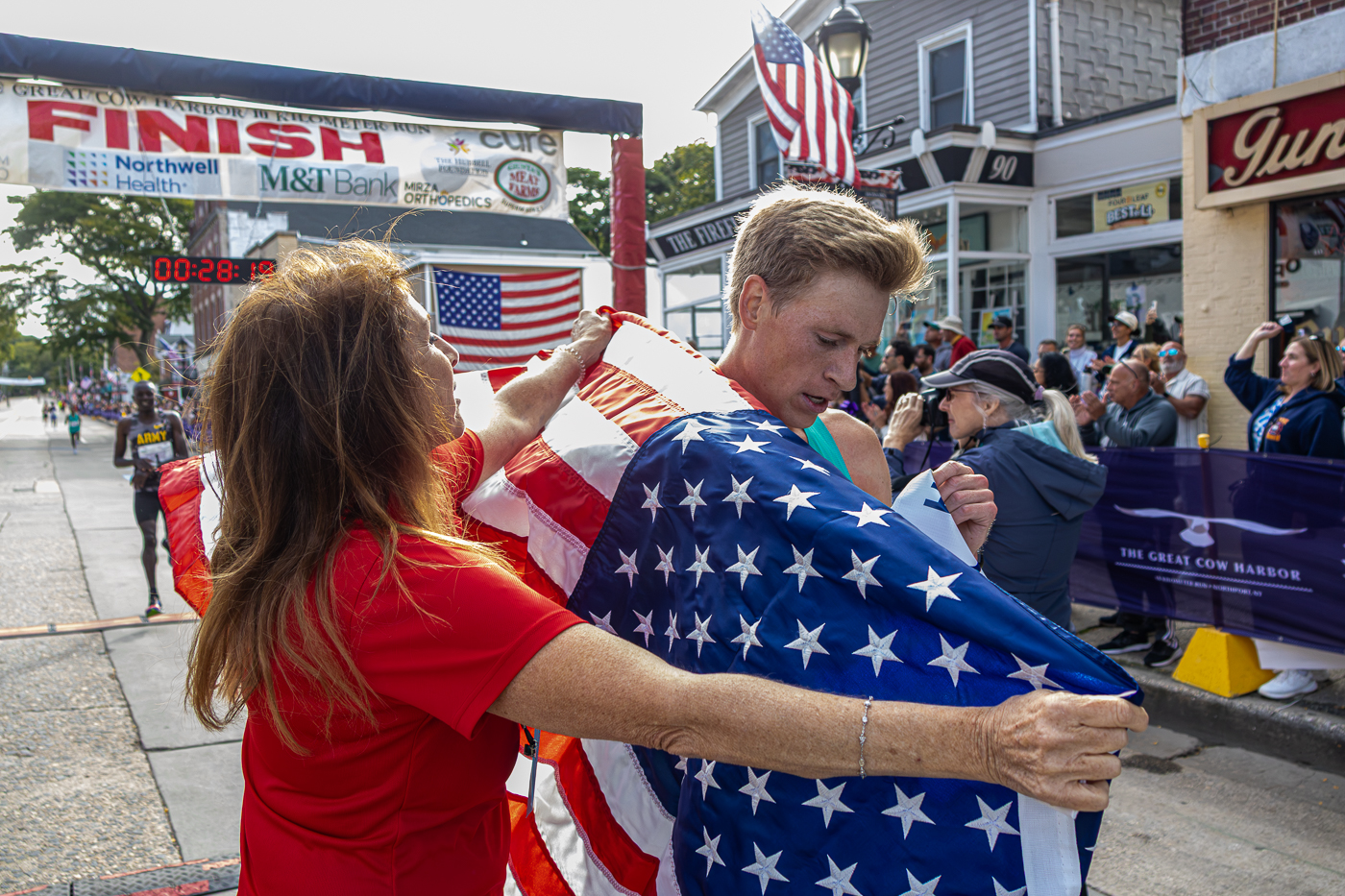
Fodor said Degefa gave her Host Family Howard and Ivanka Asche the American flag she received at the finish line after winning the women’s race.
He knows how lasting those friendships can be. He is still friends with an athlete his own family hosted in 1993.
“They’re already friends,” he said of returning runners and their hosts.
Fodor estimated that the program housed roughly 28 athletes this year, with about half the host families welcoming more than one. Sometimes the welcome extends to a runner’s family, too. When Gibbens asked where his visiting sister could park, Fodor offered his driveway, conveniently between the start and finish.
For Fodor, that attention is part of putting on a race people want to return to. He identifies the course, staggered starts and hosting program as three essential parts of The Great Cow Harbor 10K Run.
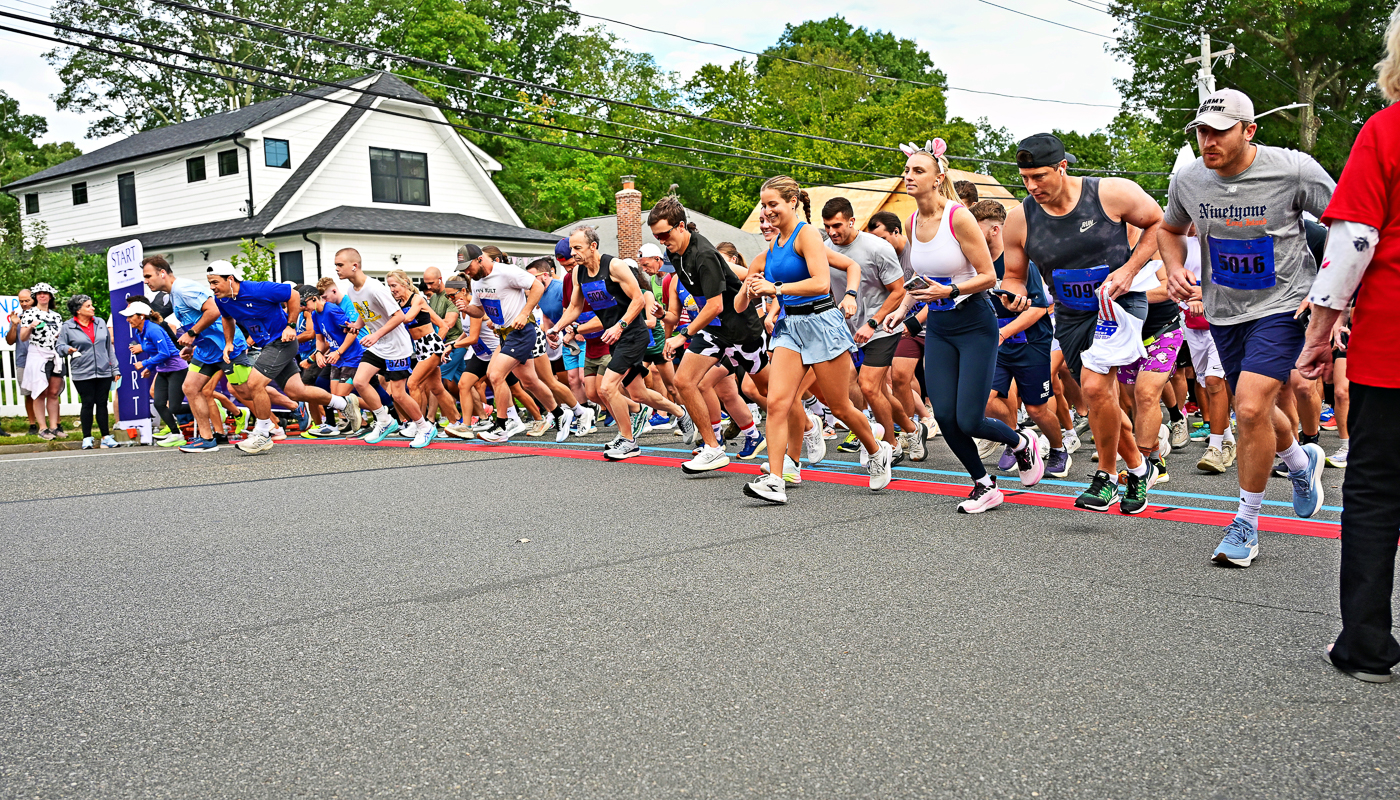
The staggered starts give runners more room on the course and a chance to experience the excitement of lining up at the front of their group.
“What we love about that is that person who’s running a 53-minute 10K gets to toe the starting line,” Fodor said.
That opportunity extends throughout the field, he explained, including runners taking an hour and a half to finish. Each group gets its own start, making the experience more personal while reducing congestion on the course.
The people behind the finish
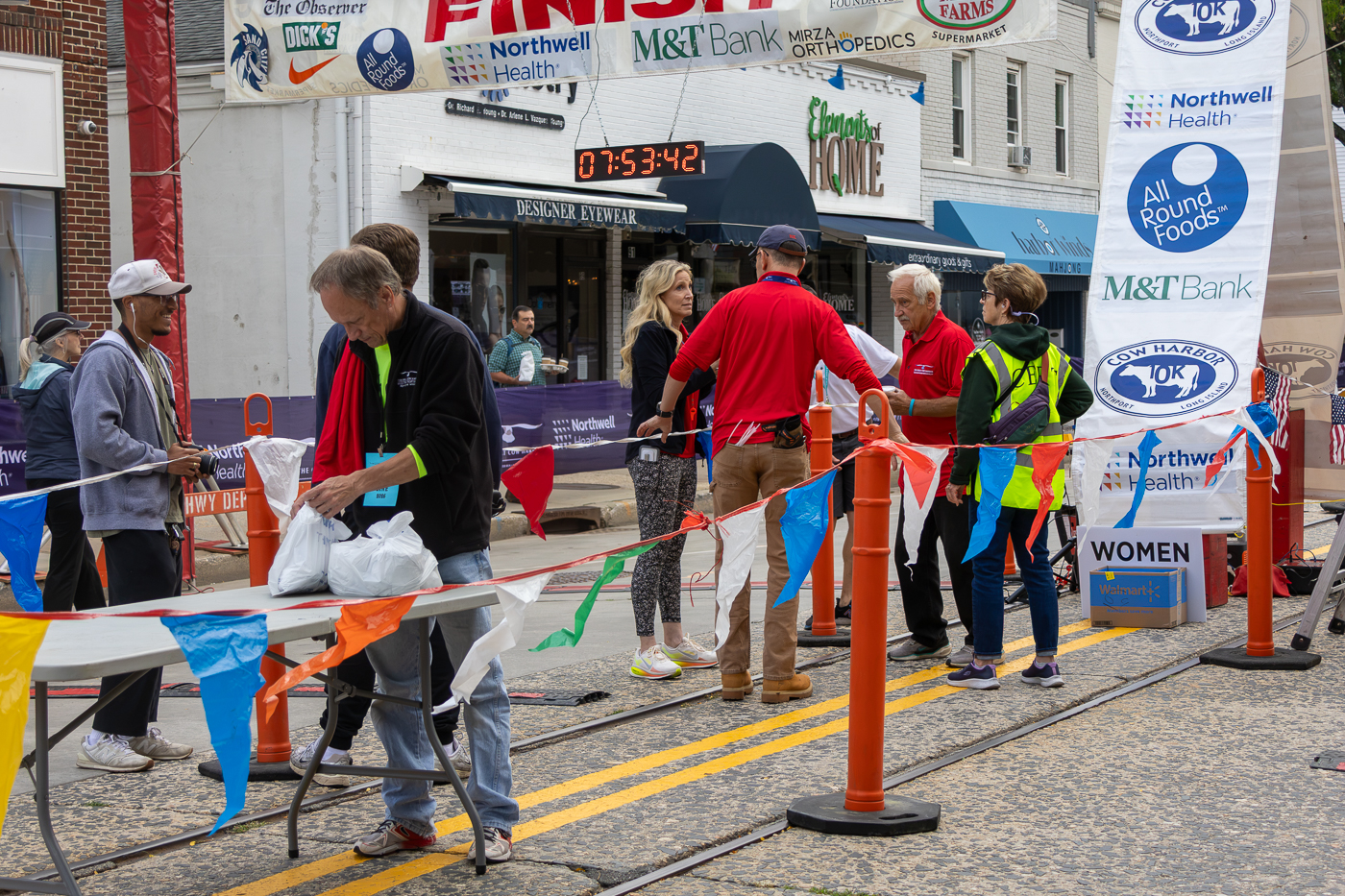
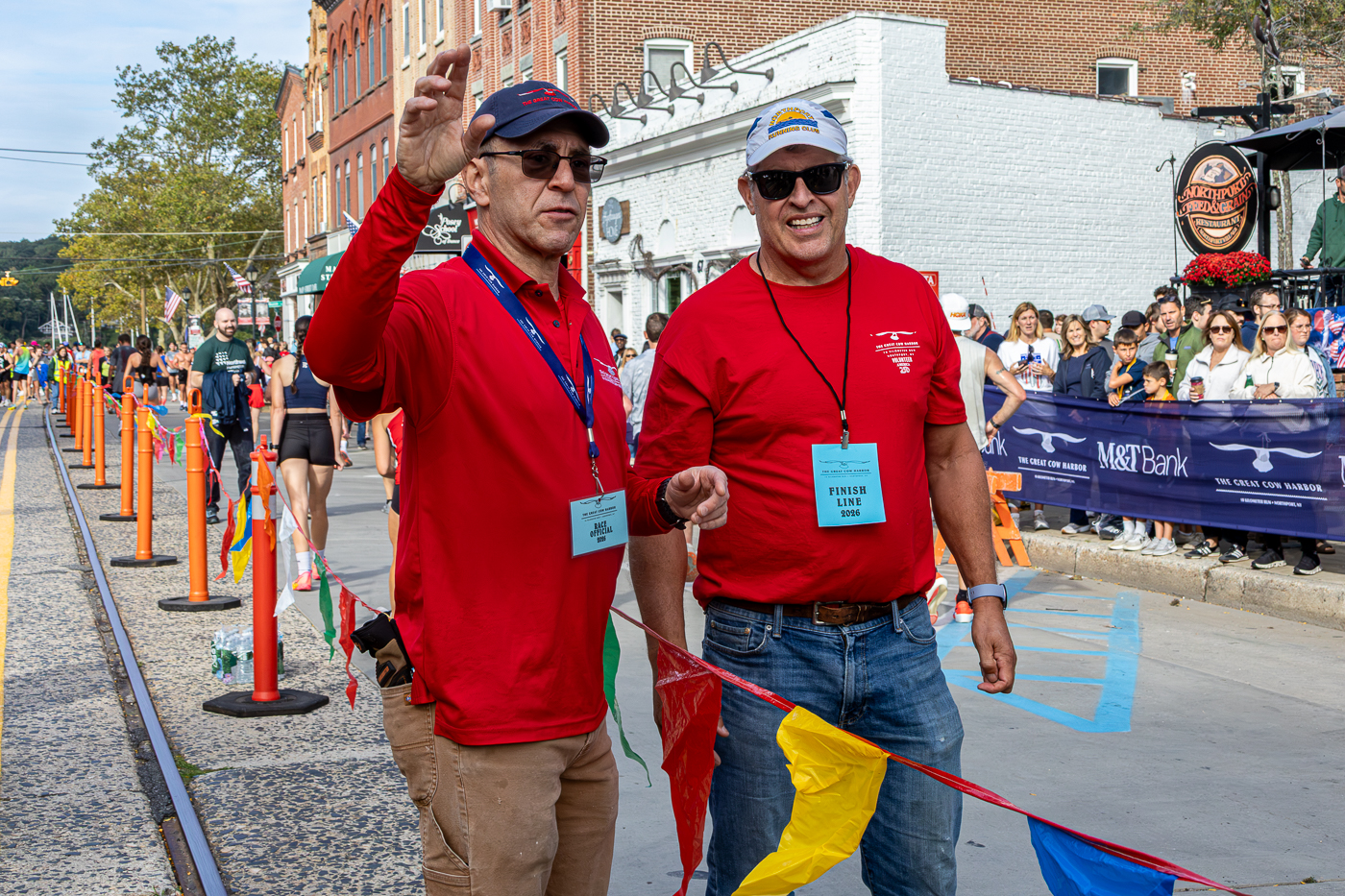
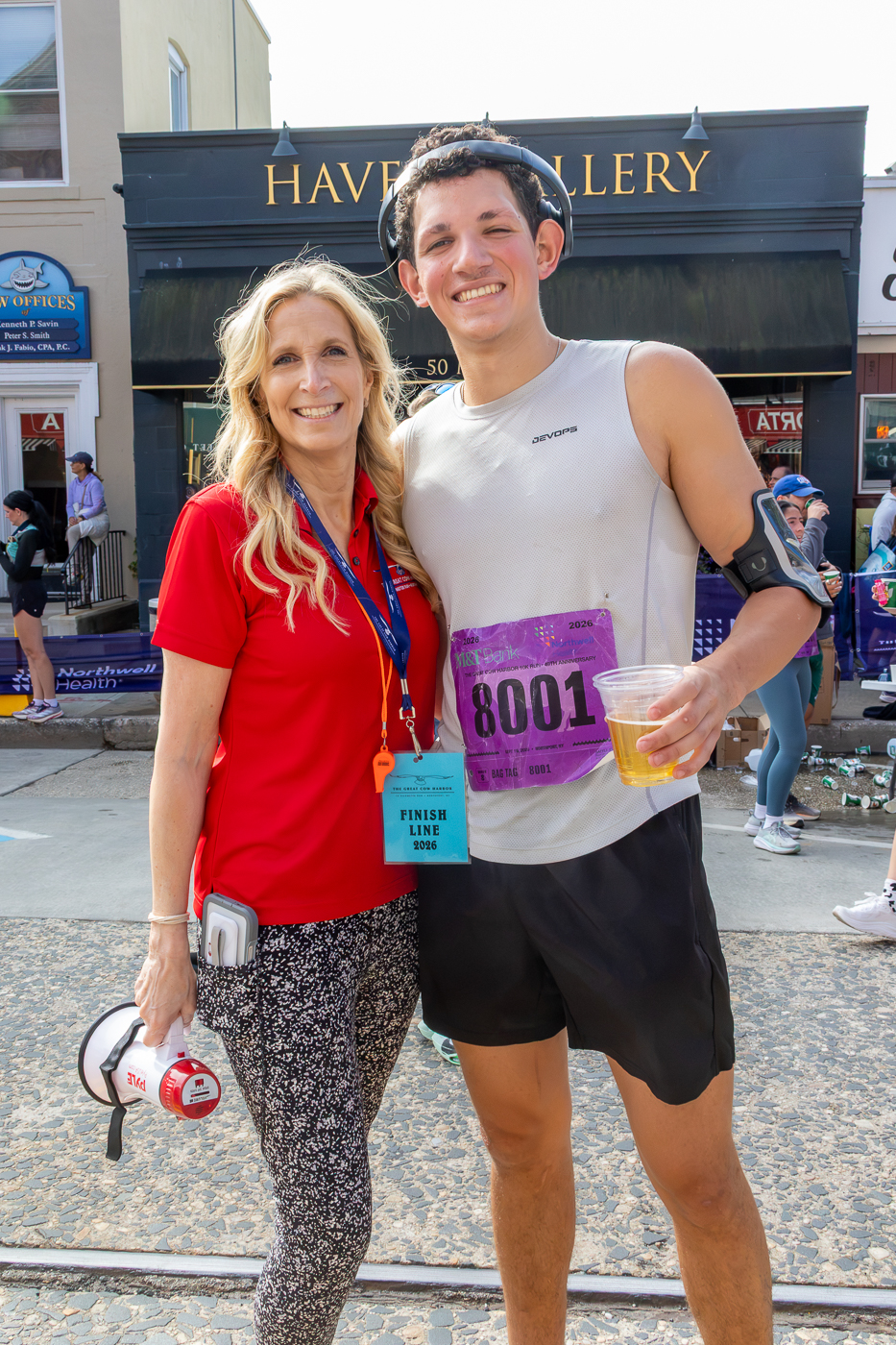
Laura Lerner, Committee Chair for Finish Line Operations, sees that experience from the Finish Line, where she works alongside Scott Gilbert, Head Committee Chair for the Finish Line. Over four years, her work has grown from coordinating volunteers to managing Finish-Line media, water stations, crowd control and other Finish-Line needs.
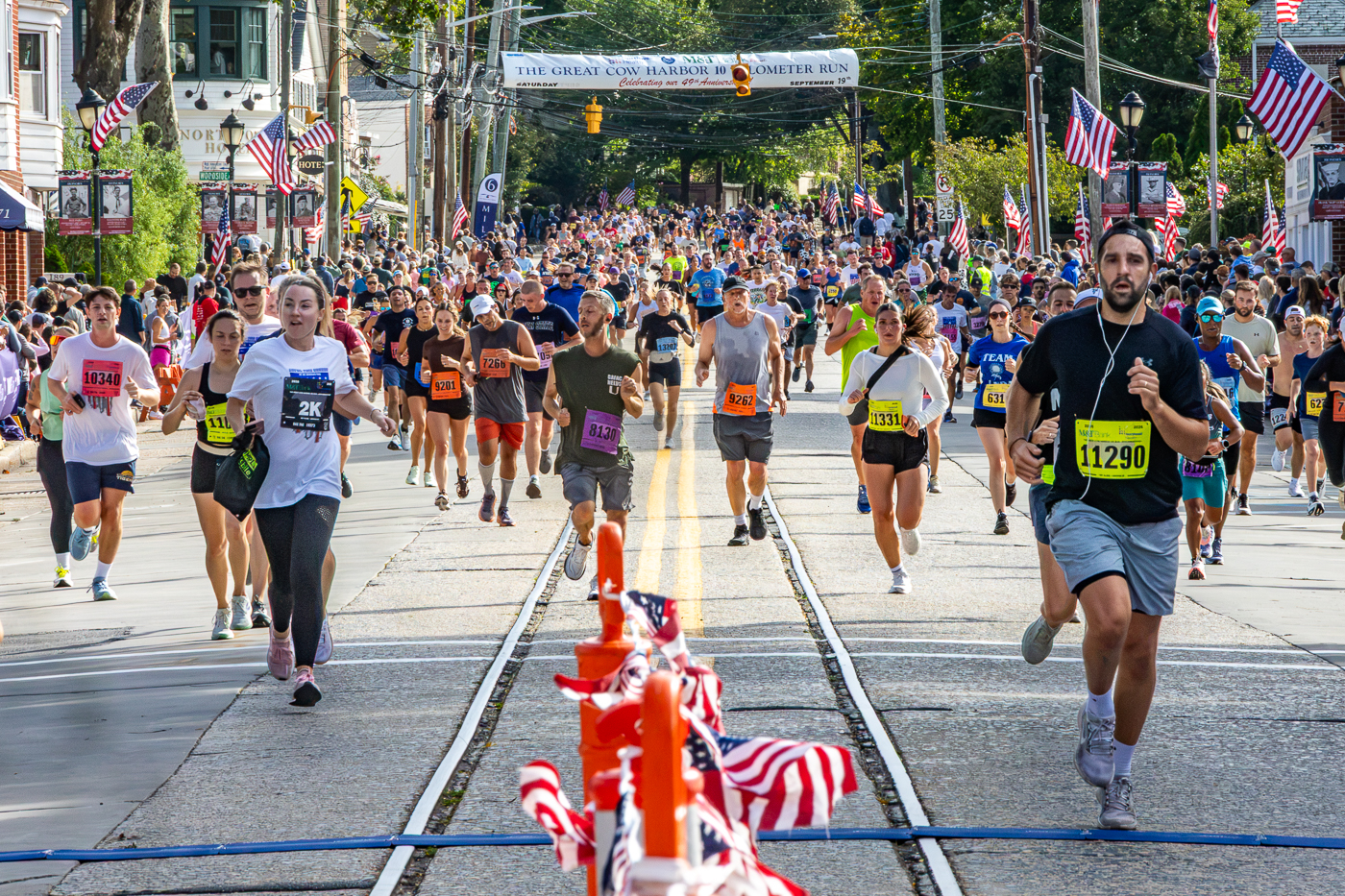
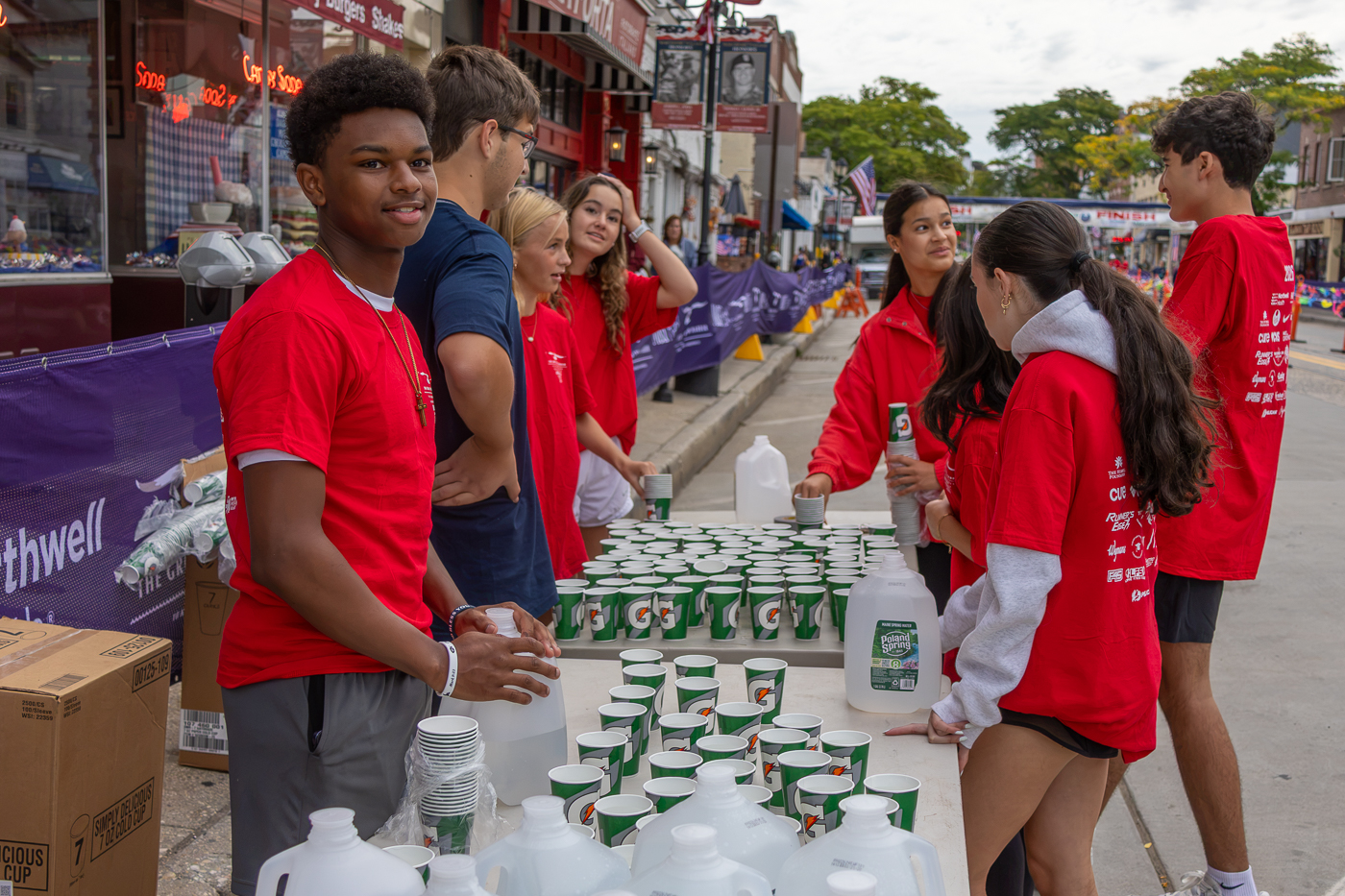
This year, when she found herself suddenly short of volunteers the night before the race, other committee members stepped in despite having their own assignments. Organizers handed out water and helped cover the work that needed doing.
That response reminded her why she stays involved. These are people she can count on.
Their connection continues through monthly meetings during most of the year and opportunities to spend time together away from race-day responsibilities. For Lerner, who has lived in Northport for about a decade, the race has become a way to feel rooted in a town where many families go back generations.
“It’s the one time a year during this event that I really feel a part of the town, as if I have been there forever,” she said.
This year held another connection: her son, Miles, returned to run Cow Harbor, bringing his own history with the race together with the work that has become hers. His story accompanies this article.
What Northport gets back
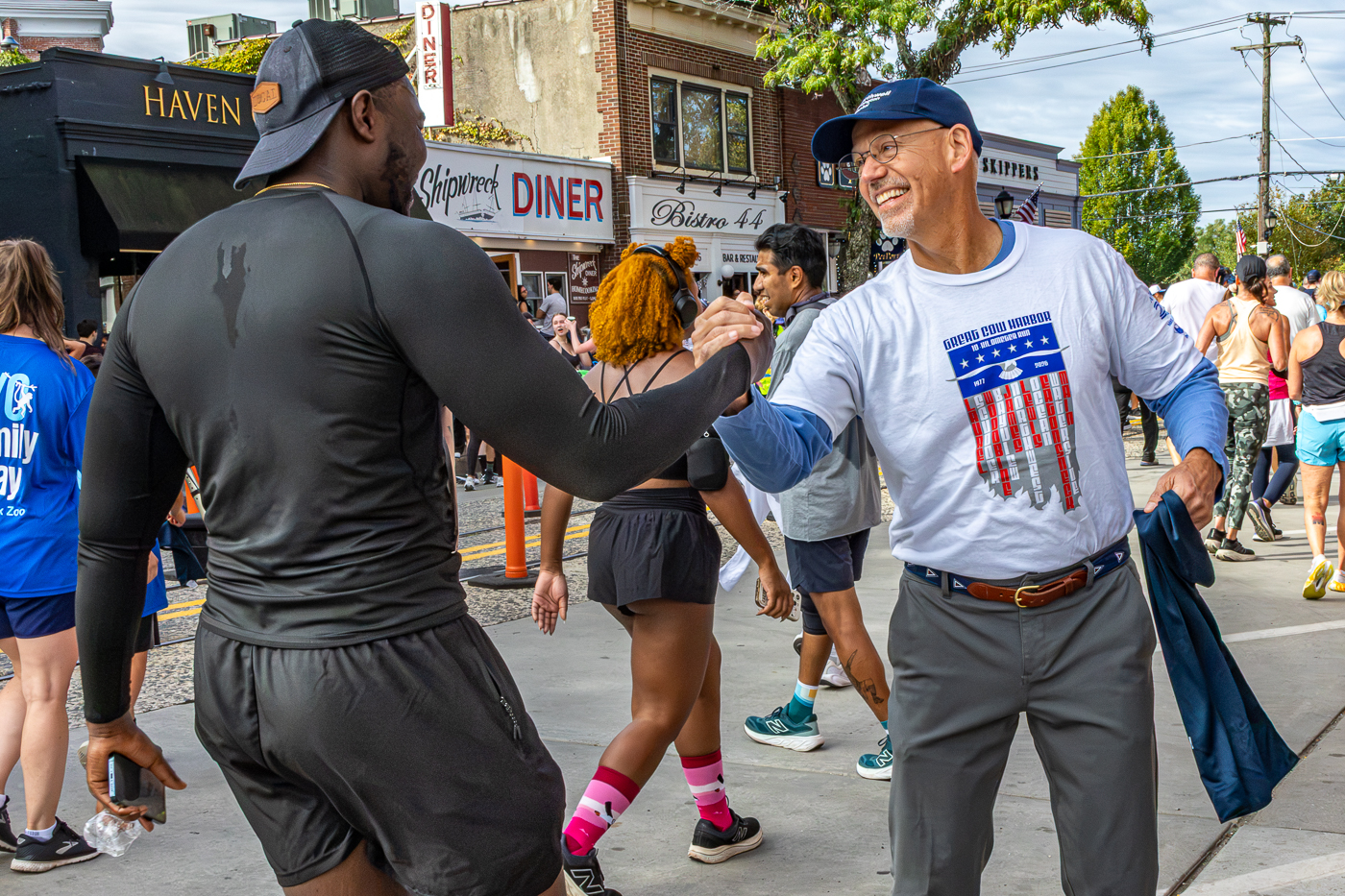
The support also reaches people beyond the course. Fodor said runners donated 868 cans of food for a local food pantry at Friday’s bib pickup. Within the first hour, he said, the collection table was overflowing. Two SUVs carried the donations to the pantry.
That response was one of his personal highlights of the weekend.
Partnerships that keep the race running
Fodor emphasized that an event of this size depends on sponsors whose support continues from year to year. He identified Northwell Health and M&T Bank as Presenting Partners and described the relationships as long-standing partnerships the race takes seriously.
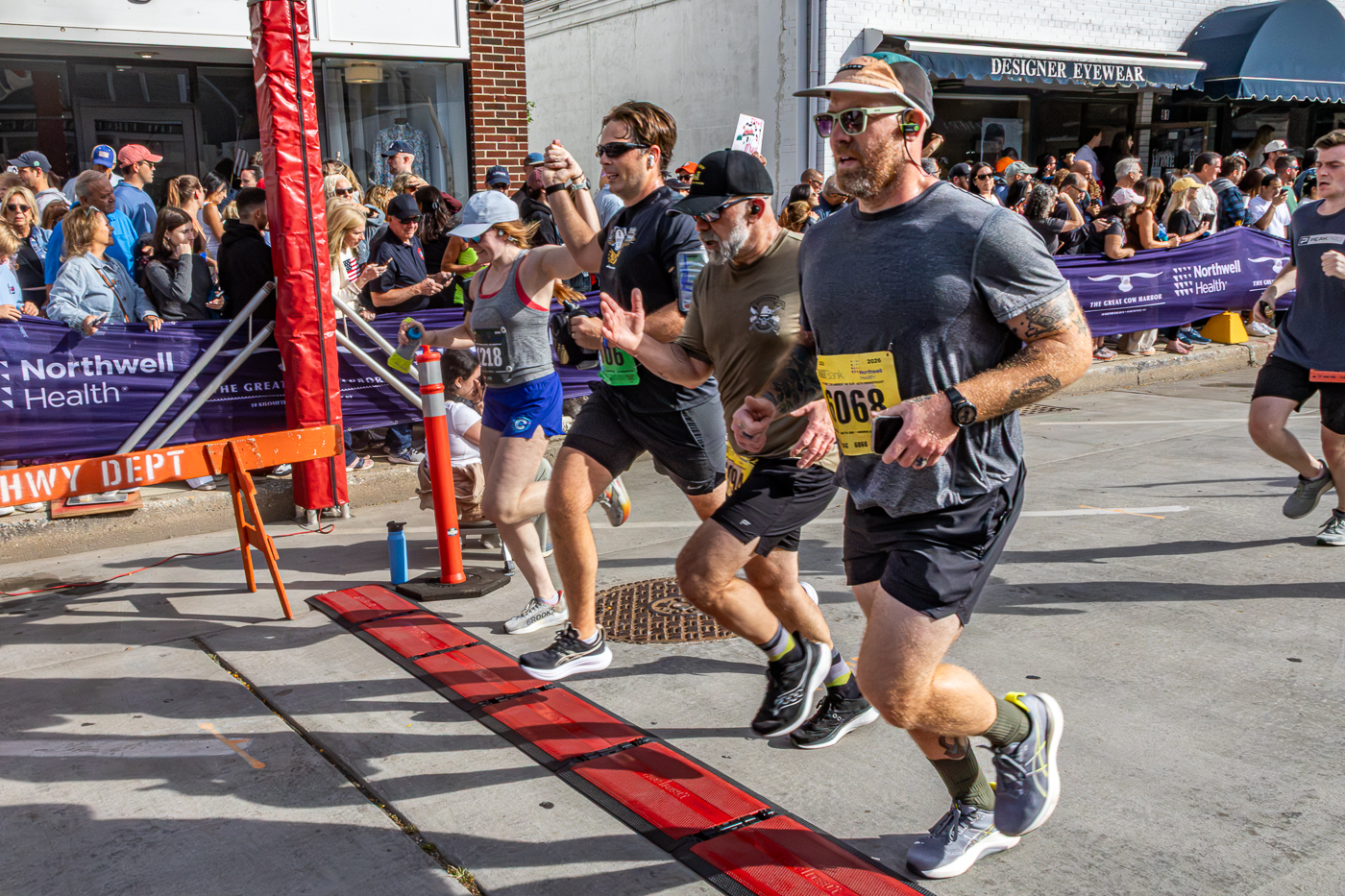
Their presence follows runners through the event: M&T Bank is featured at the start, Northwell Health at the finish, and All Round Foods at the refreshment pavilion in the park.
“This is a partnership,” Fodor said. He explained that the committee works to give those sponsors an event they can be proud to associate with their brands.
All Round Foods has taken on a prominent role in meeting one of the event’s biggest practical challenges: feeding the runners afterward. Fodor recalled the difficulty of securing enough food when a donation might cover only a fraction of the field. He said All Round Foods responds by asking what is needed and helping provide it, including bagels, cookies and other refreshments.
That support becomes part of what runners remember: an organized start, a welcoming finish and a place to eat and spend time together after the effort. It also helps volunteers deliver the experience they have spent months preparing.
For the Committee, planning the next Great Cow Harbor 10K Run begins with looking at what could be better. The friendships make people want to do that work again, Fodor said, and the satisfaction and pride come from seeing what it makes possible.
For runners deciding whether or not to return, the reasons can be just as personal: another shot at besting a rival, a welcoming stay with a Host Family, familiar faces and cheers on a difficult hill.
Cobe found his in the camaraderie along the streets where he grew up. Gibbens heard his in talking with people who knew the course. Lerner found hers when fellow volunteers stepped up to help.
Northport gives them people to come back to.
Photography by Dana E. Richter, Diane Schaber, June Margoln and Volunteer Contributing Photographers: Mike Azzato, Joe Peragallo, David Marchi, Katie Cobe and Laura Lerner. Videography by June Margolin and Diane Schaber, Editing by June Margolin.
Miles Lerner Comes Home to Cow Harbor
By Dana E. Richter
Running up James Street, Miles Lerner knew the hill as more than one of Cow Harbor’s toughest stretches. It was the street beside his. It’s where he grew up. He had run it, biked it and driven it. Now he was there again and experiencing it as part of a race that had taken on a much bigger meaning.
“It made me want to tell all the people I was running beside, ‘Hey, this is my home,’” he said.
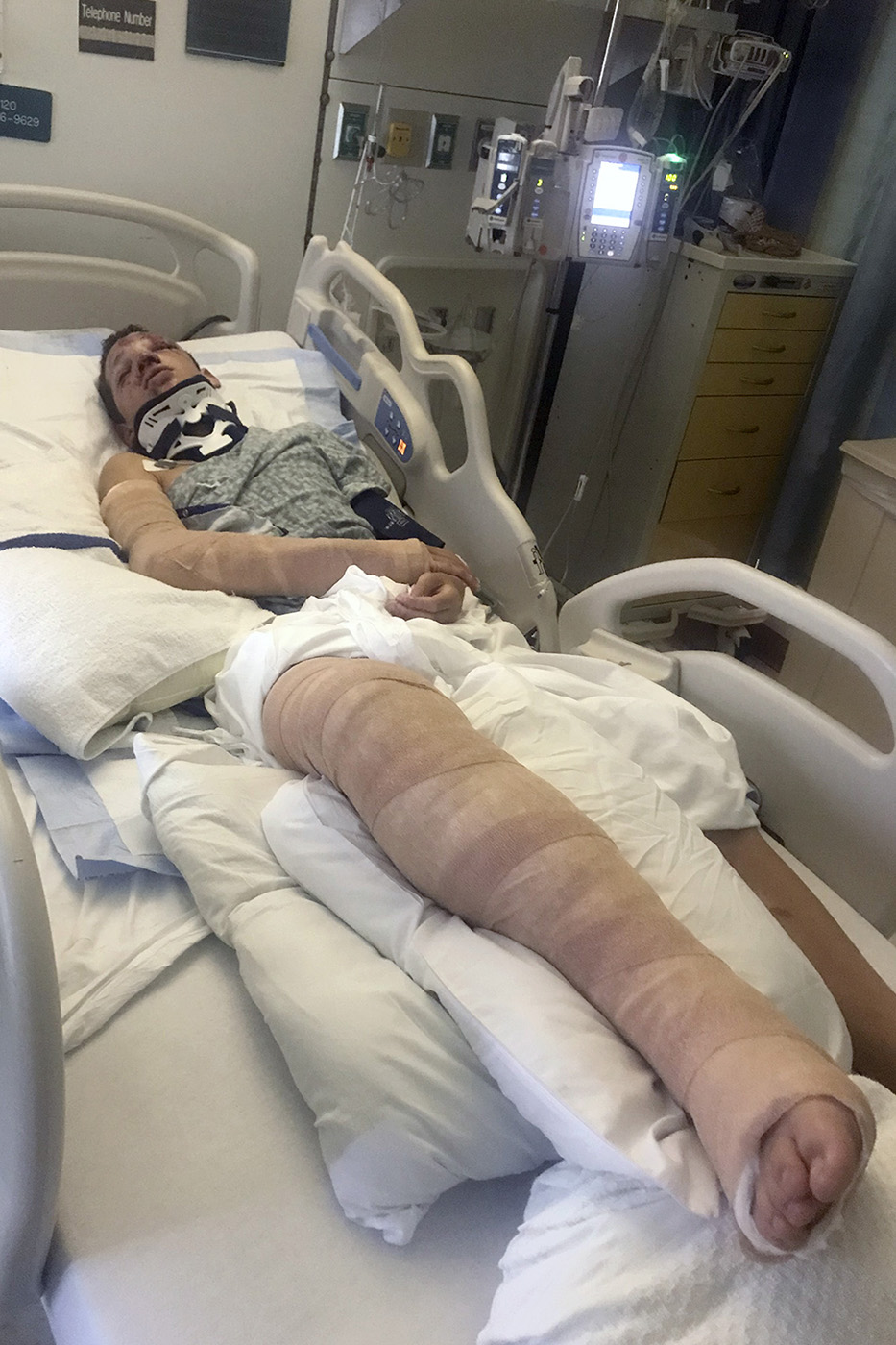
Miles’s return to the Great Cow Harbor 10K came eight years after he was hit by a car in front of Northport High School in September 2018. At the time, I was afraid he wouldn’t survive. I couldn’t begin to imagine this day. The accident and the long months after changed his life. So did the community that helped him through it.
Miles’s mother, Laura, and I became best friends back in 2011, and I’ve always had a close relationship with Miles and his siblings. I spent a lot of time with him during his hospital stay and rehabilitation. Seeing how far he has come hits me deeply. During our interview, Miles spoke about gratitude, the life he has built and his appreciation for Northport.
“And me!” I teased.
He replied that he didn’t know if he was allowed to say that in the interview.
Since his recovery, he has graduated from college and taken on physical challenges, including a grueling cross-country bicycle ride. Coming back to race Cow Harbor offered something pretty personal: the opportunity to celebrate in the town that had supported him and along streets filled with special memories.
Back from college and unsure where he might be a year from now, he wanted to take that opportunity while he was home. Running Cow Harbor again was a huge bucket-list goal.
“This definitely felt like my grand return to my hometown,” he said, “and I figured this would be a great way to appreciate this town that has given me so much, both through the community surrounding my accident and just through my childhood and upbringing.”
The Lerner family’s connection to the race stretches back to its beginning. His father and grandmother participated in the first Cow Harbor and continued running it for several years. Miles last ran it at age 11, before he lived in Northport. Of course, now he could connect the hills he remembered from that first race with the neighborhood he had come to know and love.
His mother, Laura, now chairs finish line operations. She remembers the race community being there for Miles after the accident, including fundraising and a Cow Harbor scholarship. She is forever grateful. Over the years, an event she had known through her son became a major part of her own life.
Miles prepared for his return with treadmill running and some practice time on the course, Laura said. At the starting line, he felt a rush of excitement and gratitude for being there.
“Seeing the raw excitement at the starting line was just so invigorating, and just made me feel so happy to be alive,” he said.
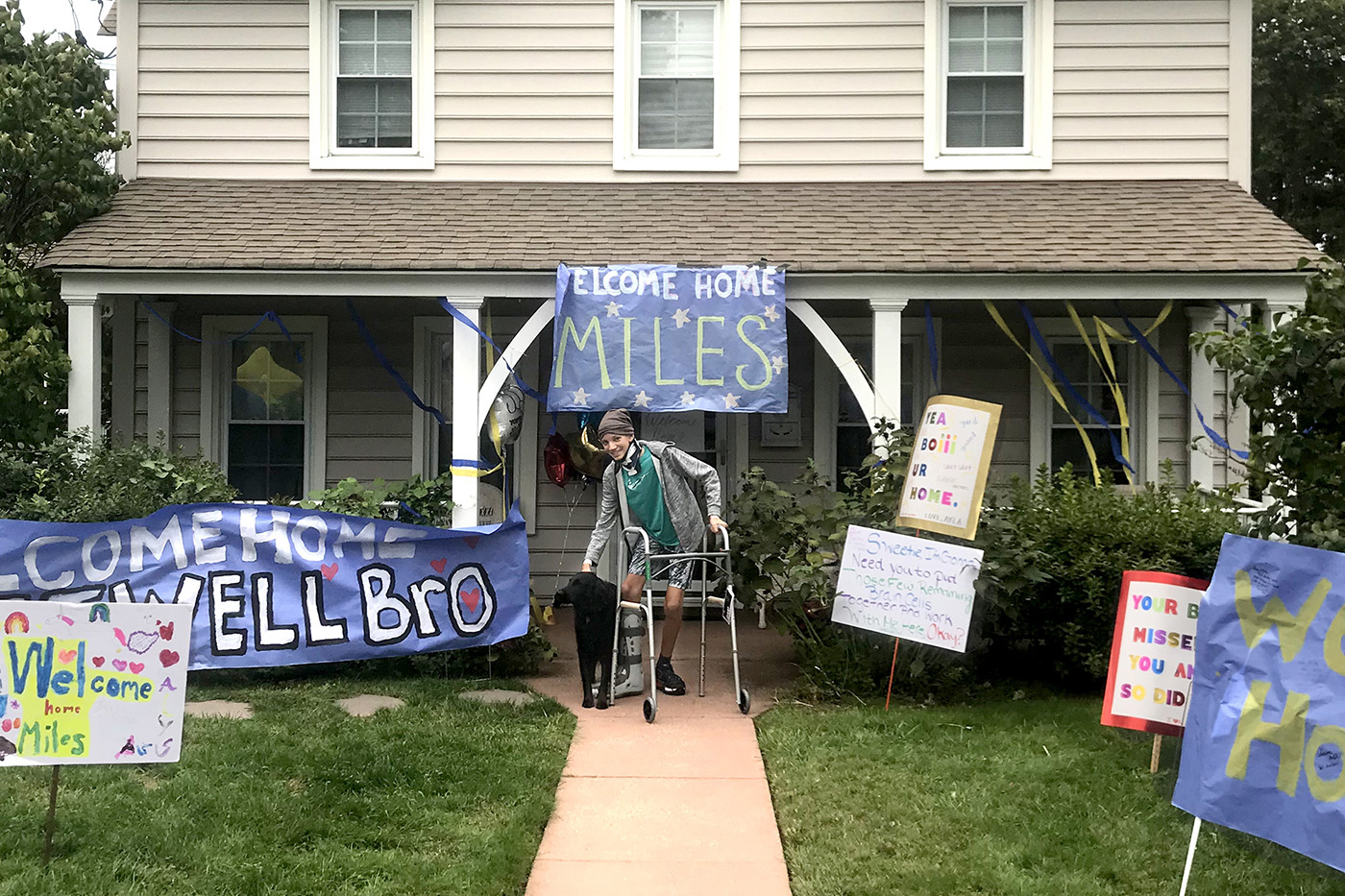
When I asked whether he thought of the race as a comeback, Miles described a return to both running and his hometown. Then he explained what it meant in relation to the accident.
“But I definitely, in terms of the accident, feel like this was more like a spiritual kind of victory lap,” he said. “All this time has passed and I’m kind of coming back to get to run this race thanks to the people that helped me along the way.”
The accident remains part of his personal story, and he is good with that. Over time, he said, he came to see his survival as a second chance, one that changed how he sees experiences and relationships.
“It made me just appreciate the value of life and the value of experiencing things and connection and just everything,” he said.
Near the finish, Laura was working crowd control when she felt a quick tap on her shoulder.
“Hey, Mom!”
She turned to see Miles crossing the line. As she later explained, she had expected him several minutes later and wasn’t watching for him yet. The surprise was that he had arrived ahead of her expectations.
Miles had his own reason to be pleased. He said he beat his time from age 11 by 50 seconds. After everything that had happened between those two races, his younger self was the runner he had most wanted to beat.
“I can beat a kid half my age,” he said.