

HUNTINGTON, NY – October 12, 2026

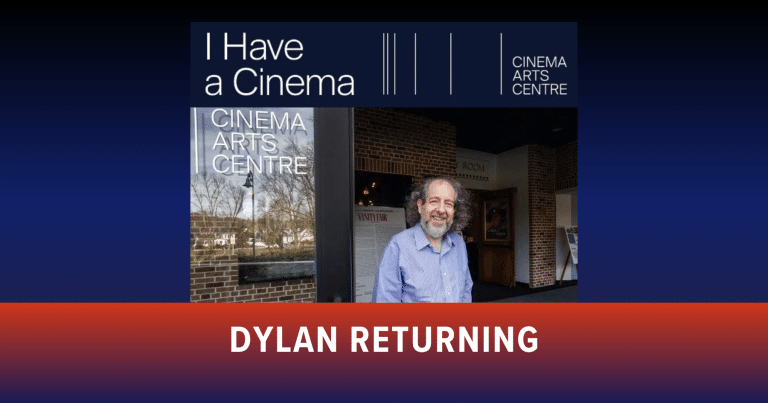
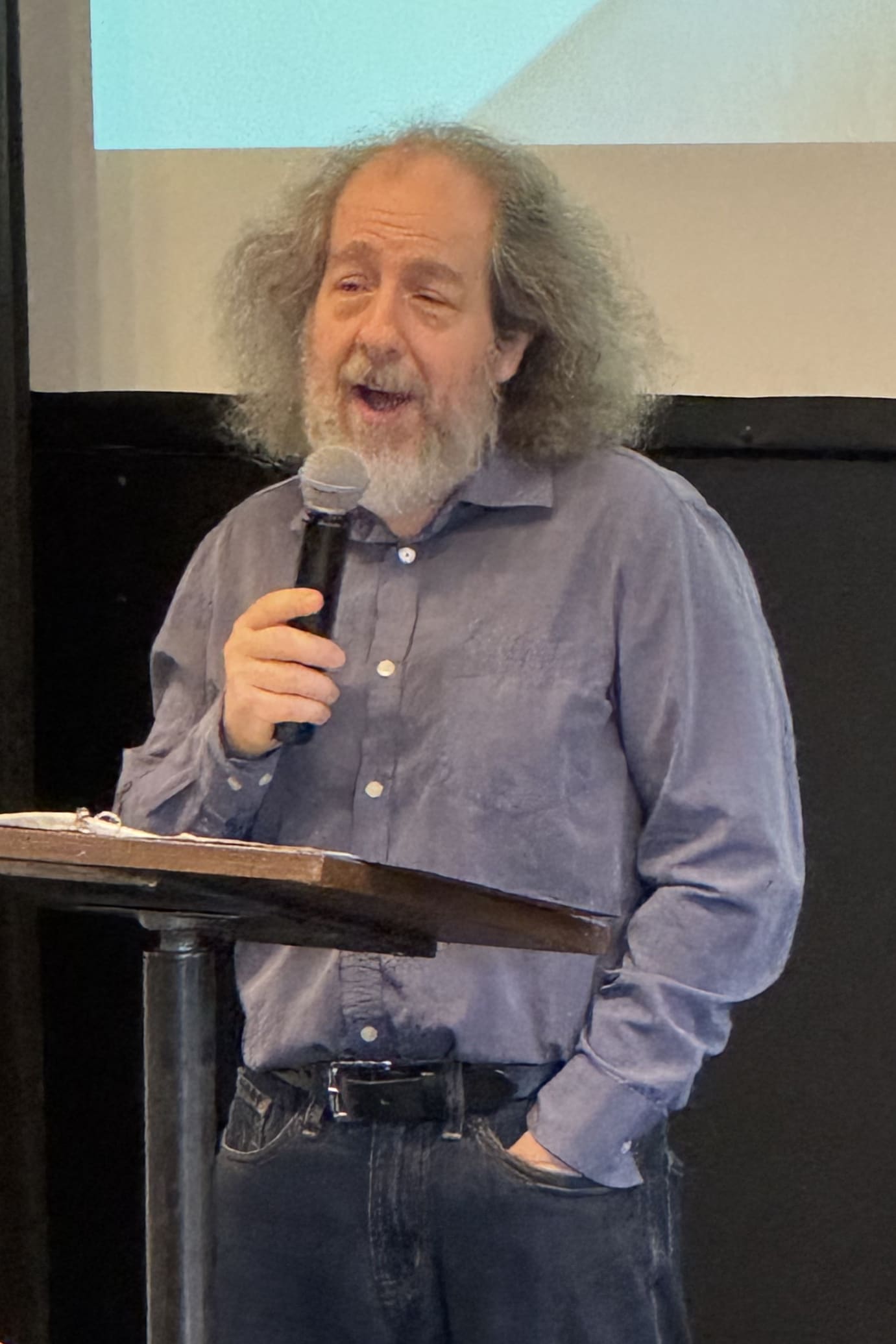
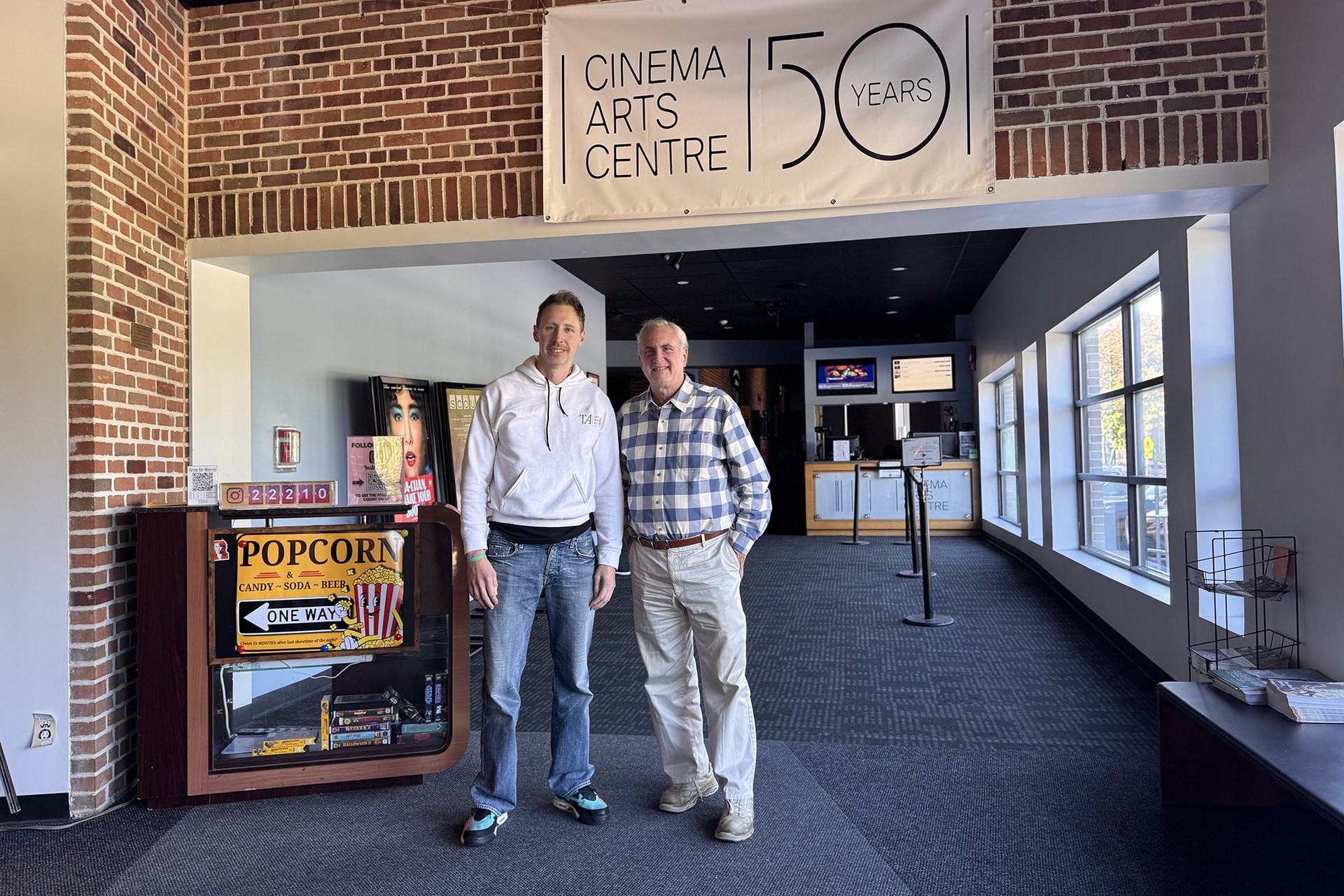
Supporters gathered at the corner of Park and 25A/Main Street, down the road from Cinema Arts Centre, on October 3 to protest the firing of longtime Co-Director Dylan Skolnick. They want him back and believe his removal threatens the identity of the theater his family helped build.
The board describes a different situation. Its representatives say the September 1 dismissal followed efforts to address management problems, staff concerns and outside business activities.
Huntington Matters interviewed Skolnick, Matthew Daidola, Michael Kornfeld and supporters Patricia Shih and Chris Thaler. Their accounts differ sharply on why he was dismissed, whether the decision was justified and what should happen next.
A Family Legacy
The Cinema Arts Centre began in 1973 as the New Community Cinema. Vic Skolnick and Charlotte Sky projected films onto a bedsheet in a Huntington Village dance studio, where audiences brought their own chairs.
Their son Dylan grew up within that organization. Over the years, his deep knowledge of film, programming and relationships with filmmakers and distributors became closely associated with the cinema.
For supporters, his dismissal represents much more than a staffing change. It separates the theater from someone whose family history and professional life have been intertwined with it for more than five decades.
“I’ve dedicated pretty much my whole life to this organization,” Skolnick said. “I’m not just gonna walk off.”
Huntington artist, musician and filmmaker Patricia Shih described a longstanding connection to the cinema, including performances, the premiere of her first film and fundraisers for disaster relief and other causes.
Asked what could be lost without Skolnick, she pointed to his values, artistic sensibility and family legacy.
“Dylan was the captain of the ship,” Shih said, explaining that she believed he kept the organization faithful to its original purpose.
Her frustration focuses on both the dismissal and its handling, which she described as “unconscionable and just completely unfair.”
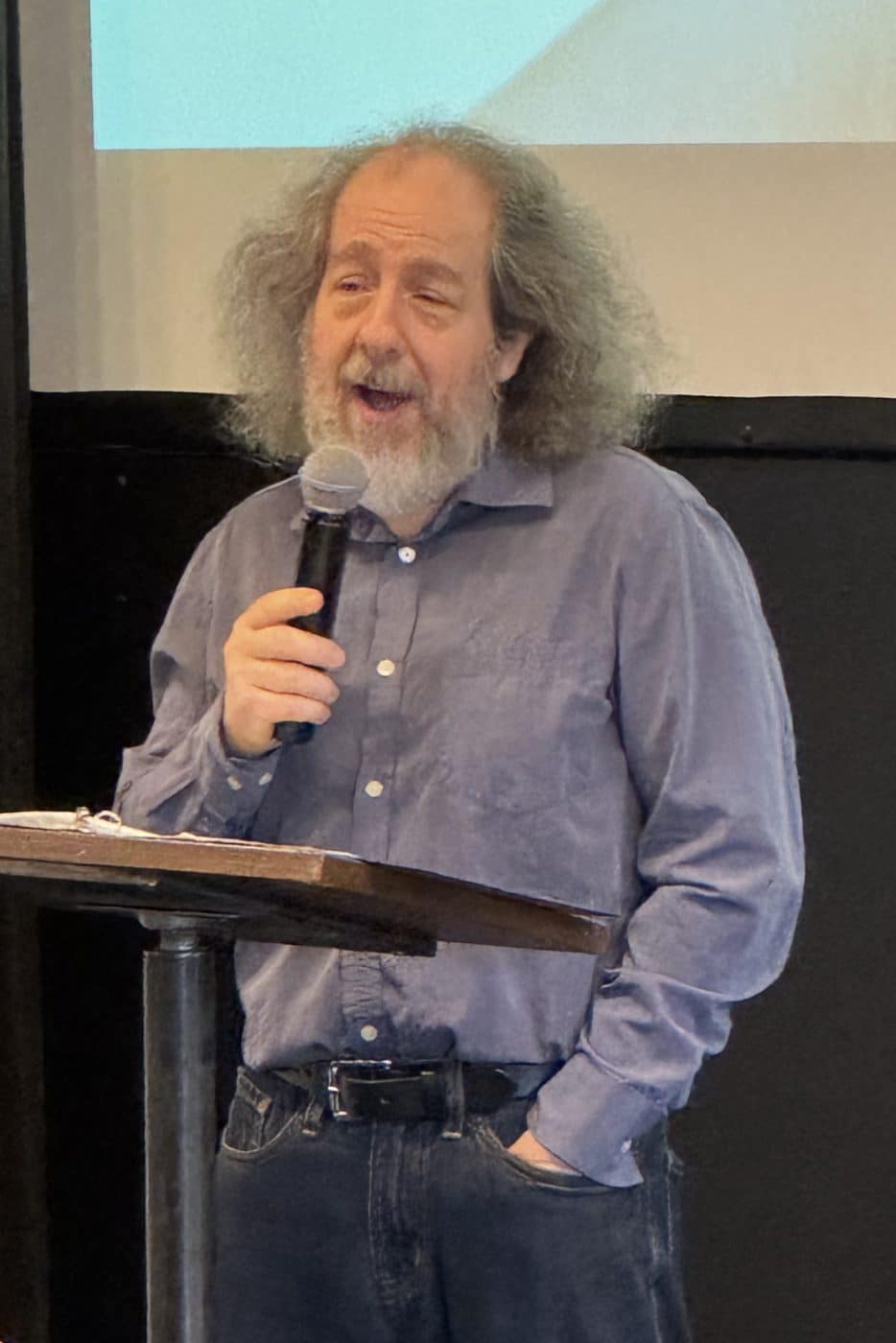
Even those defending the decision acknowledge Skolnick’s artistic contribution. Kornfeld praised his programming capabilities while distinguishing that work from the responsibilities of managing the organization.
That difference is at the core of the disagreement.
Family History and Nonprofit Oversight
Cinema Arts Centre is a nonprofit organization governed by a board of directors. Its founding family’s contribution is part of its identity, but that history does not itself make someone an owner or final decision-making authority.
New York’s Not-for-Profit Corporation Law generally places management authority with the board, subject to the organization’s certificate of incorporation. Section 717 requires directors, officers and key persons to act in good faith and exercise reasonable care.
The New York Attorney General identifies three basic duties of nonprofit directors: care, loyalty and obedience. Those duties require informed oversight, putting the organization’s interests first, and ensuring that it follows applicable laws, its mission and its governing documents. The Attorney General’s guidance calls on boards to investigate and address allegations of legal violations and periodically evaluate senior leadership.
Section 715-a generally requires the board to adopt a conflict-of-interest policy and oversee its implementation and compliance. The policy must include procedures for disclosure and for documenting the existence and resolution of conflicts. Having a policy on paper is not enough.
Those obligations meant the current board had a responsibility to investigate the concerns brought to its attention and take appropriate corrective action if violations were substantiated. Knowingly allowing improper conduct to continue could expose board members to claims that they failed in their own duties. That responsibility does not, by itself, establish that every accusation against Skolnick was proven or that dismissal was the only appropriate response.
Kornfeld said some public reaction reflects a misunderstanding of that structure.
“People thinking that this is a family business when it’s a 501c3 nonprofit,” he said, describing an organization subject to state laws and oversight requirements.
Skolnick also emphasizes CAC’s nonprofit mission.
Asked whether his parents might have established a regular for-profit business instead, he said the cinema’s financial model depends on membership and donations. He described popular films helping support screenings with smaller audiences, giving people opportunities to see work that might otherwise be unavailable on a theater screen.
He did admit that a privately owned theater would have spared him the current board issues, but said nobody wishes to change CAC’s nonprofit identity.
“It’s really been for over fifty years, really a community-based not-for-profit organization,” he said.
The disagreement concerns how authority and accountability should operate within that organization, as well as who should lead it.

Questions About the Board
Supporters have challenged the board’s experience, their motives and their commitment to the cinema’s programming.
Shih questioned whether its members truly understand the working lives of artists.
“There is not one person, and I include Mike in this, who has an arts background,” she said.
She acknowledged Kornfeld’s longstanding support for folk music but made it clear that there is a difference between involvement and earning a living as an artist.
“He doesn’t know what it takes to make a living in the arts,” she said.
Kornfeld described accusations that he was part of a “corporate right-wing cabal” seeking a hostile takeover. Daidola also recounted a comparison between the dispute and changes at the Kennedy Center. Both reject the characterization that they are pursuing a change in CAC’s values and direction.
The accounts of one conversation differ drastically. Daidola said Thaler told him he had information that President Trump had contacted Daidola and supplied a “playbook” to take over the cinema. Daidola rejected that assertion.
In an October 12 interview, Thaler denied making that accusation. He said he told Daidola that other people were making comparisons to the Kennedy Center, not that he had evidence of presidential involvement.
“I never ever accuse Matt of anything like that,” Thaler said. “What I said to Matt was that there are people that are concerned that there might be some political agenda here.”
He said he had no facts to substantiate the Kennedy Center comparison. The allegation of Trump involvement remains disputed and unsubstantiated. It is not evidence that such contact occurred.
They say film remains the organization’s focus.

Kornfeld said a recent revision to the mission statement added cultural programming and gave greater prominence to community. He described the change as reflecting activities CAC already offered, including music and discussions, while potentially expanding grant opportunities.
He also argued the idea that the board consists entirely of newcomers without a connection to Skolnick.
Kornfeld and Daidola both said Skolnick recruited them and several other board members. Daidola and Kornfeld said they had served on the board for approximately two and a half years.
Kornfeld’s connection reaches much further back. He has bragging rights for having attended the cinema’s first screening in 1973.
Management and Staff Concerns
The board’s concerns extend beyond film selection.
Kornfeld said Skolnick was lacking in leadership and management skills and was minimally responsive to employee complaints. Those complaints, he said, included harassment and verbal abuse directed at staff by certain patrons and program hosts.
Daidola said concerns became more apparent as communication between staff and the board improved. “We didn’t react immediately,” he said. “We tried to correct it over a year.”
Prestige, the HR company Skolnick selected to work with CAC, had already received employee complaints, according to Kornfeld. Those included reports of harassment and verbal abuse by certain patrons and program hosts, which he said Skolnick failed to adequately address. Daidola said the board spent roughly a year trying to correct the problems. A 360-degree evaluation, conducted by an outside agency with anonymous staff feedback, was part of that effort.
The board representatives said Skolnick was asked to address problems brought to its attention. Skolnick disputes the suggestion that he did not respond to patron conduct.
“We had meetings with a number of patrons, talking to them about their issues and conduct,” he said.
He agreed it’s difficult to address problems involving members and donors while maintaining a welcoming community organization.
“It’s certainly not acceptable for anyone to be abused,” he said. “But we do try to make it work.”
Asked about allegations that management had failed to resolve those problems, he said they were working to manage them.
A Subsequent Incident
One person’s conduct became an issue again after the October 3 protest.
According to Daidola and Kornfeld, a patron and program host who had been the subject of earlier staff complaints entered the cinema and verbally abused an employee.
Daidola said Skolnick had been told to address that person’s conduct before his dismissal. The board representatives also said the person had previously been banned and then later reinstated by Skolnick.
The person was not banned when the October 3 incident happened.
Kornfeld said police were called to the scene and he and Co-Director Kelsie Greene subsequently issued a trespass warning.
The October incident occurred more than a month after Skolnick’s dismissal. It was not a reason for the September 1 decision, but the board notes it as an incident involving someone whose conduct had already prompted concerns and should not have been permitted on the premises.
Asked whether the reported failure to address repeated staff complaints changed her view of Skolnick or the dispute, Shih said it did not. She questioned the underlying accounts and acknowledged that she did not know the particulars.
“I don’t know the ins and outs of the particular case,” she said.
She also questioned the sources behind the HR concerns and whether those evaluating Skolnick understood the arts industry.
Later in the interview, after being told that Skolnick had selected the HR provider and recruited board members, she said, “I’m going to reserve judgment until I hear everything that comes out.”
She remained opposed to the way his dismissal had been handled.
Differing Accounts of His Availability
The two sides also describe different work patterns.
Daidola and Kornfeld said staff members reported that Skolnick was frequently absent or unavailable. “He just didn’t show up,” Daidola said. “I don’t know what he did all day long.”
Skolnick said he generally worked more than 50 hours a week, including nights and weekends. He described responding to overnight burglar alarms and handling responsibilities beyond normal business hours.
Shih offered a similar impression.
“He seemed to be at the theater all the time,” she said.
Those accounts bring up separate questions about his time spent working, his availability to staff and how well management concerns were addressed by him.
Outside Film-Booking Work
Skolnick said an earlier board approved his freelance film-booking work approximately 15 years ago. He described it as a modest source of additional income that helped him meet household expenses.
He said he never had more than four or five active theater clients at a time and disputed the characterization of the work as a competing operation.
The current board questions whether that permission was granted and says the work was not disclosed on his conflict-of-interest forms.
The board also contends that Skolnick’s freelance work violated Section 5.11 of CAC’s employee manual, titled “Conflict of Interest and Business Ethics.” Huntington Matters reviewed a copy of that section included in an August 27 email among board members.
The policy identifies situations that would constitute a conflict in most cases. These include holding an interest in a competing organization; employment or consulting work for an organization that does, or seeks to do, business with CAC or competes with it; and personal payments from organizations seeking to do business with CAC. It also covers certain interests in business partners held by employees able to influence CAC’s dealings with them.
“It is the employee’s responsibility to report any actual or potential conflict,” the policy states.
The excerpt is an employee policy, distinct from the state-law requirements governing the board. It does not impose a blanket ban on every outside job. Its application depends on the relationship between the work, the employee’s interests and CAC. The board alleges a violation; Skolnick maintains that the freelance work was approved and disputes that it competed with CAC.
Daidola said the board’s secretary was asked to locate evidence of the earlier approval, but none had been handed over as of this reporting.
The two sides still disagree about whether that permission was ever given. Skolnick named former board leaders Ken Katz and Barbara Nagel as people who could support his account.
The board also alleges he used CAC’s email and other resources for personal business.
Skolnick acknowledged using one email address for both activities and said having separate email accounts would have been better. He also admitted to using the name Cinema Arts Booking at the bottom of emails.
He disputes that he improperly benefited from CAC’s reputation, emphasizing his own decades of experience and relationships within the national art-house film community.
“The cinema’s reputation is intertwined with mine,” he said.
Shih viewed the outside work as consistent with artists needing multiple sources of income and helping others in their field.
“This is what people in the arts do: we help each other because we know how hard it is,” she said.
The board’s objection concerns the circumstances of that work, including disclosure, competition and the alleged use of CAC’s resources.
North Shore Towers
According to Daidola and Kornfeld, Skolnick brought the idea of working with North Shore Towers to the board. CAC then entered an agreement to manage the residential complex’s theater, book films and plan its programming. Daidola and Kornfeld said the venture lost money and was not financially sustainable.
That relationship became a sticking point over where CAC’s business ended and Skolnick’s personal work began.
A May 27 email from Daidola and Kornfeld informed Skolnick that the board voted 8-0 to end the relationship, effective June 10.
“Effective immediately, please notify NST of this decision and ensure that no further programming is scheduled at their location,” the email stated.
Skolnick replied on May 28 that he had informed North Shore Towers and that no future events on sale required refunds.

In his interview, Skolnick said he advised NST to operate the theater itself and offered to perform film-booking work personally. He said that subsequent work was separate from CAC.
The board interprets its instruction to Skolnick as requiring an end to those business ties.
September 2 correspondence with Sony Pictures Classics shows that the distributor was still communicating with CAC about paperwork for both theaters and outstanding NST box-office reports. CAC’s business manager requested separate statements and directed Sony to contact NST independently.
As of October 12, North Shore Towers’ website still described an affiliation with Cinema Arts Centre, saying residents could attend first-run movies and film discussions through that relationship. The page also linked to CAC’s website. That description remained online more than four months after the board’s June 10 termination date, although the website alone does not establish that the agreement remained in effect.
The correspondence documents that an administrative connection still remained after the June termination date. It does not establish, by itself, who performed every subsequent booking or received the associated payments.
Prior board approval, however, would not by itself settle the nonprofit compliance question. Permission to freelance and permission to use the Cinema’s paid time, staff or equipment for personal income are separate issues. If CAC provided those resources without receiving appropriate value in return, the arrangement could raise concerns about improper financial benefits to an insider. Federal consequences can include repayment, personal tax penalties and, in some circumstances, loss of the organization’s tax-exempt status.
A previous board’s permission would not eliminate the current board’s responsibility to investigate and deal with a potentially improper arrangement. Federal law also allows excise taxes on organization managers who knowingly participate in an excess benefit transaction, subject to statutory exceptions. Those penalties are not automatic consequences of permitting freelance work.
Those rules explain why the issue could extend beyond a disagreement over outside employment. They do not establish that Skolnick committed a tax violation or that CAC’s exemption was in imminent danger. That determination would require evidence of what resources were used, their value, and the terms of any approved arrangement.
Was He Given an Opportunity to Respond?
Skolnick and his supporters say he was removed without a meaningful opportunity to address the grounds for his firing.
He said the freelance-work concerns were not discussed with him until after his dismissal.
The board says its management concerns had been raised over a long period and that it attempted corrective steps before deciding to remove him.
The August 27 employee handbook email shows that board members were discussing the conflict-of-interest policy before the September 1 dismissal. It does not mention when those concerns were communicated to Skolnick or what opportunity he had to respond.
Those accounts need to be considered separately. Earlier discussions about staffing or management do not necessarily establish that Skolnick received advance notice of every outside-work allegation. His surprise at those accusations does not mean the board hadn’t already raised other concerns with him.
On October 9th, IndieWire reported that Skolnick was placed on paid administrative leave on August 19 for “ongoing concerns regarding leadership and management,” citing an email from Daidola that Skolnick shared with the publication. Skolnick and his attorney Jennifer Casey told IndieWire that the board provided no further details until his September 1 dismissal.
The August leave shows that Skolnick knew the board had concerns before September 1. The disagreement is over what he was told about those concerns and whether he had an opportunity to address them.
Loyalty and Distrust
The dispute has exposed strong loyalties and deep distrust.
Thaler, a longtime cinema member, said his involvement grew from concern about the institution and the board’s initial public messaging, rather than a close personal relationship with Skolnick.
“This isn’t for me any sort of cult of personality,” he said. “This is about the cinema.”
He hosted an informational meeting at St. John’s Episcopal Church approximately two weeks after the dismissal, offering a place for Skolnick to speak and answer questions. Thaler said he also offered the space to Daidola and the board, but Daidola said he was unable to participate at that point.

Thaler criticized the board’s use of “serious misconduct” without specifics, saying it encouraged damaging speculation. He acknowledged that improvements to Skolnick’s management might have been possible, while emphasizing his standing in independent cinema.
Shih’s comments illustrate how closely some supporters connect their confidence in Skolnick with their confidence in the cinema itself. Her concerns about the board’s judgment persisted even when she was asked about allegations concerning his management.
At the same time, her statement that she would reserve judgment acknowledged that more information was needed.
For the all board representatives, the public response has become deeply personal.
Daidola said board members have been doxxed. Their families have faced harassment, employers have been contacted and personal information has been exposed. Kornfeld described being attacked by people he had known for years.
The Save Our Cinema website publishes photographs, names and outside professional affiliations of Cinema Arts Centre’s volunteer board members, provides a sample letter calling for their resignations and encourages supporters to contact them and distribute campaign flyers.
Skolnick said he encourages supporters to be polite and avoid personal attacks. He also said the board’s public description of “serious misconduct,” without specifics, created a vacuum that others filled with damaging speculation about him.
Thaler also disputed the idea that supporters alone should be blamed for CAC’s difficulties. He said the Save Our Cinema movement was not telling people to stop attending or withdraw money, and argued that the board’s actions prompted the reaction.
The disagreement extends to Daidola’s offer of an advisory role. Daidola said it would allow Thaler to observe programming and see that the board was committed to the cinema’s mission. Thaler acknowledged the offer but said he did not intend to accept it and denied characterizing it as a bribe.
The strength of those reactions has made it harder for the two sides to agree even on the circumstances they are debating.
What Happens Now?
Skolnick has made his desired outcome clear.
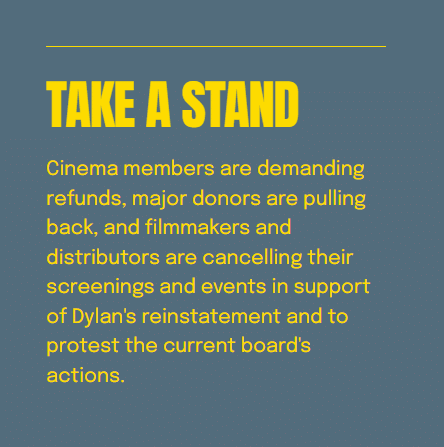
“What we’re looking for is for the current management and board to resign, for me to be reinstated, and to form a new board,” he said.
He believes supporters and donors would return if that happened.
Daidola describes a different risk. He said CAC’s business manager relayed warnings that creditors would demand repayment if Skolnick returned following his termination. Huntington Matters has not independently verified those warnings.
His comments also indicated that he did not expect the board simply to walk away from the conflict.
Shih places responsibility for sustaining the cinema with the board and believes its handling of Skolnick’s removal has damaged the institution.
“The board’s function is to sustain… the entity that they are in charge of, be good stewards of it,” she said.
Both sides say they want Cinema Arts Centre to survive. They disagree about who should lead it, what accountability requires and how its future can be secured.
The institution that began with films projected onto a bedsheet has become part of Huntington’s cultural life – a crown jewel of the town. Its future matters to more than either side of this dispute. Staff, volunteers, members, donors and audiences all have a stake in what happens next.
Huntington Matters will continue reporting on the unresolved questions surrounding the dismissal, governance and the cinema’s future.
Sources for Legal Context
New York Attorney General guidance on nonprofit board responsibilities https://ag.ny.gov/sites/default/files/publications/Right-From-the-Start.pdf
New York Not-for-Profit Corporation Law Section 701 https://www.nysenate.gov/legislation/laws/NPC/701
New York Not-for-Profit Corporation Law Section 717 https://www.nysenate.gov/legislation/laws/NPC/717
New York Not-for-Profit Corporation Law Section 715-a https://www.nysenate.gov/legislation/laws/NPC/715-A
IRS guidance on inurement and private benefit IRS guidance on inurement and private benefit https://www.irs.gov/charities-non-profits/charitable-organizations/inurement-private-benefit-charitable-organizations
IRS guidance on excess benefit transactions https://www.irs.gov/charities-non-profits/charitable-organizations/intermediate-sanctions-excess-benefit-transactions
IRS guidance on intermediate sanctions and exemption revocation https://www.irs.gov/charities-non-profits/charitable-organizations/intermediate-sanctions
Photography by Dana E. Richter, Ken Farrell – Volunteer Contributor and Megan – Volunteer Contributor.